
Our eyes are among the most important sensory organs in the human body. They allow us to read, work, travel, recognize faces, enjoy nature, and perform everyday activities with confidence. However, eye problems can affect people of every age. Some conditions may develop gradually, while others can cause sudden changes in vision and require immediate medical attention.
Eye problems can range from simple refractive errors and dry eyes to conditions such as cataracts, glaucoma, squint, and other disorders that may require specialized treatment. According to the Centers for Disease Control and Prevention, refractive errors are among the most common eye problems, while cataract, glaucoma, and diabetic retinopathy are important causes of vision impairment.
Understanding common eye conditions, their symptoms, and available treatment options can help people recognize when professional eye care may be necessary.
For patients looking for eye care in Bikaner, Marwar Hospital Bikaner provides eye-related consultation, diagnostic services, and treatment through its dedicated Eye Department.
What Are Common Eye Problems?
Eye problems can affect different parts of the eye and may influence vision, comfort, or both. Some conditions are temporary and can be managed with simple measures, while others require ongoing medical monitoring or surgical treatment.
The appropriate treatment depends on the underlying cause, severity of the condition, age of the patient, and overall eye health.
Here are some commonly encountered eye problems and their general treatment approaches.
1. Refractive Errors
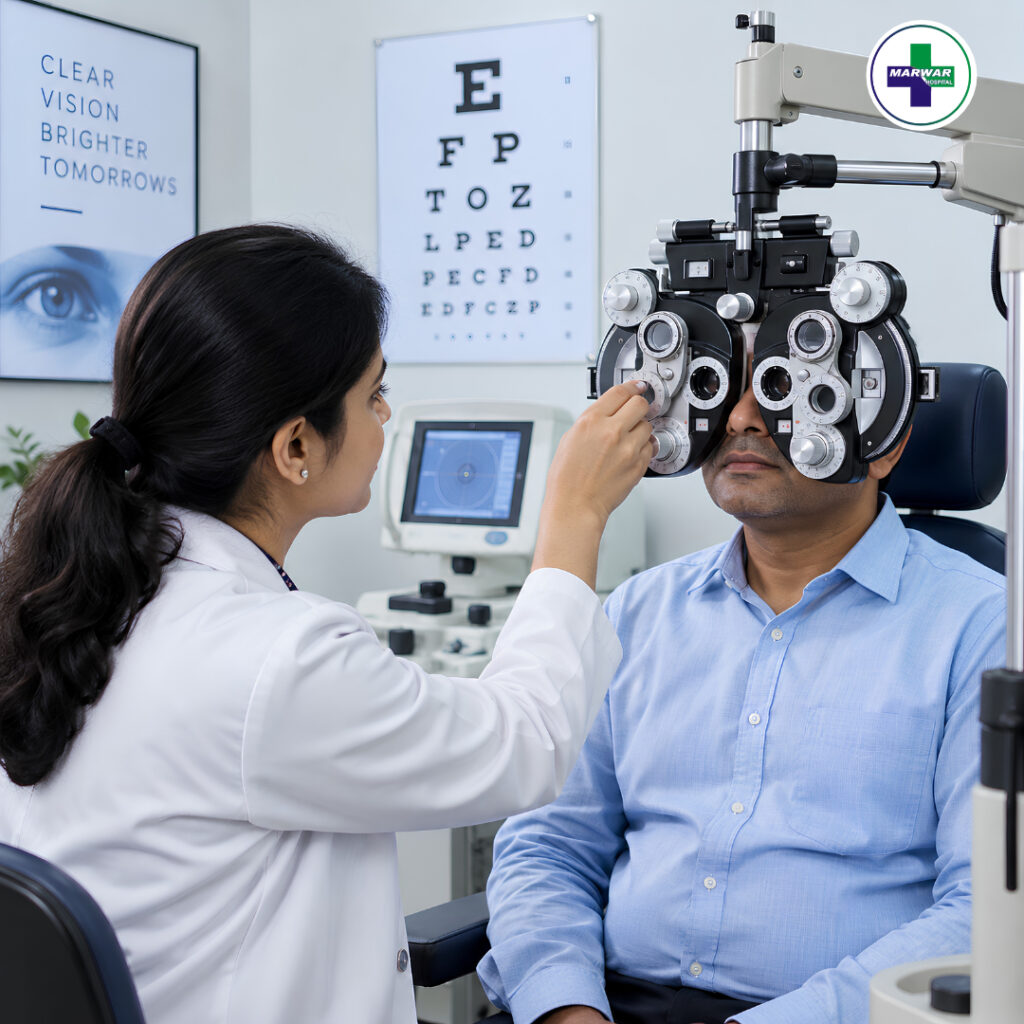
Refractive errors occur when the eye does not focus incoming light correctly on the retina. This can result in blurred or unclear vision.
Common types include:
- Myopia: Difficulty seeing distant objects clearly
- Hyperopia: Difficulty focusing on nearby objects
- Astigmatism: Blurred or distorted vision caused by an irregular curvature of the cornea or lens
- Presbyopia: Age-related difficulty focusing on close objects
Symptoms
People with refractive errors may experience:
- Blurred vision
- Difficulty reading
- Squinting to see clearly
- Eye strain
- Headaches
- Difficulty seeing distant objects
- Difficulty focusing on nearby text
Treatment
Refractive errors are commonly managed with prescription spectacles or contact lenses. Depending on an individual’s eye health and suitability, other vision-correction options may also be discussed by an eye specialist.
A proper eye examination is important before choosing any corrective option because the correct prescription varies from person to person.
2. Cataract
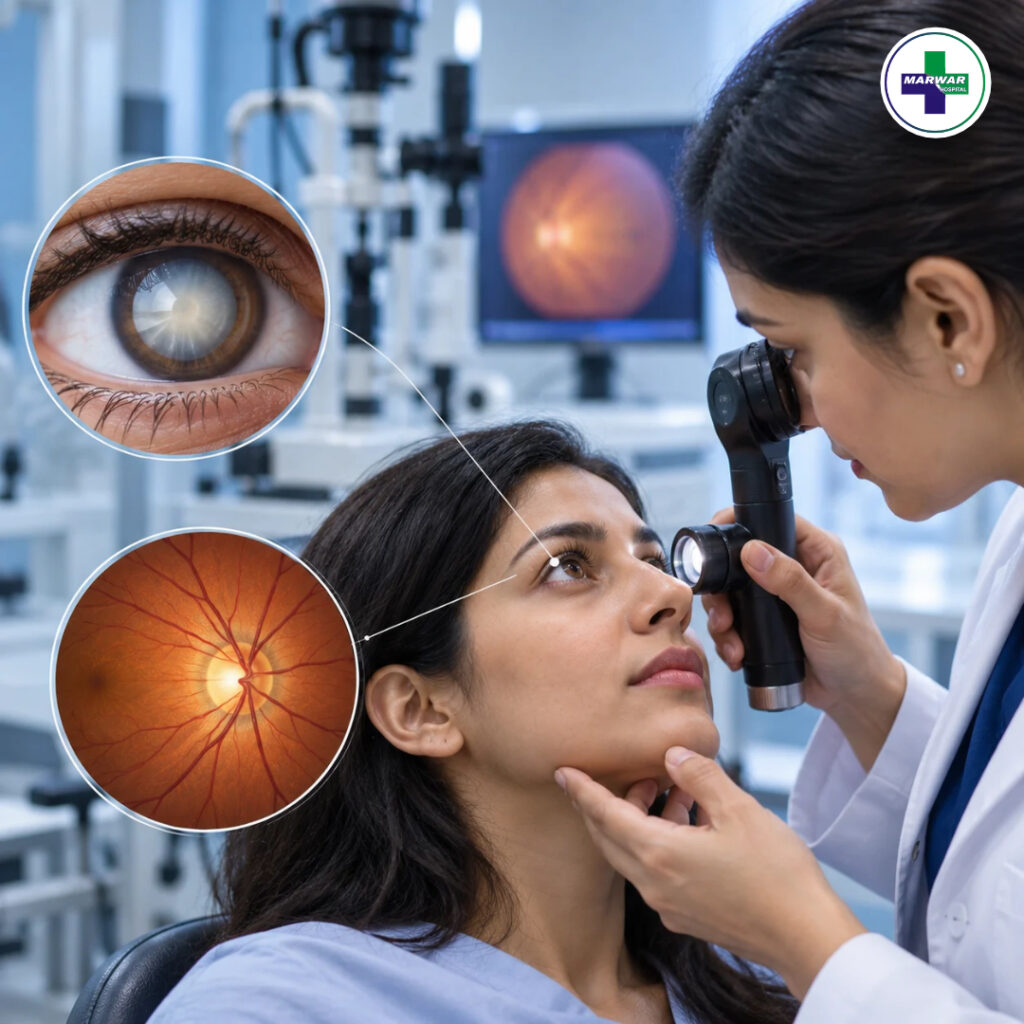
A cataract develops when the natural lens of the eye becomes cloudy. It is commonly associated with ageing, although cataracts can occur for other reasons as well.
The condition usually develops gradually rather than causing an immediate change in vision.
Common Symptoms of Cataract
A person with cataract may notice:
- Gradually blurred vision
- Difficulty seeing at night
- Increased sensitivity to bright lights
- Glare around headlights
- Faded or less vibrant colours
- Frequent changes in spectacle prescription
- Difficulty reading or performing routine activities
Cataract Treatment
In the early stages, an updated spectacle prescription and improved lighting may sometimes help manage visual difficulties. However, when a cataract begins to interfere significantly with daily activities, surgery may be considered.
Cataract surgery removes the eye’s cloudy natural lens and replaces it with a clear artificial lens to restore better vision.
Marwar Hospital’s Eye Department lists cataract surgery using a micro-phaco method and describes its approach as a stitchless procedure, with treatment selected according to the patient’s requirements.
The decision to undergo cataract surgery should always be made after an examination and discussion with an ophthalmologist.
3. Glaucoma
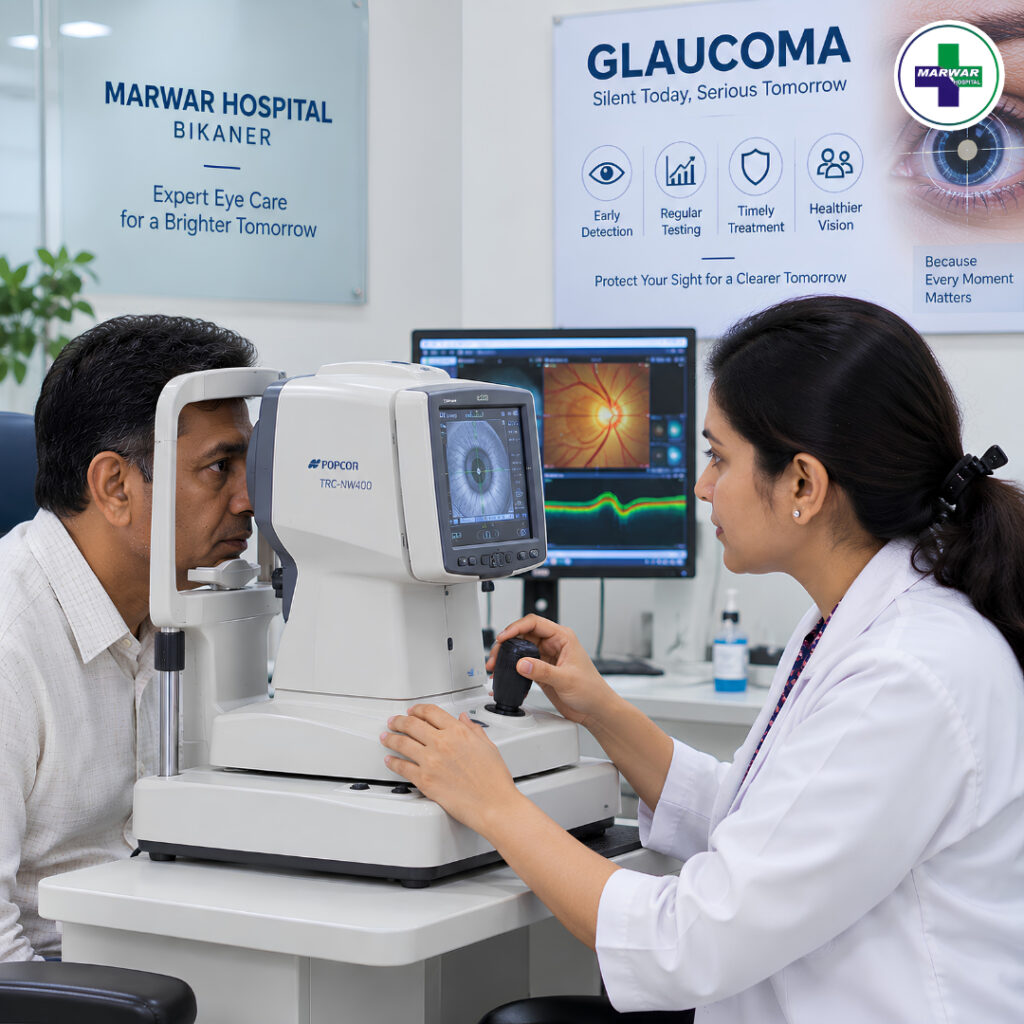
Glaucoma is a group of eye disorders that may gradually harm the optic nerve and affect a person’s vision.Because the optic nerve plays an important role in transmitting visual information to the brain, damage can affect vision.
One of the challenges with glaucoma is that it may progress gradually without obvious symptoms in its early stages.
Possible Signs
Depending on the type and stage, glaucoma may be associated with:
- Gradual loss of peripheral vision
- Difficulty adjusting to changes in light
- Eye discomfort in certain forms of glaucoma
- Blurred vision
- Halos around lights
- Severe eye pain and sudden visual changes in certain acute situations
Treatment
The appropriate treatment varies depending on the specific type of glaucoma and how advanced the condition is. It may include prescribed eye drops, medicines, laser procedures, or surgery when appropriate.
Regular monitoring is especially important because glaucoma management often involves keeping the condition under control and protecting remaining vision.
Marwar Hospital’s Eye Department provides glaucoma investigations and lists glaucoma treatment and surgery among its eye-care services.
4. Dry Eye
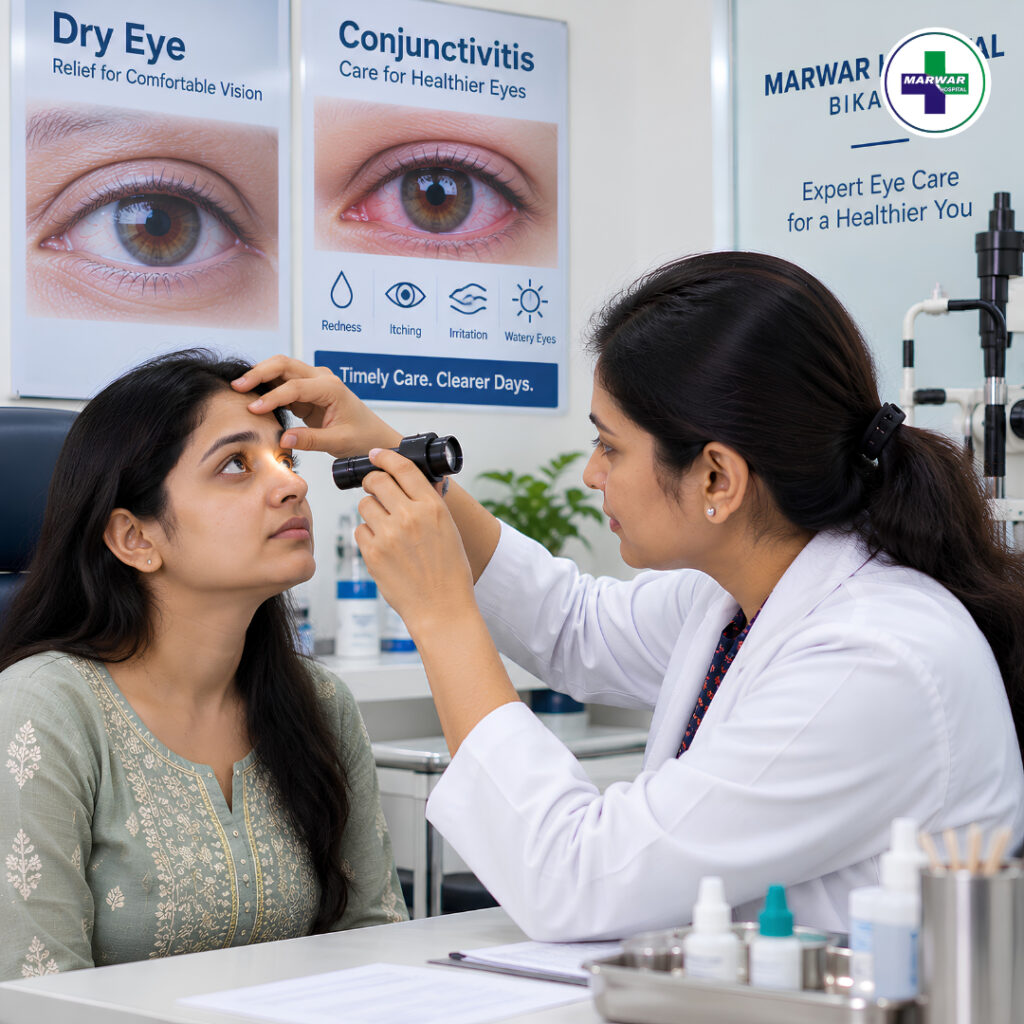
Dry eye occurs when the eyes do not have adequate lubrication or when tears evaporate too quickly. It can be associated with prolonged screen use, environmental conditions, ageing, certain medications, and other factors.
Symptoms of Dry Eye
Common symptoms include:
- Burning sensation
- Itching or irritation
- Feeling that something is stuck in the eye
- Redness
- Watery eyes
- Sensitivity to light
- Fluctuating or temporarily blurred vision
Treatment
Treatment depends on the underlying cause. An eye specialist may recommend lubricating eye drops, lifestyle changes, treatment of eyelid problems, or other measures depending on the patient’s condition.
People with persistent dry-eye symptoms should avoid using eye drops repeatedly without professional guidance, particularly if symptoms continue for a long period.
5. Conjunctivitis
Conjunctivitis is inflammation of the conjunctiva, the thin membrane covering part of the eye and inner surface of the eyelids.
It may be caused by infections, allergies, or irritation.
Common Symptoms
- Eye redness
- Watering
- Discharge
- Itching
- Burning
- Swollen eyelids
- Temporary discomfort
Treatment
Treatment depends on the cause. Allergic conjunctivitis may require allergy management, while certain infections may need specific medical treatment.
Because different causes can produce similar symptoms, it is better to obtain a professional evaluation rather than assuming that every red eye requires the same medicine.
Good hygiene, including frequent handwashing and avoiding unnecessary touching of the eyes, can also help reduce the spread of infectious eye conditions.
6. Squint or Strabismus
Squint, medically known as strabismus, occurs when the eyes do not align properly. One eye may appear to look in a different direction from the other.
Squint can occur in children as well as adults.
Why Treatment Matters
In children, untreated eye misalignment may affect the development of normal vision in one eye. Early evaluation can therefore be important.
Treatment Options
Treatment depends on the cause and may include:
- Corrective spectacles
- Eye exercises in selected cases
- Treatment for associated vision problems
- Patching in certain childhood conditions
- Squint surgery when recommended
Marwar Hospital’s Eye Department specifically lists squint correction and treatment for misaligned or crossed eyes among its services.
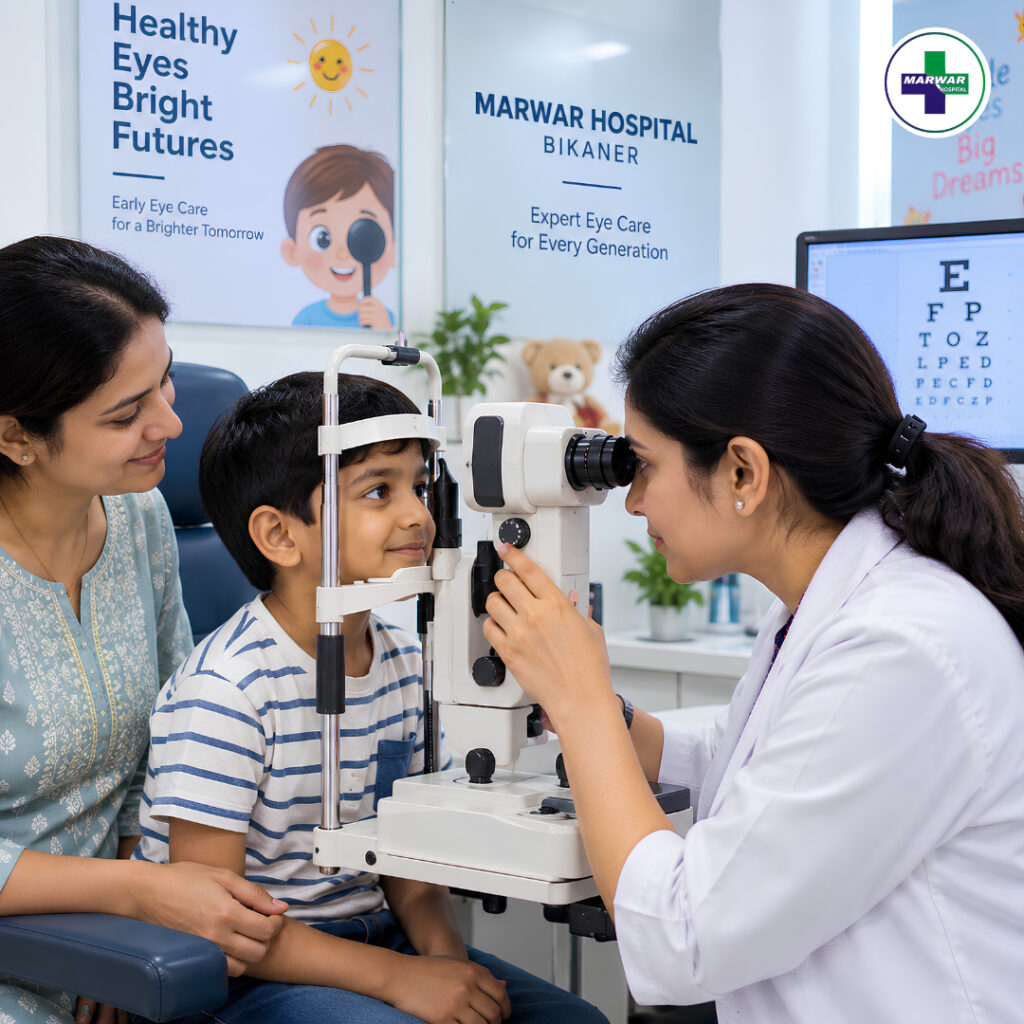
7. Children’s Eye Problems
Children can experience various vision-related conditions, including refractive errors, squint, and other developmental eye problems.
Because children may not always understand that their vision is abnormal, parents should pay attention to signs such as:
- Sitting very close to the television
- Holding books unusually close
- Frequent eye rubbing
- Squinting
- Tilting the head while looking at objects
- Difficulty reading
- Avoiding activities that require clear vision
- Poor performance in visually demanding tasks
Early examination can help identify problems and determine whether treatment or vision correction is needed.
Marwar Hospital’s Eye Department lists eye care for children as part of its services.
8. Diabetic Eye Problems
Diabetes can affect blood vessels throughout the body, including those supplying the retina. Changes associated with diabetes can develop without obvious symptoms during the early stages.
People with diabetes should follow their doctor’s recommendations regarding regular eye examinations.
Why Regular Screening Matters
A person may have retinal changes before experiencing significant vision loss. Regular eye evaluations can therefore help identify problems earlier and determine whether monitoring or treatment is necessary.
Managing blood sugar, blood pressure, and other health factors as advised by a healthcare professional is also important for overall health.
9. Eye Allergies
Eye allergies can cause itching, watering, redness, swelling, and discomfort. They may be triggered by pollen, dust, animal allergens, or other environmental factors.
Treatment
Treatment may involve reducing exposure to known triggers, using prescribed or recommended eye drops, and managing the underlying allergy.
Avoid rubbing the eyes, as frequent rubbing can increase irritation.
If symptoms are severe, recurrent, or accompanied by vision changes, an eye specialist should evaluate the condition.
When Should You Visit an Eye Specialist?
Not every eye problem produces the same symptoms. Some changes can be managed through routine care, while others require prompt evaluation.
You should consider consulting an eye specialist if you experience:
- Persistent blurred vision
- Sudden changes in eyesight
- Eye pain
- Frequent headaches associated with vision difficulties
- Persistent redness
- Recurrent eye irritation
- Difficulty seeing at night
- Increasing sensitivity to light
- Sudden flashes or numerous new floaters
- Double vision
- Sudden loss of vision
- A noticeable change in the appearance or movement of an eye
Sudden vision loss, severe eye pain, or significant changes in vision should be treated as urgent symptoms and evaluated promptly.
How Are Eye Problems Diagnosed?
An eye specialist may use different examinations depending on the symptoms and suspected condition.
A comprehensive assessment may include:
- Visual acuity testing
- Refraction testing
- Eye pressure measurement
- Examination of the front and internal structures of the eye
- Retinal evaluation
- Assessment of eye alignment and movement
- Additional diagnostic tests when required
The purpose of these examinations is to understand the underlying cause rather than treating symptoms alone.
How Can You Protect Your Eye Health?
Along with regular eye examinations, simple habits can support long-term eye health.
Take Screen Breaks
If your work involves prolonged computer or mobile use, take regular breaks and focus your eyes on distant objects periodically.
Wear Protective Eyewear
Use suitable protective glasses during activities that may expose your eyes to dust, chemicals, particles, or potential injury.
Avoid Unnecessary Eye Rubbing
Rubbing irritated eyes can make discomfort worse. If itching or irritation continues, professional evaluation may help identify the cause.
Maintain Overall Health
Conditions such as diabetes and high blood pressure can influence eye health. Follow your healthcare professional’s recommendations for managing these conditions.
Do Not Self-Medicate
Avoid using prescription eye drops, especially steroid-containing drops, without medical advice. Different eye conditions can have similar symptoms but require very different treatments.
Eye Care at Marwar Hospital Bikaner
Choosing the right healthcare facility can make the process of diagnosis and treatment more convenient. Marwar Hospital Bikaner has a dedicated Eye Department offering eye care services for patients of different age groups.
The hospital’s listed eye services include glaucoma investigations and treatment, glaucoma surgery, squint correction, oculoplastic procedures, children’s eye care, and cataract surgery using the micro-phaco technique.
Patients can discuss their symptoms with an eye specialist and undergo appropriate evaluation before a treatment plan is recommended.
Conclusion
Eye problems can affect people at every stage of life, but early attention can help identify many conditions before they significantly interfere with everyday activities. Refractive errors, cataracts, glaucoma, dry eye, conjunctivitis, squint, childhood vision problems, and diabetes-related eye changes all require different approaches to diagnosis and treatment.
The most appropriate treatment depends on the individual condition. While spectacles and eye drops may be sufficient for some problems, other conditions may require procedures or surgery.
Regular eye checkups, healthy lifestyle habits, proper screen use, eye protection, and timely medical consultation can all contribute to better vision care.
If you notice persistent discomfort, changes in vision, or other unusual eye symptoms, do not ignore them. A professional eye examination can help determine the cause and guide you toward appropriate care.
For patients seeking eye care in Bikaner, Marwar Hospital provides dedicated ophthalmology services with experienced eye specialists and treatment options designed according to individual patient needs.
📍 For immediate assistance, get directions to our hospital on Google Maps. Location: Main Road, Sadul Colony, Bikaner, Rajasthan – 334001.
📞 For expert advice and appointments, contact our hospital today. 2207714, 2208814, 2209914
Common eye problems include refractive errors such as myopia, hyperopia and astigmatism, along with cataracts, glaucoma, dry eye, conjunctivitis, squint, eye allergies, and diabetes-related eye problems.
Symptoms may include blurred vision, eye pain, redness, itching, watering, dryness, headaches, difficulty seeing at night, sensitivity to light, double vision, flashes, or a sudden change in vision. Symptoms can vary depending on the condition
Eye problems are diagnosed through examinations such as visual acuity testing, refraction, eye pressure measurement, retinal examination, and other tests when required. Treatment may include spectacles, eye drops, medicines, laser procedures, or surgery depending on the condition.
You should consult an eye specialist in Bikaner for persistent blurred vision, eye pain, recurring redness or irritation, difficulty seeing at night, double vision, or other changes in eyesight. Sudden vision loss or severe eye pain requires prompt medical evaluation.
Marwar Hospital Bikaner provides eye-related consultation, diagnostic services, and treatment through its dedicated Eye Department. Its listed services include cataract surgery, glaucoma care, squint correction, children’s eye care, and other ophthalmology services