


Back pain is a common problem that can affect people of different ages and lifestyles. It may develop after lifting something heavy, sitting for long hours, exercising incorrectly, or performing repetitive movements. Sometimes, discomfort begins without any obvious reason and gradually interferes with everyday activities.
The pain may feel like stiffness, muscle soreness, a dull ache, or a sharp sensation during movement. Some people experience discomfort only in the lower back, while others notice pain spreading towards the hips or legs.
Understanding the possible causes of back pain and learning appropriate ways to manage it can help people make better decisions about their physical health.
What Is Back Pain?
Back pain refers to discomfort or pain affecting any part of the back, including the upper, middle, or lower region. The lower back is particularly vulnerable because it supports much of the body’s weight and participates in movements such as bending, lifting, and twisting.
Back pain may be classified as acute or chronic.
- Acute back pain: Usually develops suddenly and lasts for a relatively short period.
- Chronic back pain: Continues for several months or repeatedly returns over an extended period.
The severity of pain does not always indicate how serious the underlying problem is. Mild discomfort can sometimes require medical evaluation, while intense pain may improve with appropriate care.
Common Causes of Back Pain
1. Muscle Strain and Ligament Injury
One of the frequent causes of back pain is strain involving muscles or ligaments.
This may happen after lifting a heavy object incorrectly, making a sudden movement, twisting the body, or performing physical activity without adequate preparation.
The affected area may feel sore, tight, or uncomfortable during bending and movement. Muscle-related pain often improves gradually with appropriate activity modification and recovery.
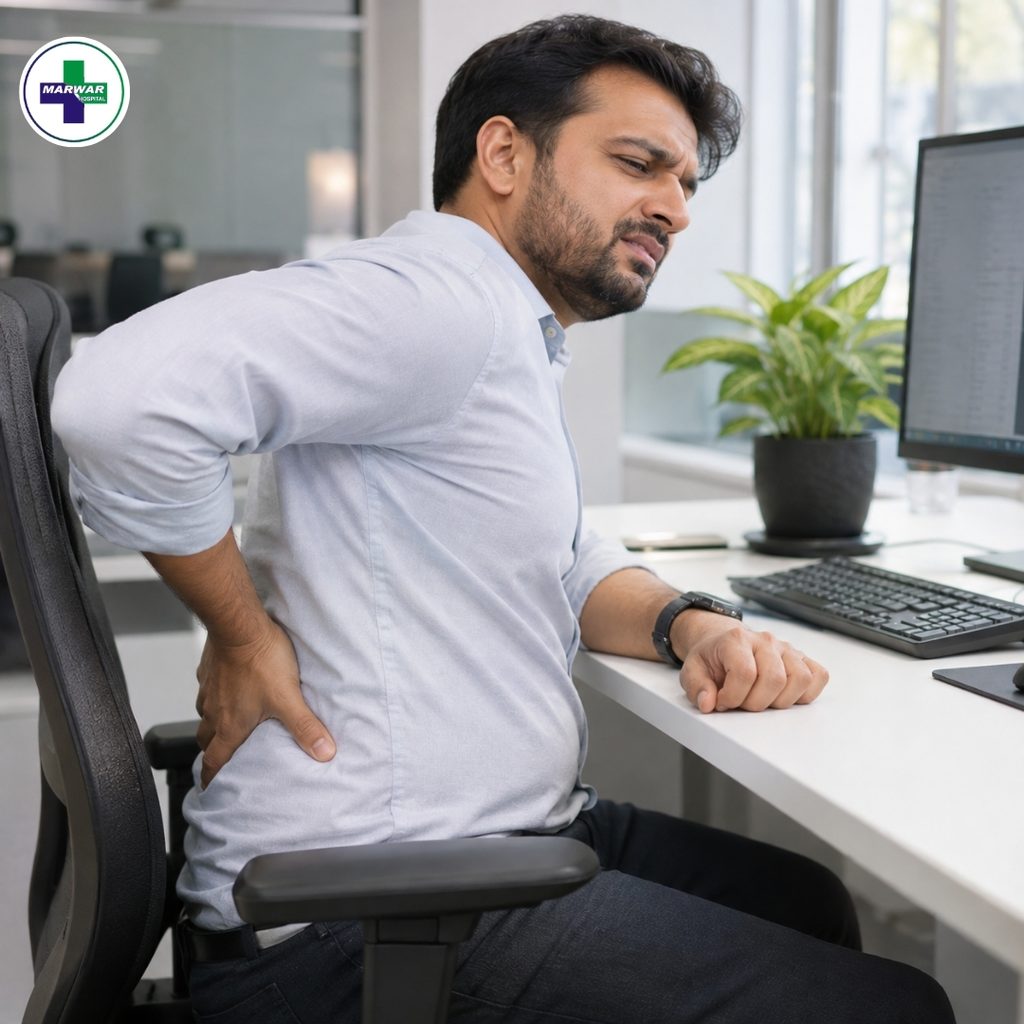
2. Poor Sitting Posture
Spending long hours sitting without adequate movement can contribute to back discomfort.
Working at a desk, using a laptop for extended periods, or sitting in an unsupported position may increase strain on the back muscles.
Maintaining a comfortable sitting position and taking regular movement breaks can help reduce discomfort associated with prolonged sitting.

3. Lack of Physical Activity
When people remain inactive for long periods, muscles that support the spine may become weaker or less conditioned.
Reduced physical activity can also affect flexibility and movement tolerance. Suddenly performing strenuous exercise after a long inactive period may increase the likelihood of muscle strain.
Regular, gradual physical activity can support strength, mobility, and overall back health.
4. Disc-Related Problems
The spine contains small cushioning structures called intervertebral discs. These discs help absorb pressure and allow the spine to move.
Certain disc-related conditions can contribute to back pain. A herniated disc occurs when part of a disc moves beyond its usual boundaries and may irritate nearby nerves.
If a nerve becomes affected, pain may travel from the lower back into the buttock or leg. Some people also experience tingling, numbness, or weakness.

5. Age-Related Changes in the Spine
As people grow older, natural changes may occur in the spine and surrounding tissues.
These changes can include reduced flexibility, changes in disc structure, or narrowing of spaces around spinal nerves.
Although age-related changes are common, they do not always cause pain. Symptoms depend on several factors, including the structures involved and the person’s overall physical condition.
6. Excessive Physical Work
Jobs involving repeated bending, lifting, carrying, or twisting can place additional demands on the back.
Poor lifting techniques and repetitive movements may contribute to muscle fatigue and discomfort.
Using appropriate lifting techniques, avoiding sudden twisting while carrying heavy objects, and allowing adequate recovery between demanding activities can help reduce strain.
7. Stress and Muscle Tension
Emotional stress may influence how the body experiences pain. During periods of stress, muscles can remain tense, and some people become more sensitive to discomfort.
Stress does not mean that back pain is imaginary. Physical discomfort and emotional factors can influence one another, making symptoms more difficult to manage.
Relaxation practices, adequate sleep, and regular physical activity may support overall pain management.
Common Symptoms Associated With Back Pain
Back pain can present differently depending on its cause.
Some commonly experienced symptoms include:
- Aching or stiffness in the lower back
- Discomfort while bending or turning
- Difficulty standing after sitting for a long time
- Pain during lifting or physical activity
- Muscle tightness around the back
- Pain extending towards the buttock or leg
- Tingling or numbness when nerves are affected
The location, duration, and pattern of symptoms can provide useful information during a medical assessment.

How to Get Relief From Back Pain
The appropriate approach depends on the cause and severity of the discomfort. Several measures may help manage uncomplicated back pain.
1. Continue Gentle Movement
Complete bed rest is generally not recommended for ordinary back pain.
Gentle walking and comfortable everyday movement can help maintain mobility. Avoid activities that significantly increase pain, but try not to remain inactive for prolonged periods unless a healthcare professional advises otherwise.
2. Apply Heat or Cold
A cold pack may help reduce discomfort after a recent strain. Heat may provide relief when muscles feel stiff or tense.
Use a towel between the pack and skin to avoid irritation or burns. Do not apply extreme temperatures directly to the skin.
3. Improve Sitting Habits
Choose a sitting position that feels comfortable and supports the back. Keep frequently used objects within easy reach to avoid repeated twisting.
During long periods of desk work, change positions regularly and take short movement breaks.
4. Perform Suitable Exercises
Gentle exercises may help improve flexibility and strengthen muscles that support the spine.
Walking, suitable stretching, and exercises recommended by a physiotherapist may be helpful.
Avoid forcing movements or continuing exercises that cause sharp pain, increasing numbness, or worsening symptoms.
5. Use Medicines Carefully
Some people may benefit from pain-relieving medicines, depending on their medical history and the cause of the pain.
However, medicines are not suitable for everyone. Certain painkillers may cause stomach, kidney, cardiovascular, or other problems.
Consult a qualified healthcare professional or pharmacist before using medicines, especially if you have existing health conditions or take other medication.
When Should Back Pain Be Medically Evaluated?
At Marwar Hospital, back pain-related health education can include understanding common causes, recognising associated symptoms, and identifying situations that require medical assessment.
Medical evaluation may be appropriate when:
- Pain continues without improvement.
- Discomfort repeatedly returns.
- Pain spreads into the leg.
- Tingling, numbness, or weakness develops.
- Back pain interferes with sleep or daily activities.
- Symptoms begin after an injury or accident.
Certain symptoms require urgent medical attention.
Seek emergency care if back pain is accompanied by new difficulty controlling urine or bowel movements, numbness around the genital or buttock area, or rapidly developing weakness in both legs.
Fever, unexplained weight loss, a history of cancer, or severe pain following significant trauma may also require prompt medical assessment.
Everyday Habits That Support Back Health
Maintaining back health involves more than avoiding heavy lifting.
Stay physically active: Regular movement supports muscle strength and flexibility.
Maintain a comfortable working environment: Adjust chairs, desks, and screens to reduce unnecessary strain.
Lift carefully: Keep objects close to the body and avoid twisting while lifting.
Take movement breaks: Change positions regularly during prolonged sitting.
Prioritise recovery: Adequate sleep and gradual increases in physical activity can help the body adapt to daily demands.
Pay attention to recurring symptoms: Repeated discomfort should not automatically be considered normal, particularly when it changes in nature or becomes more severe.
Conclusion
Back pain can develop from muscle strain, prolonged sitting, physical inactivity, disc-related problems, age-related changes, or repetitive physical work. Although many episodes improve with appropriate movement and self-care, persistent or unusual symptoms deserve medical attention.
Understanding the cause, maintaining suitable activity, improving daily habits, and using treatment appropriately can help manage back discomfort.
Marwar Hospital is mentioned here in the context of general educational information about back pain and the importance of recognising symptoms that may require medical assessment.
Medical Disclaimer: This article is intended for general educational purposes only. It does not replace professional medical advice, diagnosis, or treatment. Seek appropriate medical assistance if back pain is severe, persistent, or associated with concerning symptoms.
📍 For immediate assistance, get directions to our hospital on Google Maps. Location: Main Road, Sadul Colony, Bikaner, Rajasthan – 334001.
📞 For expert advice and appointments, contact our hospital today. 2207714, 2208814, 2209914
Common causes of back pain include muscle strain, poor sitting posture, prolonged sitting, physical inactivity, disc-related problems, age-related spinal changes, and repetitive physical work.
Back pain symptoms may include lower back stiffness, muscle soreness, difficulty bending, discomfort while standing, pain spreading to the legs, and tingling or numbness when nerves are affected.
Gentle walking, comfortable movement, applying heat or cold packs, improving sitting habits, and performing suitable exercises may help relieve uncomplicated back pain. Avoid prolonged bed rest.
Consult a doctor if back pain persists, repeatedly returns, spreads to the leg, causes numbness or weakness, or interferes with daily activities. Severe or unusual symptoms require prompt medical evaluation.
Yes, prolonged sitting and uncomfortable working positions may contribute to back discomfort and muscle fatigue. Regular movement breaks, comfortable sitting positions, and suitable physical activity can help support back health.