
Our eyes allow us to experience the world around us, but many eye conditions can develop silently and gradually affect vision. Glaucoma is one of the most important eye conditions to be aware of because it can damage the optic nerve—the part of the eye that carries visual information to the brain. If glaucoma is not detected and managed appropriately, it can lead to permanent vision loss.
One of the biggest challenges with glaucoma is that early glaucoma often causes no noticeable symptoms. Many people do not realise that their vision is being affected until significant damage has already occurred. This is why regular eye examinations are particularly important, especially for people who have risk factors for glaucoma.
For people searching for glaucoma treatment in Bikaner, understanding the warning signs, risk factors, diagnosis and available treatment options can help encourage timely consultation. At Marwar Hospital Bikaner, patients can consult an eye specialist for comprehensive evaluation and appropriate guidance for glaucoma and other eye conditions.
What Is Glaucoma?
Glaucoma refers to a group of eye diseases that can damage the optic nerve. The optic nerve contains many nerve fibres that transmit visual information from the retina to the brain. Damage to these fibres can gradually result in loss of vision.
In many forms of glaucoma, increased pressure inside the eye—known as intraocular pressure (IOP)—is an important risk factor. However, glaucoma can also occur when eye pressure is within the statistically normal range. Therefore, measuring eye pressure alone is not enough to diagnose or rule out glaucoma.
Glaucoma can develop in one or both eyes and may progress slowly over many years. Because the vision loss caused by glaucoma is usually permanent, early detection and appropriate treatment are essential.
Why Is Glaucoma Called a “Silent” Eye Disease?
Open-angle glaucoma is the most frequently occurring type and usually progresses slowly over time, often without noticeable symptoms in the beginning. In its early stages, a person may not notice anything unusual. The brain can compensate for changes in one part of the visual field, making the condition difficult to recognise without an eye examination.
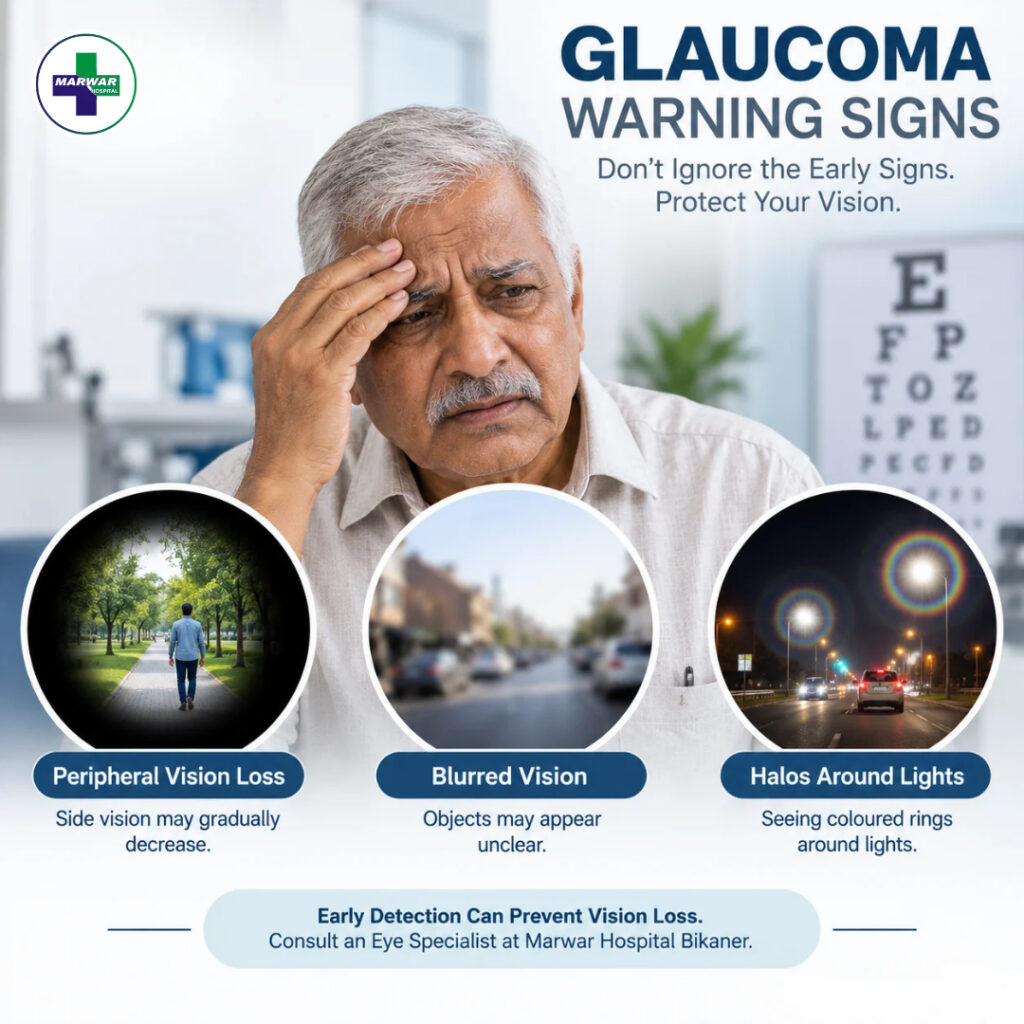
Over time, peripheral or side vision may begin to deteriorate. As glaucoma progresses, more of the visual field can be affected.
This is why waiting until you notice obvious vision problems is not the best approach. Regular comprehensive eye examinations can identify changes before significant symptoms become apparent.
Important Glaucoma Warning Signs
Although early glaucoma may have no symptoms, certain signs can occur depending on the type and stage of the disease.
1. Gradual Loss of Peripheral Vision
One of the important signs of advanced glaucoma is a gradual reduction in side vision.
A person may still see clearly when looking straight ahead but have increasing difficulty noticing objects outside their central field of vision. This can sometimes affect activities such as walking, navigating crowded areas or driving.
Because the change can happen slowly, many people may not recognise it themselves.
2. Difficulty Adjusting to Dark Areas
Some people with glaucoma may experience difficulties with vision in low-light environments. Moving from a bright room into a darker area may feel more challenging.
However, difficulty seeing in the dark can have many causes, so it should not automatically be considered a sign of glaucoma. An eye examination can help identify the underlying cause.
3. Eye Pain or Severe Headache
Certain forms of glaucoma, particularly angle-closure glaucoma, can develop suddenly and cause significant symptoms.
Possible symptoms include severe eye pain, headache, blurred vision, nausea or vomiting and seeing halos around lights. This can be an eye emergency and requires immediate medical attention.
4. Blurred Vision
Blurred vision may occur with glaucoma, particularly in more advanced or acute cases. However, blurred vision is a common symptom of many eye conditions, including cataracts and refractive errors.
If your vision becomes persistently blurred or changes unexpectedly, a comprehensive eye examination is recommended.
5. Halos Around Lights
Seeing coloured rings or halos around lights can occur during an acute glaucoma attack, particularly when accompanied by severe eye pain, redness, headache, nausea or blurred vision.
If these symptoms develop suddenly, do not wait for them to disappear on their own. Seek urgent medical care.
6. Redness of the Eye
Eye redness can have many causes, including allergies, infection, dryness and irritation. In some cases of acute angle-closure glaucoma, the eye may become red and painful.
Redness accompanied by severe eye pain, blurred vision, halos, headache, nausea or vomiting requires urgent evaluation.
7. Nausea and Vomiting
Sudden glaucoma attacks can cause nausea and vomiting because of the rapid increase in eye pressure and severe pain.
This combination of symptoms should not be ignored, particularly when it occurs together with eye pain and visual changes.
Who Is at Higher Risk of Glaucoma?
Glaucoma can affect anyone, but some people have a higher risk.
Risk factors may include:
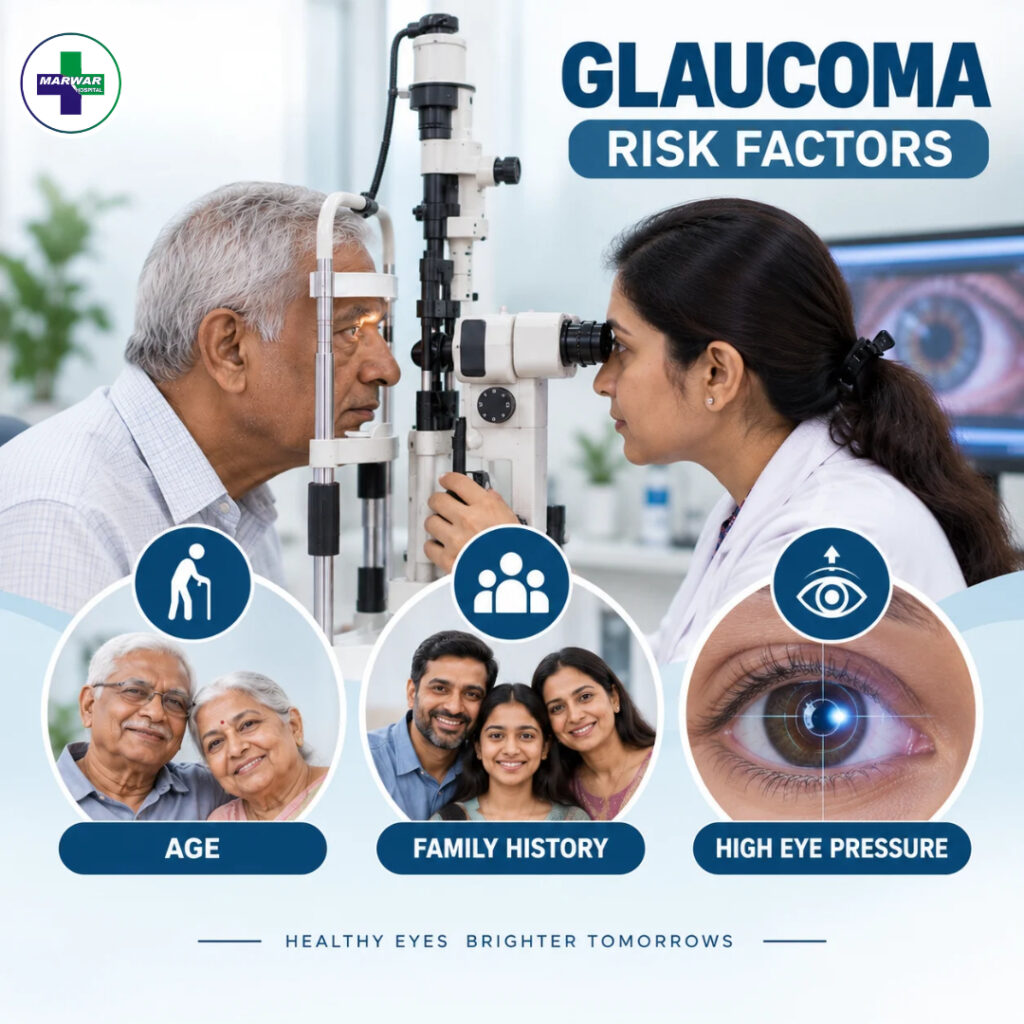
- Increasing age
- Family history of glaucoma
- High eye pressure
- Previous eye injury
- Certain medical conditions
- Certain medications, particularly prolonged corticosteroid use
- Severe short-sightedness or other refractive factors
- Previous eye surgery or other eye conditions
Having one or more risk factors does not mean that someone will definitely develop glaucoma. However, it can make regular eye examinations particularly important.
Does High Eye Pressure Always Mean Glaucoma?
Not necessarily.
Some people have ocular hypertension, meaning their eye pressure is higher than the usual range but they do not have optic nerve damage or corresponding visual field loss. Conversely, some people can develop glaucoma even when their measured eye pressure is not particularly high.
Therefore, a glaucoma evaluation typically involves more than simply checking eye pressure.
An ophthalmologist may assess the optic nerve, visual field, drainage angle, corneal thickness and other factors when determining whether glaucoma is present and how it should be managed.
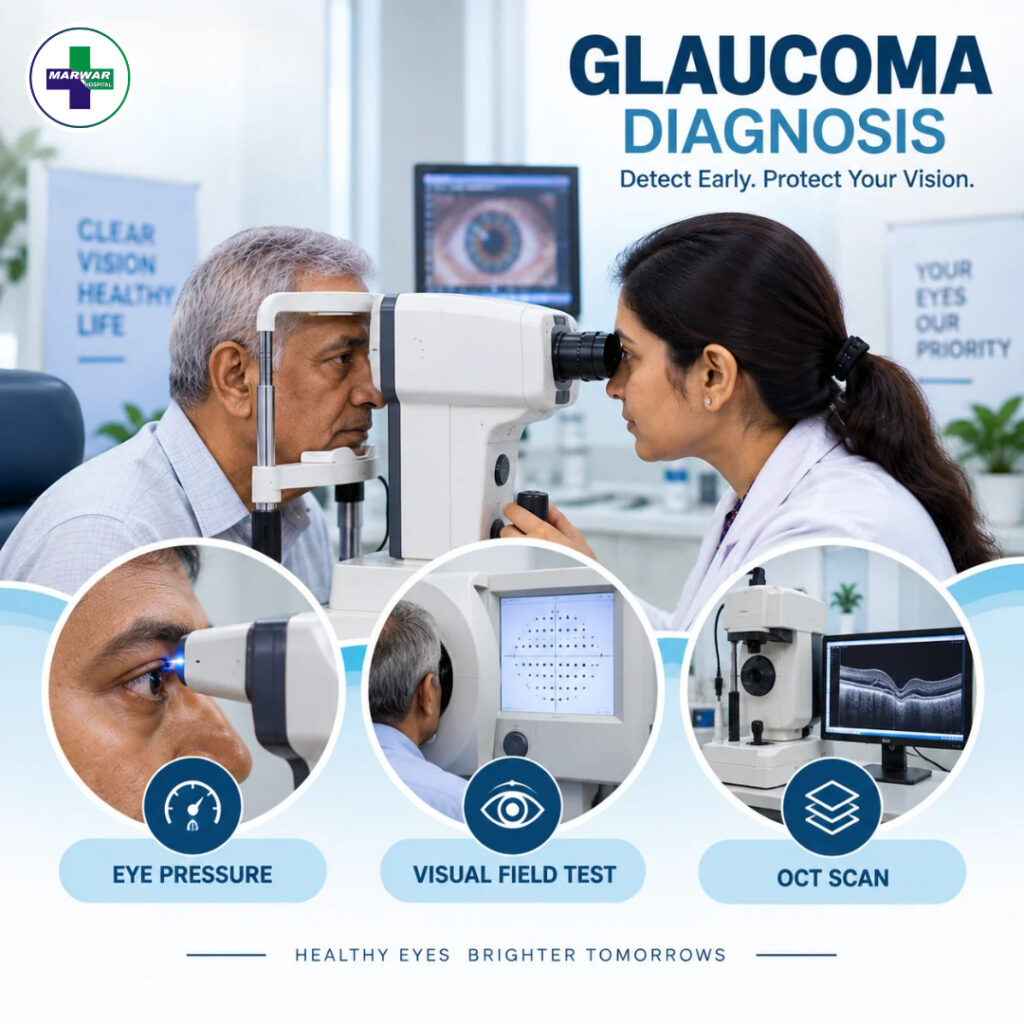
How Is Glaucoma Diagnosed?
A comprehensive eye examination is one of the most important tools for detecting glaucoma.
Depending on the individual patient, an ophthalmologist may perform several tests.
Eye Pressure Measurement
Tonometry measures the pressure inside the eye. It is an important part of glaucoma evaluation, but it cannot independently confirm or exclude glaucoma.
Optic Nerve Examination
The doctor examines the optic nerve for signs of damage. Changes in the optic nerve can provide important clues about glaucoma.
Visual Field Test
A visual field test evaluates how well a person can see objects in different areas of their field of vision. It can help identify areas of vision loss that the patient may not have noticed.
Gonioscopy
Gonioscopy allows the ophthalmologist to examine the drainage angle of the eye. This can help determine whether the angle is open or narrow and can assist in distinguishing different types of glaucoma.
Optical Coherence Tomography (OCT)
OCT uses light waves to create detailed images of structures within the eye. It can help doctors assess the optic nerve and retinal nerve fibre layer for changes associated with glaucoma.
The specific tests required depend on the patient’s symptoms, risk factors and clinical findings.
Different Types of Glaucoma
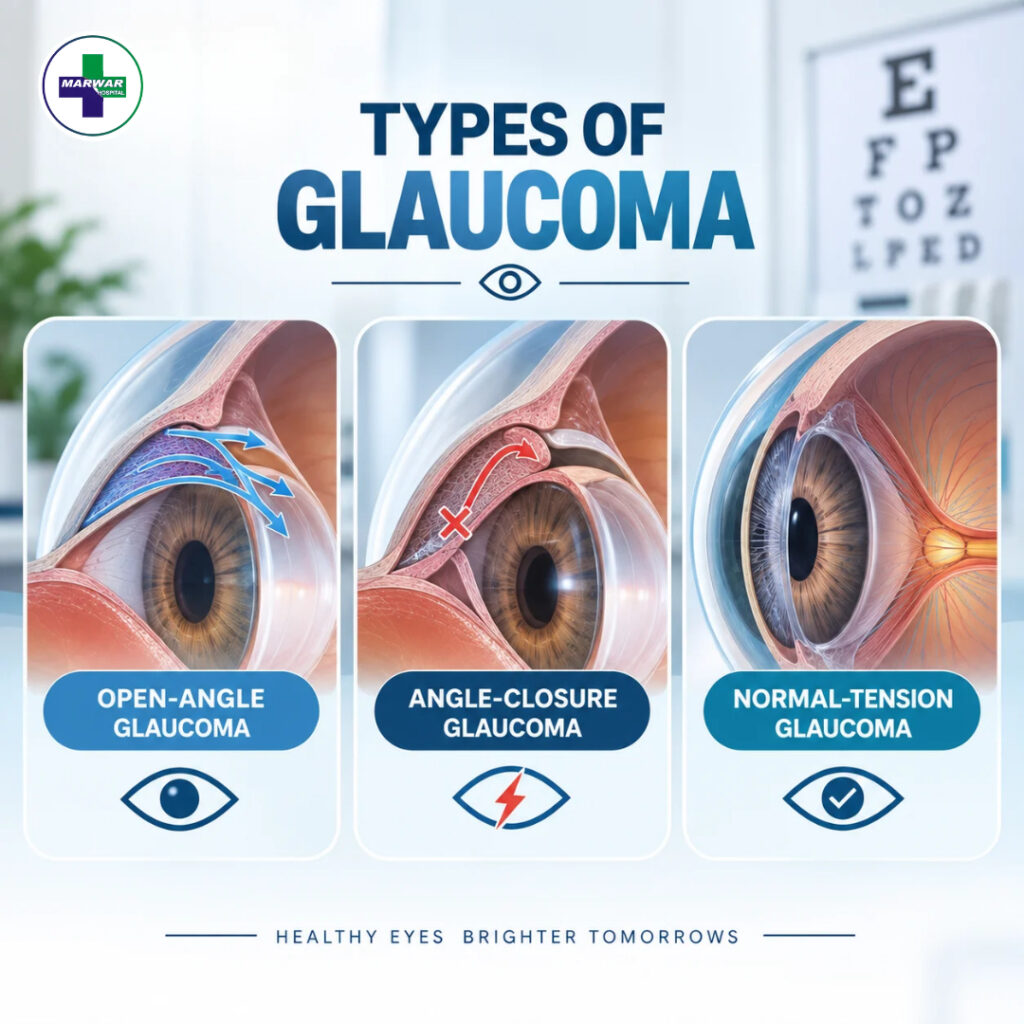
Glaucoma is not a single disease. There are several types, and their symptoms can differ.
Open-Angle Glaucoma
This is the most common form of glaucoma. It usually develops gradually and may not cause noticeable symptoms during its early stages.
Vision loss often begins in the peripheral field and may progress over time.
Angle-Closure Glaucoma
Angle-closure glaucoma can occur when the drainage angle becomes blocked. If the pressure rises rapidly, it can cause severe symptoms such as intense eye pain, headache, blurred vision, halos around lights, nausea and vomiting.
Acute angle-closure glaucoma is an emergency and requires immediate treatment.
Normal-Tension Glaucoma
In normal-tension glaucoma, optic nerve damage can occur even though measured eye pressure is within the normal range.
This highlights why a comprehensive eye examination is important rather than relying only on an eye-pressure reading.
Childhood Glaucoma
Glaucoma can occasionally affect infants and children. Symptoms can vary according to age and may include excessive tearing, light sensitivity, enlarged eyes or cloudy-looking eyes.
Children with concerning eye symptoms should be evaluated promptly by an appropriate eye-care specialist.
Glaucoma Treatment Options
The goal of glaucoma treatment is generally to prevent or slow further optic nerve damage. Treatment cannot usually restore vision that has already been permanently lost due to glaucoma.
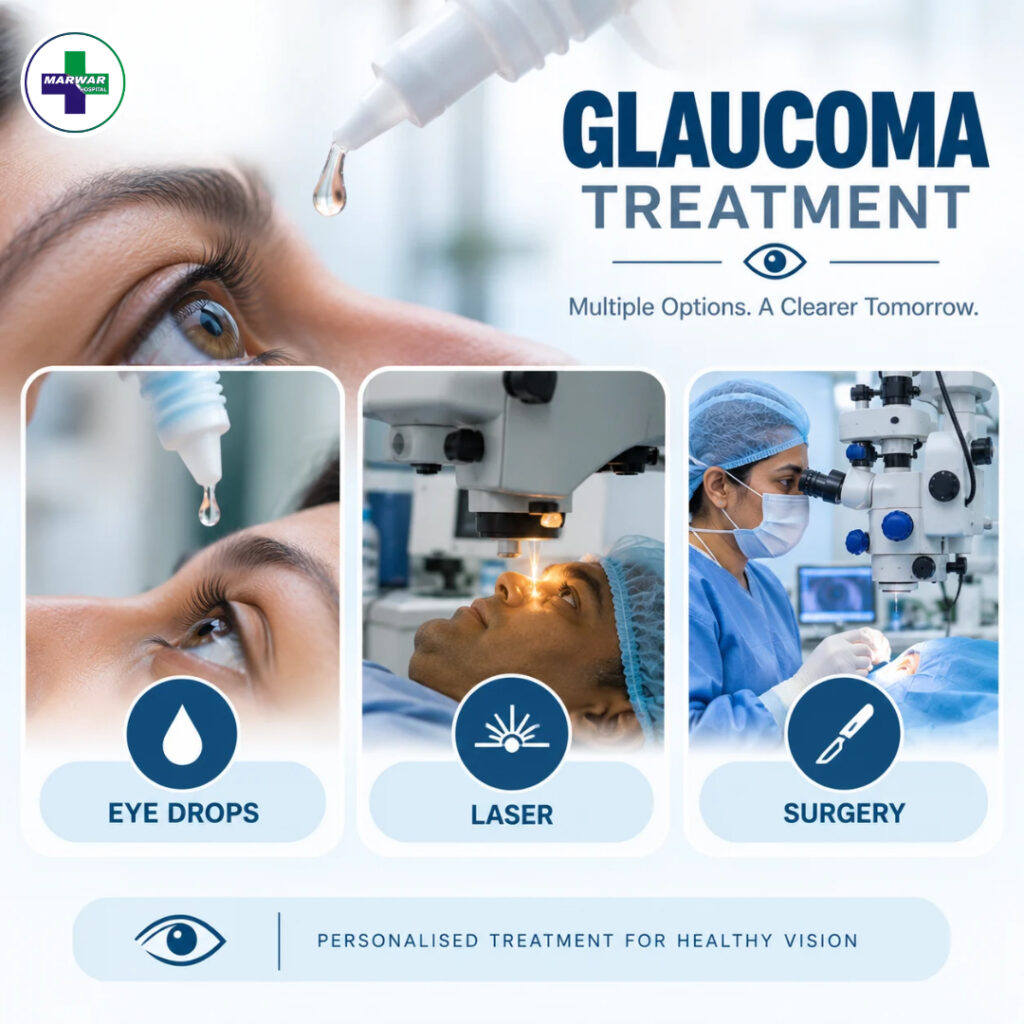
Depending on the type and severity of glaucoma, treatment may include eye drops, laser treatment or surgery.
1. Prescription Eye Drops
Eye drops are commonly used to lower eye pressure. Different medications work in different ways—for example, by reducing fluid production inside the eye or improving fluid drainage.
Patients should use glaucoma medication exactly as prescribed. Stopping treatment without medical advice can allow eye pressure to rise and may increase the risk of further damage.
2. Laser Treatment
Laser procedures can be used in selected patients to improve fluid drainage or reduce eye pressure.
The type of laser treatment depends on the type of glaucoma and the patient’s individual eye anatomy.
3. Glaucoma Surgery
If medications or laser treatment are not sufficient to control eye pressure, surgery may be recommended.
Procedures such as trabeculectomy, glaucoma drainage devices or other surgical techniques may be considered depending on the patient’s condition.
The ophthalmologist will determine the most appropriate treatment based on the severity and type of glaucoma.
Can Glaucoma Be Prevented?
There is currently no guaranteed way to prevent every case of glaucoma. However, early detection is one of the most important ways to protect vision.
Regular comprehensive eye examinations can identify glaucoma before noticeable symptoms appear.
People who have a family history of glaucoma or other risk factors may require more frequent examinations. Your ophthalmologist can recommend an appropriate screening schedule based on your age, risk profile and eye health.
Protecting your eyes from injury, managing existing health conditions and following prescribed eye treatments can also contribute to overall eye health.
Why Regular Eye Check-Ups Matter
One of the biggest misconceptions about glaucoma is that normal vision means everything is fine.
Unfortunately, glaucoma can progress without obvious symptoms. By the time a person notices substantial peripheral vision loss, optic nerve damage may already have occurred.
Regular eye examinations allow doctors to compare findings over time and identify subtle changes in eye pressure, optic nerve appearance or visual fields.
This is particularly important for people with a family history of glaucoma.
When Should You Seek Emergency Eye Care?
Certain symptoms require immediate medical attention.
Seek urgent eye care if you suddenly develop:
- Severe eye pain
- Sudden blurred vision
- Red eye accompanied by significant pain
- Halos around lights
- Severe headache associated with eye symptoms
- Nausea or vomiting along with eye pain or visual changes
These symptoms may indicate acute angle-closure glaucoma or another serious eye condition and should not be ignored.
Glaucoma Care at Marwar Hospital Bikaner
If you are experiencing changes in vision or have concerns about glaucoma, consulting an experienced ophthalmologist can help identify the cause and determine the appropriate next steps.
At Marwar Hospital Bikaner, patients can seek evaluation for glaucoma and other eye-related concerns. A comprehensive assessment can help identify eye pressure abnormalities, optic nerve changes and visual field problems and guide the doctor in recommending suitable treatment.
Whether you are experiencing symptoms or simply have a higher risk because of age or family history, regular eye examinations can play an important role in protecting your vision.
Learn more about our expert ophthalmologist care services here.
Conclusion
Glaucoma is a serious eye condition that can cause permanent vision loss, but early detection and appropriate management can help protect remaining vision. The condition can be difficult to detect in its early stages because many people experience little or no noticeable symptoms.
Warning signs such as gradual peripheral vision loss, blurred vision, halos, eye redness and severe eye pain should be taken seriously. Sudden severe symptoms—especially intense eye pain, blurred vision, halos, headache, nausea or vomiting—require immediate medical attention.
If you are looking for glaucoma treatment in Bikaner, do not wait until your eyesight is significantly affected. Regular eye check-ups and timely consultation with an ophthalmologist can help detect glaucoma at an earlier stage and allow appropriate management.
📍 For immediate assistance, get directions to our hospital on Google Maps. Location: Main Road, Sadul Colony, Bikaner, Rajasthan – 334001.
📞 For expert advice and appointments, contact our hospital today. 2207714, 2208814, 2209914
Protect your vision today—regular eye examinations can make a difference.
Marwar Hospital Bikaner is committed to providing comprehensive healthcare and helping patients receive timely evaluation and appropriate treatment for their eye-health concerns.
Early glaucoma may cause no noticeable symptoms. As the condition progresses, warning signs can include gradual loss of peripheral vision, blurred vision, difficulty seeing in low light, and halos around lights
No high eye pressure does not always mean that a person has glaucoma, and glaucoma can sometimes develop even when eye pressure is within the normal range. A comprehensive eye examination is needed for proper evaluation.
Glaucoma may be diagnosed through a combination of tests, including eye pressure measurement, optic nerve examination, visual field testing, gonioscopy, and OCT. The tests required depend on the patient’s individual condition and risk factors.
Glaucoma treatment may include prescription eye drops, laser procedures, or surgery, depending on the type and severity of the condition. Treatment aims to control the condition and help prevent further optic nerve damage.
Patients looking for glaucoma treatment in Bikaner can consult the Eye Department at Marwar Hospital Bikaner for glaucoma evaluation, diagnostic testing, and appropriate treatment guidance from an ophthalmologist.