
Healthy eyesight is an important part of a child’s growth, learning, communication, and overall development. Children use their vision to read books, recognize faces, participate in sports, understand classroom activities, and explore the world around them. When a child has an undetected vision problem, it may affect school performance, confidence, concentration, and normal visual development.
One of the challenges with children’s eye health is that young children may not realize that their vision is different from normal. They may simply assume that the way they see the world is normal. This is why parents and caregivers should pay attention to changes in a child’s visual behavior and ensure that appropriate vision screening and eye examinations are carried out when required.
Routine childhood vision screening can help identify problems such as refractive errors, amblyopia, and eye misalignment at an early stage. Early identification is particularly important because the visual system continues developing during childhood, and some conditions can be managed more effectively when detected early.
For families looking for professional eye care in Bikaner, Marwar Hospital provides eye-care services for patients of different age groups, including children.
Why Is Eye Health Important for Children?
Good vision supports almost every aspect of a child’s daily life. Children depend on their eyes for learning, coordination, movement, and social interaction.
A child with an uncorrected vision problem may struggle to see the classroom board, read small text, focus on schoolwork, or participate comfortably in outdoor activities. In some cases, children may not complain about blurred vision because they have never experienced clear vision.
Early identification of an eye problem can provide an opportunity for appropriate correction or treatment before the condition has a greater impact on the child’s development.
Common Eye Problems in Children
Children can develop several types of eye and vision problems. Some may be present from birth, while others become noticeable as the child grows.
1. Refractive Errors
Refractive errors are one of the most frequent vision-related issues affecting children, potentially making it difficult for them to see clearly. They occur when light does not focus correctly on the retina, resulting in unclear vision.
Common types include:
- Myopia: Difficulty seeing distant objects clearly
- Hyperopia: Difficulty focusing on nearby objects
- Astigmatism: Blurred or distorted vision due to an irregular shape of the cornea or lens
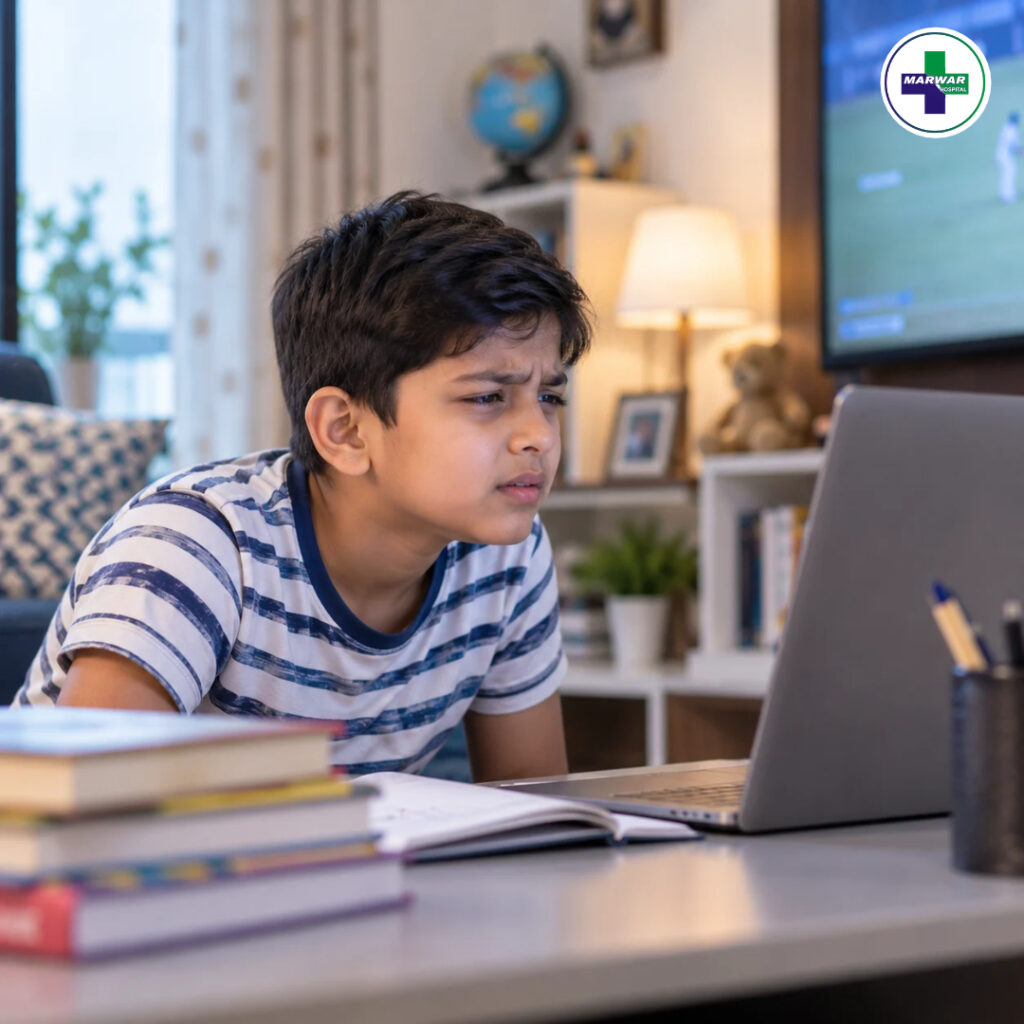
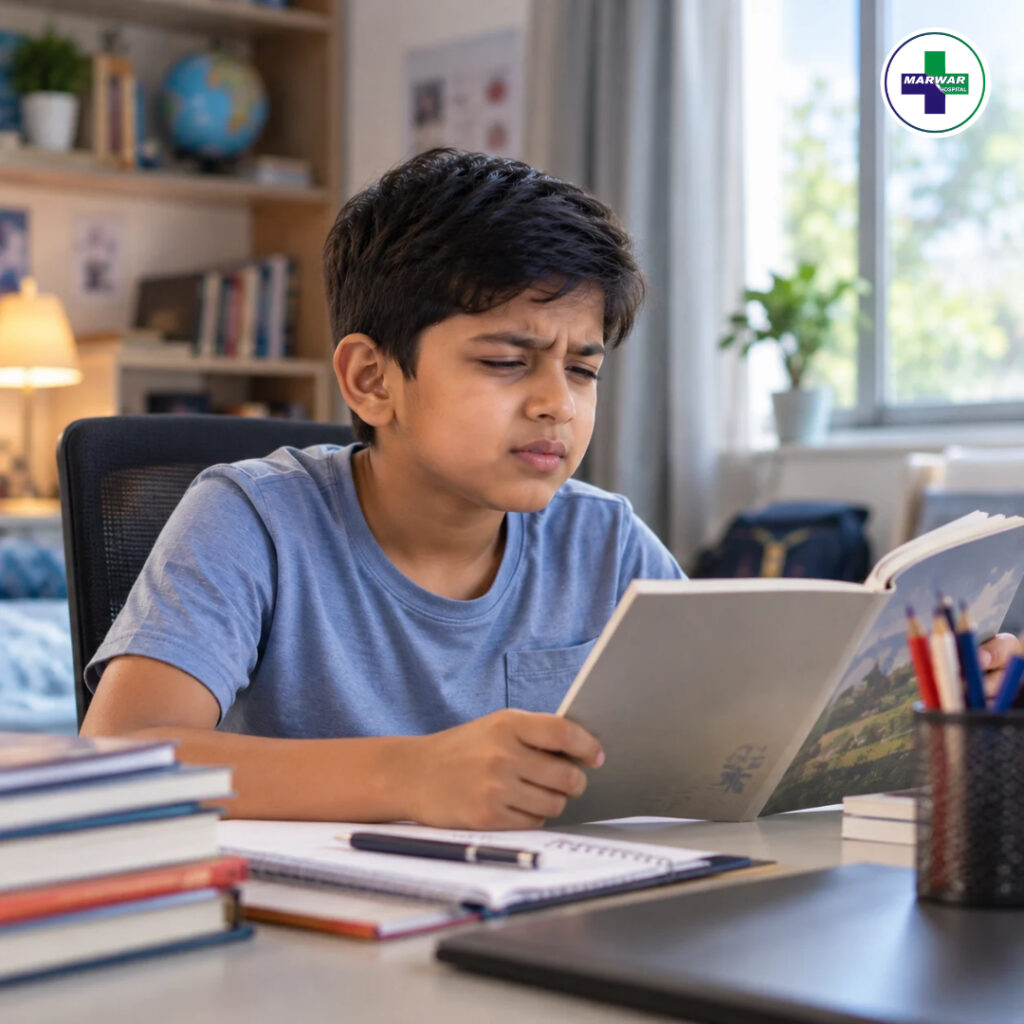
A child with an uncorrected refractive error may squint, sit close to the television, hold books unusually close, or complain about headaches after reading.
Depending on the child’s age and eye condition, corrective spectacles or other appropriate treatment may be recommended by an eye specialist.
2. Amblyopia or Lazy Eye
Amblyopia, or lazy eye, develops when normal vision fails to properly develop in one or both eyes during childhood. It may be associated with conditions such as significant differences in the prescription between the two eyes, squint, or anything that prevents a clear image from reaching the retina. If identified during childhood, the underlying cause can often be addressed and treatment may include measures such as correcting the refractive error or patching the stronger eye when medically recommended.
Because children may not realize that one eye is seeing less clearly than the other, routine screening can be valuable.
3. Squint or Strabismus
Strabismus, commonly called squint, is an eye condition in which the eyes fail to stay properly aligned and point in different directions. One eye may shift inward, outward, upward, or downward, while the other eye remains focused in a straight direction.
Parents may notice that the child’s eyes do not appear to work together or that the child frequently tilts or turns the head while looking at objects.
Squint is more than a cosmetic concern, as it can sometimes affect vision and the normal development of the eyes. Depending on the cause, it may affect the development of normal vision.
Treatment varies according to the child’s age, type of squint, and underlying condition. It may include spectacles, other vision-related treatment, or surgery in selected cases.
Marwar Hospital’s Eye Department lists treatment for misaligned or crossed eyes and squint correction among its services.
4. Childhood Eye Allergies
Children may develop eye allergies after exposure to dust, pollen, environmental allergens, or other irritants.
Typical symptoms may include:
- Itchy eyes
- Redness
- Watering
- Swelling around the eyes
- Burning or irritation
- Increased sensitivity to environmental triggers
Parents should discourage children from repeatedly rubbing their eyes. If symptoms are persistent or severe, professional evaluation can help determine whether the problem is an allergy or another eye condition.
5. Eye Infections
Children can develop eye infections that cause redness, watering, discharge, swelling, or discomfort.
Because different infections and inflammatory conditions can produce similar symptoms, parents should avoid automatically using leftover or previously prescribed eye medicines.
If a child develops significant redness, discharge, pain, swelling, or changes in vision, an eye specialist should assess the condition.
6. Childhood Myopia
Myopia, or short-sightedness, is an increasingly important vision concern among children. A myopic child can usually see nearby objects more clearly than distant objects.
Parents may notice that the child:
- Squints when looking at distant objects
- Sits close to the television
- Moves closer to the classroom board
- Has difficulty reading information from a distance
- Complains about headaches or eye strain
- Avoids activities that require clear distance vision
Regular vision screening and professional assessment can help identify myopia and determine whether corrective lenses or additional management is appropriate. The American Academy of Ophthalmology recognizes childhood myopia as an important vision-health concern and supports periodic screening and targeted evaluation of children at risk of progression.
Warning Signs Parents Should Watch For
Children may not always recognize or communicate that they are experiencing difficulties with their vision. Therefore, behavioral changes can provide important clues.
Parents should consider an eye examination if their child frequently:
- Squints while looking at objects
- Sits unusually close to screens
- Holds books very close to the face
- Rubs the eyes repeatedly
- Tilts the head while looking
- Covers one eye to see better
- Frequently complains of headaches
- Has difficulty reading
- Loses concentration during visually demanding activities
- Struggles to see the classroom board
- Avoids drawing, reading, or other visual tasks
- Has eyes that appear misaligned
- Experiences unexplained changes in school performance
These signs do not necessarily mean that the child has an eye disease. However, they can be reasons to seek professional evaluation.
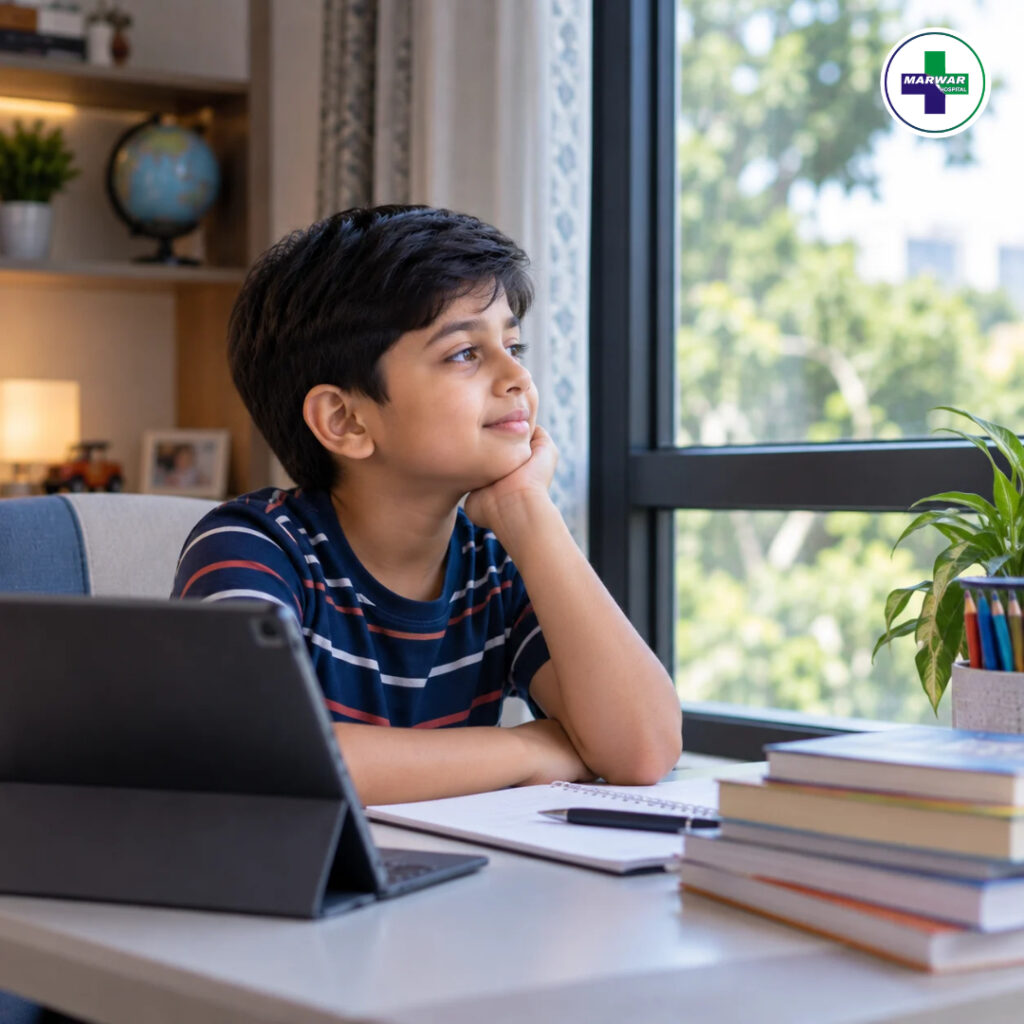
Why Vision Screening Is Important
Vision screening is designed to identify children who may have a vision problem and require further assessment.
Screening can help identify potential problems involving:
- Visual acuity
- Refractive errors
- Eye alignment
- Amblyopia risk
- Other abnormalities affecting vision
Professional organizations recommend vision assessment at different stages of childhood rather than waiting until a child develops obvious symptoms.
A child who does not pass a screening may need a more detailed examination by an ophthalmologist.
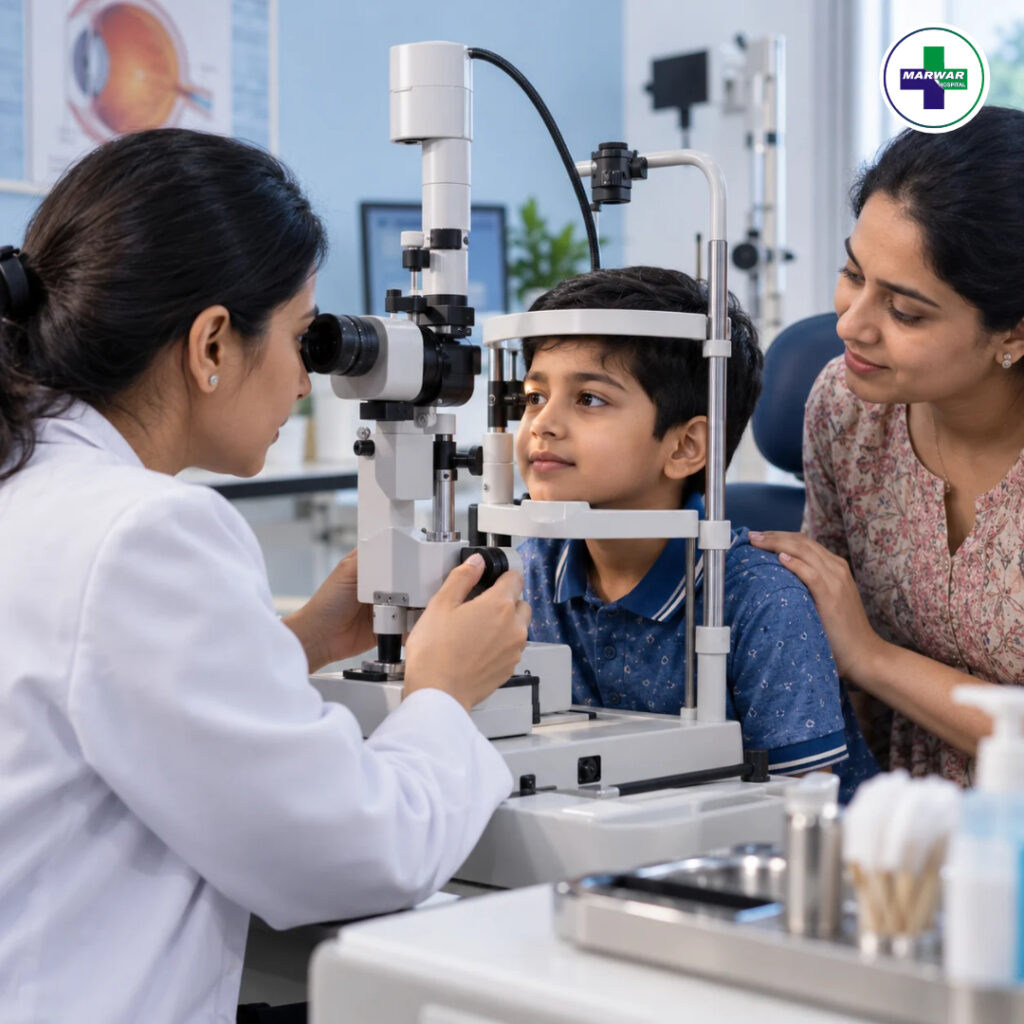
What Happens During a Child’s Eye Examination?
The exact examination depends on the child’s age and symptoms.
An eye specialist may evaluate:
Visual Acuity
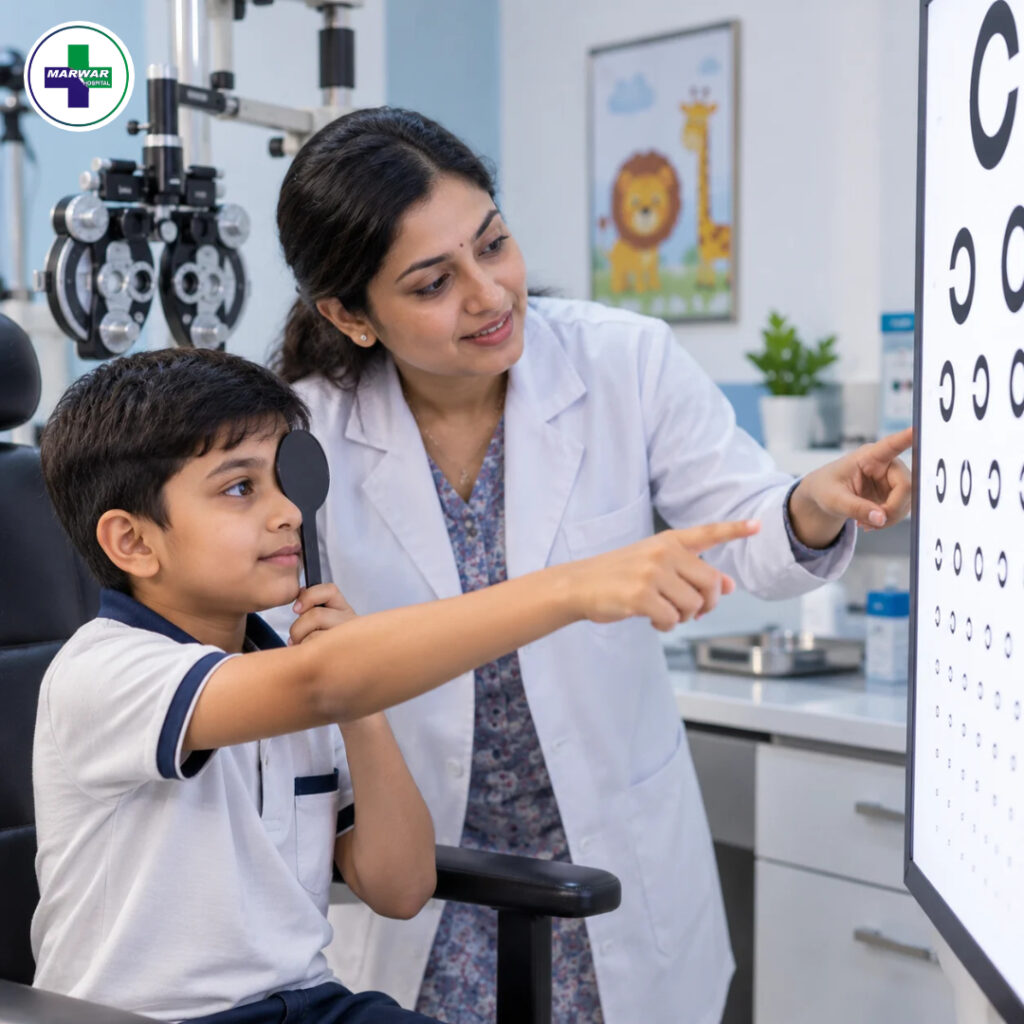
The doctor checks how clearly the child can see objects at a particular distance. The method used can be adjusted according to the child’s age and ability to understand instructions.
Refraction
Refraction helps determine whether the child has a refractive error and whether spectacles may be required.
Eye Alignment
The specialist checks whether both eyes are properly aligned and working together.
Eye Movement
The doctor may observe how the child’s eyes move in different directions to identify possible abnormalities.
Internal Eye Examination
Depending on the child’s symptoms and clinical findings, the doctor may examine internal structures of the eyes using appropriate instruments.
Additional tests may be recommended if a specific eye condition is suspected.
Children’s Eye Health and Screen Time
Digital devices are now a regular part of children’s education and entertainment. While screens can be useful, children may spend long periods focusing on nearby objects without taking adequate breaks.
Parents can encourage healthier visual habits by:
- Encouraging regular breaks from screens
- Avoiding unnecessarily long uninterrupted screen sessions
- Encouraging children to spend time outdoors
- Maintaining a comfortable viewing distance
- Ensuring appropriate lighting while reading or studying
- Encouraging regular blinking during screen activities
If a child develops persistent eye strain, headaches, blurred vision, or other visual symptoms, an eye examination may be appropriate.
How Can Parents Protect Their Child’s Eyes?
Eye health is influenced by both medical care and everyday habits.
1. Encourage Outdoor Activities
Children should have opportunities to spend time outdoors and participate in age-appropriate physical activities. Outdoor time can also be part of a healthy lifestyle for children at risk of myopia.
2. Provide a Well-Lit Study Area
Children should study in an environment with adequate lighting. Poor lighting may make reading uncomfortable and contribute to visual fatigue.
3. Teach Children Not to Rub Their Eyes
Children often rub their eyes when they are tired or itchy. Frequent rubbing can increase irritation and may be particularly undesirable in children with allergies or other eye problems.
4. Encourage Good Hygiene
Children should wash their hands regularly and avoid touching their eyes with dirty hands. Personal towels and other hygiene items should not be shared when an eye infection is suspected.
5. Use Protective Eyewear When Appropriate
Children participating in activities where there is a risk of eye injury should use suitable protective equipment recommended for that activity.
6. Make Eye Checkups Part of Preventive Care
Parents should not wait for a child to complain about poor vision. Age-appropriate screening and evaluation can help detect problems that may otherwise go unnoticed.
When Does a Child Need Immediate Eye Care?
Some symptoms require prompt medical attention.
Parents should seek urgent professional evaluation if a child experiences:
- Sudden loss or major reduction of vision
- Severe eye pain
- Significant eye injury
- Chemical exposure to the eye
- Sudden double vision
- Severe swelling
- Sudden unusual changes in the appearance of the eye
- Flashes or a sudden increase in floaters
- Severe redness accompanied by pain or vision changes
In case of chemical exposure or serious injury, immediate medical attention is particularly important.
Children’s Eye Care at Marwar Hospital Bikaner
Choosing an appropriate healthcare facility is an important part of managing a child’s eye health. Marwar Hospital Bikaner has a dedicated Eye Department that provides eye-care services for patients of different ages.
The hospital specifically lists eye care for children, treatment for misalignment or crossed eyes, and squint correction among its eye services. Its Eye Department also lists glaucoma investigations and treatment and other ophthalmic procedures.
For parents concerned about their child’s eyesight, a professional eye evaluation can help determine whether the child needs spectacles, monitoring, further diagnostic assessment, or specific treatment.
Frequently Asked Questions About Children’s Eye Health
At what age should a child have an eye checkup?
Vision screening is recommended at different stages of childhood. The appropriate schedule depends on the child’s age, risk factors, symptoms, and healthcare guidance. Children with suspected vision problems should be evaluated promptly rather than waiting for a routine screening.
How can I tell if my child has weak eyesight?
Watch for signs such as squinting, sitting close to screens, holding books very close, headaches, difficulty seeing distant objects, covering one eye, or struggling with visually demanding schoolwork.
Is squint normal in children?
Some eye alignment changes may occur during early infancy, but persistent or noticeable eye misalignment should be evaluated by an eye specialist. Early assessment is important because untreated misalignment can be associated with abnormal visual development.
Can children develop myopia?
Yes. Myopia can develop during childhood. Regular vision screening can help identify it, particularly when parents notice difficulty seeing distant objects.
Should children wear spectacles if prescribed?
If an eye specialist prescribes spectacles, parents should encourage the child to use them according to the doctor’s instructions. Correcting a child’s vision can support clear visual development and everyday activities.
Conclusion
Children’s eye health deserves attention from the earliest stages of life. Good vision supports learning, physical coordination, communication, and a child’s ability to interact confidently with the world.
Problems such as refractive errors, myopia, amblyopia, squint, allergies, and eye infections can affect children in different ways. Because children may not always recognize or communicate vision problems, parents should pay attention to behavioral signs and follow age-appropriate vision screening recommendations.
Simple habits such as encouraging outdoor activities, taking breaks from screens, maintaining good eye hygiene, providing adequate study lighting, and protecting the eyes during potentially risky activities can contribute to better eye health.
Most importantly, parents should not ignore persistent changes in a child’s vision or eye behavior. Early professional assessment can help identify problems and guide appropriate treatment when necessary.
For families seeking children’s eye care in Bikaner, Marwar Hospital provides dedicated eye-care services that include children’s eye care, squint correction, and treatment for misaligned or crossed eyes.
If you notice unusual eye movements, difficulty seeing, frequent squinting, persistent redness, or other changes in your child’s eyes, consult a qualified eye specialist for an appropriate evaluation.
📍 For immediate assistance, get directions to our hospital on Google Maps. Location: Main Road, Sadul Colony, Bikaner, Rajasthan – 334001.
📞 For expert advice and appointments, contact our hospital today. 2207714, 2208814, 2209914
Common eye problems in children include refractive errors, myopia, hyperopia, astigmatism, amblyopia or lazy eye, squint or strabismus, eye allergies, and eye infections.
Signs of a vision problem may include squinting, sitting close to screens, holding books close to the face, frequent eye rubbing, headaches, covering one eye, tilting the head, or difficulty seeing the classroom board.
Children should have age-appropriate vision screening as part of preventive healthcare. The timing and frequency depend on the child’s age, risk factors, symptoms, and healthcare recommendations. Children with suspected vision problems should be evaluated promptly.
Yes. Children can develop myopia, which causes difficulty seeing distant objects, as well as squint or strabismus, where the eyes are not properly aligned. Early examination can help identify these conditions and determine appropriate treatment.
Families looking for children’s eye care in Bikaner can consult the Eye Department at Marwar Hospital Bikaner, which lists children’s eye care, squint correction, and treatment for misaligned or crossed eyes among its eye-care services.