


In today’s digital world, our eyes are constantly working—whether we are looking at computers, smartphones, tablets, televisions or reading for long periods. Spending extended hours focusing on nearby objects can leave the eyes feeling tired, dry and uncomfortable. This condition is commonly referred to as eye strain or digital eye strain.
Eye strain is usually temporary and often improves after resting the eyes. However, frequent or persistent symptoms should not be ignored because they may sometimes be associated with an underlying vision problem, dry eyes or an unsuitable working environment.
For people searching for eye care in Bikaner, understanding the common causes of eye strain and adopting simple preventive habits can help maintain better visual comfort. Marwar Hospital Bikaner provides healthcare services and professional evaluation for patients experiencing various eye-related concerns.
What Is Eye Strain?
Eye strain occurs when the eyes become tired or uncomfortable after prolonged visual activities. It can happen after reading, driving, using digital devices, working on detailed tasks or concentrating on an object for an extended period.
Digital eye strain, sometimes called computer vision syndrome, is particularly common among people who spend several hours each day using computers and other digital screens.
Eye strain does not necessarily indicate permanent damage to the eyes. However, recurring discomfort may affect concentration, productivity and overall quality of life.
Common symptoms can include:
- Tired or sore eyes
- Dryness or excessive watering
- Burning or irritation
- Blurred vision
- Headaches
- Increased sensitivity to light
- Difficulty maintaining focus
- Feeling that the eyes are heavy
- Neck or shoulder discomfort associated with prolonged screen use
The symptoms can vary from person to person and may depend on the duration and intensity of the visual activity.

Common Causes of Eye Strain
Eye strain can have several causes. Often, multiple factors contribute to the discomfort at the same time.
1. Prolonged Screen Time
Spending long periods looking at computers, smartphones, tablets or other screens is one of the most common contributors to eye strain.
When concentrating on a screen, people tend to blink less frequently. Blinking helps spread tears across the surface of the eyes, so reduced blinking can contribute to dryness and irritation.
Long periods of uninterrupted screen use can also require the eyes to maintain focus continuously, which may contribute to fatigue.
2. Reading for Long Periods
Reading books, newspapers, documents or study material for extended periods can make the eyes feel tired, especially when there are few breaks.
This can be particularly noticeable among students and professionals who spend several hours reading or studying.
Maintaining a comfortable reading distance, using sufficient lighting and taking regular breaks can help reduce discomfort.
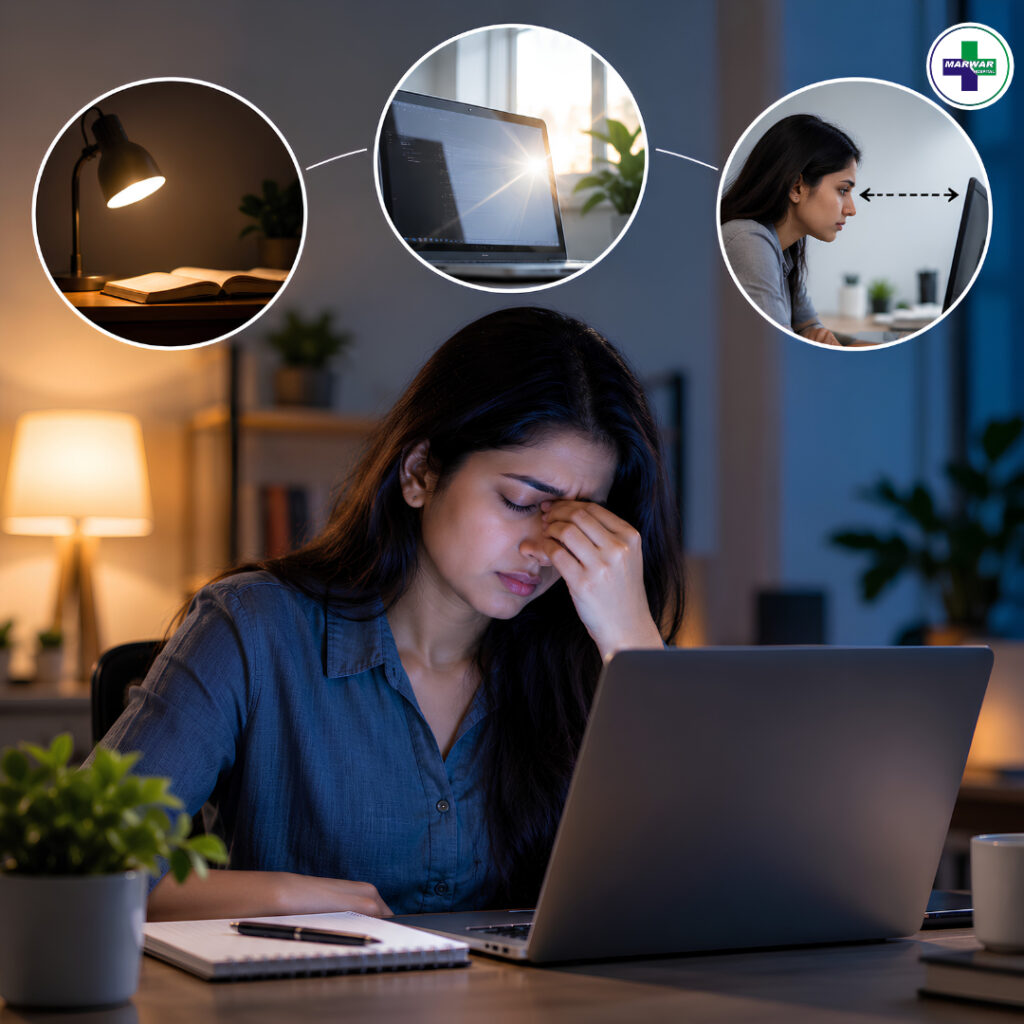
3. Poor Lighting
Working or reading in an environment that is too bright or too dark can increase visual discomfort.
Strong glare from windows, overhead lights or reflective surfaces can make it harder to see the screen clearly. On the other hand, insufficient lighting may make reading more difficult and encourage the eyes to work harder.
A comfortable, evenly lit environment is generally preferable.
4. Screen Glare
Reflections on computer and mobile screens can force the eyes to work harder to distinguish text and images.
Glare may come from windows, lamps or other light sources. Adjusting the position of the screen, reducing unnecessary reflections and using appropriate screen brightness can improve viewing comfort.
5. Incorrect Viewing Distance
Holding a phone too close to the face or sitting too close to a computer screen can contribute to visual discomfort.
Maintaining an appropriate viewing distance and positioning the screen comfortably can help reduce unnecessary visual stress.
6. Uncorrected Vision Problems
Eye strain can sometimes be related to an uncorrected or incorrectly corrected vision problem.
Short-sightedness, long-sightedness, astigmatism or difficulty focusing at close distances can cause discomfort when reading or using digital devices.
If headaches or eye discomfort occur regularly during visual tasks, an eye examination can help determine whether a change in glasses prescription or another form of correction is required.
7. Dry Eyes
Dry eyes can make prolonged screen use particularly uncomfortable.
People with dry eyes may experience:
- Burning
- Gritty sensation
- Redness
- Watering
- Blurred vision
- Eye fatigue
Digital screen use may worsen dryness because people often blink less while concentrating.
8. Long Periods of Continuous Focus
The eyes are constantly adjusting focus when we perform close-up activities. Spending hours without looking into the distance can contribute to fatigue and discomfort.
This is particularly relevant for people whose work or studies involve prolonged close-up concentration.
Common Symptoms of Eye Strain
Recognising the symptoms can help you take action before discomfort becomes more frequent.
Eye Discomfort
Your eyes may feel sore, tired, heavy or uncomfortable after prolonged visual activity.
Dryness
You may experience a dry or gritty sensation, especially after spending several hours in front of a screen.
Watery Eyes
Interestingly, dry eyes can sometimes cause excessive watering. When the eye surface becomes irritated, the eyes may produce additional tears.
Blurred Vision
Temporary blurred vision may occur after prolonged visual concentration. If blurred vision persists or frequently returns, an eye examination is recommended.
Headaches
Eye strain can sometimes contribute to headaches, particularly after prolonged reading or screen use.
Light Sensitivity
Some people may become more uncomfortable when exposed to bright light after extended screen use.
Difficulty Focusing
You may find it harder to shift focus between near and distant objects or maintain clear vision after prolonged close-up work.
Simple Prevention Tips for Eye Strain
Fortunately, several simple habits can help reduce eye strain and improve visual comfort.
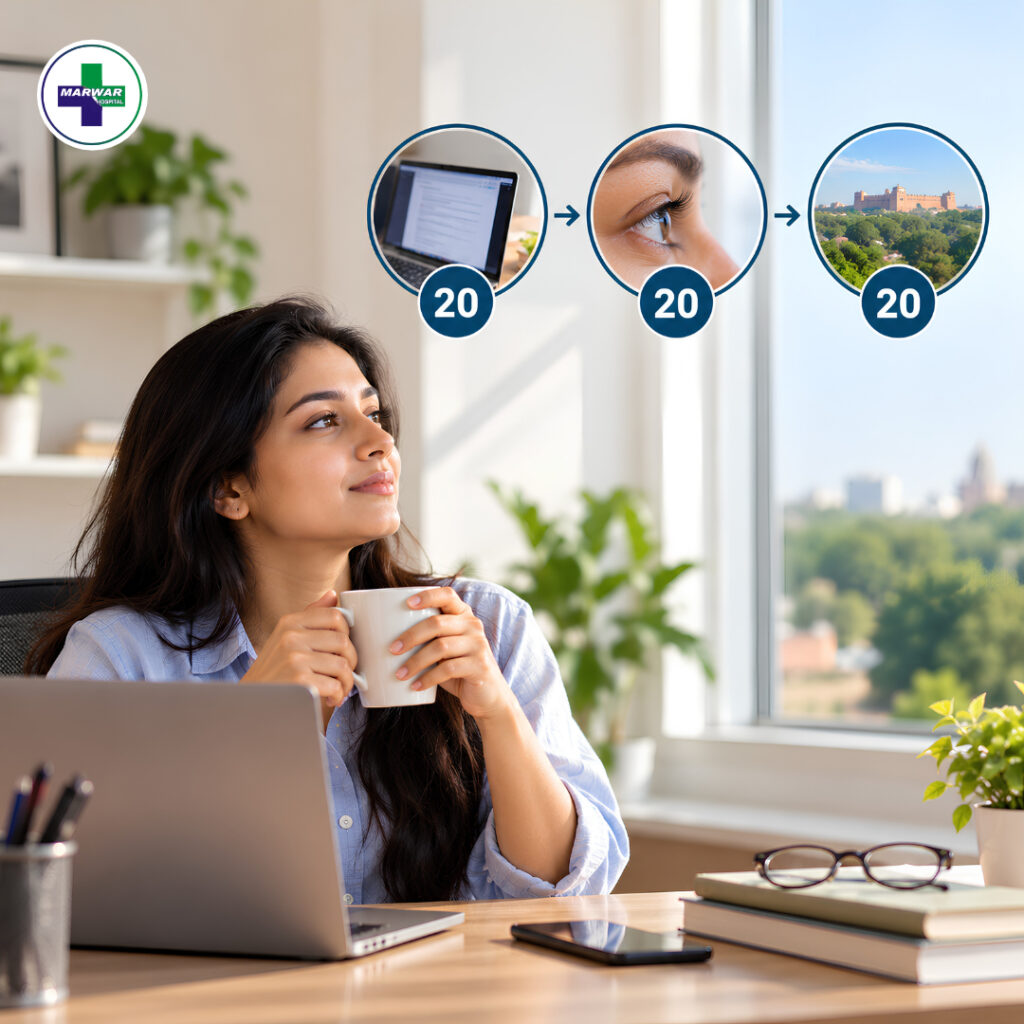
1. Follow the 20-20-20 Rule
One commonly recommended strategy for reducing digital eye strain is the 20-20-20 rule.
After approximately 20 minutes of close-up screen work, look at something around 20 feet away for about 20 seconds.
This short pause helps your eyes relax and reduces fatigue caused by prolonged close-up screen viewing.
You can also use reminders on your phone or computer if you frequently forget to take breaks.
2. Take Regular Screen Breaks
Avoid spending several hours continuously staring at a screen.
Stand up, walk around and allow your eyes to relax periodically. Even short breaks can make screen-based work more comfortable.
For people who work at computers throughout the day, incorporating regular breaks into the work routine can be especially useful.
3. Blink More Frequently
Blinking is an important part of maintaining a healthy tear film on the surface of the eye.
When concentrating on a screen, consciously reminding yourself to blink can help reduce dryness.
If your eyes frequently feel dry despite these measures, consult an eye-care professional.
4. Adjust Screen Brightness
Your screen should not appear dramatically brighter or darker than the surrounding environment.
Adjust brightness according to the room lighting and your comfort. A screen that is excessively bright in a dark room may create unnecessary discomfort.
5. Reduce Glare
Position your monitor so that windows and light sources do not directly reflect off the screen.
Anti-glare screen protectors may also be helpful in some situations.
Cleaning the screen regularly can further improve visibility by removing dust and fingerprints.
6. Maintain a Comfortable Screen Position
Position your computer monitor at a comfortable distance and slightly below eye level.
This can help reduce excessive neck movement and may make prolonged computer work more comfortable.
For smartphones and tablets, avoid holding the device extremely close to your face for long periods.
7. Improve Workplace Lighting
Your workspace should have comfortable, balanced lighting.
Avoid reading or working in complete darkness with only a bright screen illuminating your face. Similarly, avoid strong lights that create distracting reflections.
Natural light can be useful, but direct sunlight on the screen should be avoided if it creates glare.
8. Keep Your Eyes Clean and Avoid Rubbing Them
If your eyes feel irritated, avoid repeatedly rubbing them.
Frequent rubbing can increase irritation and may worsen certain eye conditions.
If you experience persistent itching, redness or discharge, consult an eye specialist rather than repeatedly rubbing your eyes.
9. Use Artificial Tears When Recommended
People with dry eyes may benefit from lubricating eye drops. However, it is better to consult an eye-care professional if dryness occurs frequently.
Your doctor can recommend an appropriate product depending on the underlying cause of your symptoms.
Avoid using medicated eye drops without professional guidance.
10. Get Your Eyes Checked Regularly
Regular eye examinations can identify vision problems that may contribute to eye strain.
If you are experiencing frequent headaches, blurred vision, difficulty reading or discomfort while using screens, an eye examination can help determine whether you need a new glasses prescription or treatment for another eye condition.
Eye Strain in Children and Teenagers
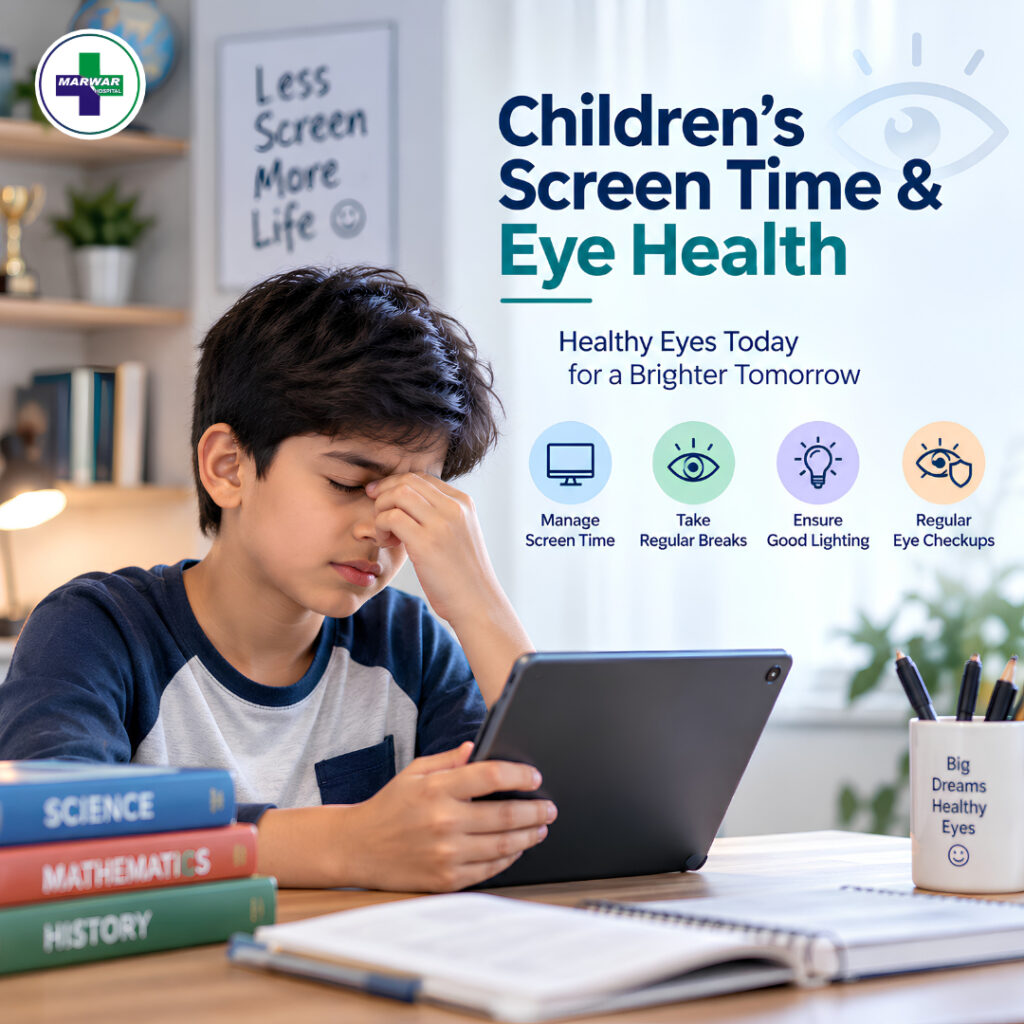
Children and teenagers are increasingly spending time on smartphones, tablets, computers and gaming devices.
Because children may not always recognise or communicate visual discomfort, parents should pay attention to changes such as:
- Frequently rubbing the eyes
- Sitting very close to screens
- Complaining of headaches
- Squinting while viewing distant objects
- Avoiding reading
- Difficulty concentrating
- Frequent blinking
- Complaining of blurred vision
Encourage children to take regular screen breaks, spend time outdoors and maintain a comfortable viewing distance.
If a child frequently complains about eye discomfort or difficulty seeing, an eye examination is advisable.
Eye Strain and Sleep
Using digital devices late at night may interfere with healthy sleep routines. Bright screens and stimulating digital activities can make it harder for some people to relax before bedtime.
Creating a screen-free period before sleep may help establish a healthier nighttime routine.
Keeping phones and tablets away from the bed can also reduce the temptation to continue using them late at night.
When Should You Visit an Eye Specialist?
Occasional eye fatigue after a long day may improve with rest. However, persistent or recurring symptoms deserve professional attention.
Consider consulting an ophthalmologist if you experience:
- Frequent headaches while reading or using screens
- Persistent blurred vision
- Repeated eye pain
- Ongoing dryness or burning
- Significant redness
- Difficulty focusing
- Double vision
- Increasing sensitivity to light
- Sudden changes in eyesight
Sudden loss of vision, severe eye pain, flashes of light, a sudden increase in floaters or a curtain-like shadow across the vision requires urgent medical evaluation.
These symptoms may indicate a serious eye problem and should not simply be attributed to eye strain.

Learn more about our expert ophthalmologist care services here.
Can Eye Strain Cause Permanent Eye Damage?
In most cases, ordinary eye strain is temporary and improves when the eyes are rested or the contributing activity is reduced.
However, persistent symptoms should not automatically be dismissed as simple eye fatigue. They can sometimes indicate dry eye disease, an incorrect glasses prescription or another underlying eye condition.
If symptoms continue despite improving your screen habits and taking regular breaks, an eye examination is a sensible next step.
Eye Care at Marwar Hospital Bikaner
Maintaining good eye health requires more than simply reducing screen time. Regular eye examinations, appropriate vision correction and timely attention to unusual symptoms can help protect your eyesight.
At Marwar Hospital Bikaner, patients can seek professional evaluation for various eye-related concerns, including persistent eye discomfort, vision changes and other symptoms affecting everyday activities.
If you spend long hours working on a computer, studying or using mobile devices and regularly experience headaches, dryness or blurred vision, consider discussing your symptoms with an eye specialist.
A timely examination can help identify whether the discomfort is related to eye strain or another condition requiring treatment.
Conclusion
Eye strain has become increasingly common as screens have become a major part of work, education and everyday life. Long periods of screen use, reduced blinking, poor lighting, glare, dry eyes and uncorrected vision problems can all contribute to discomfort.
Fortunately, simple habits can make a meaningful difference. Take regular breaks, follow the 20-20-20 rule, blink frequently, adjust screen brightness, reduce glare, maintain a comfortable viewing distance and ensure proper workplace lighting.
Regular eye examinations are equally important, especially if symptoms occur frequently or do not improve with rest.
If you are experiencing persistent eye strain, headaches, blurred vision, dryness or other changes in your eyesight, don’t ignore them. Consult an eye specialist at Marwar Hospital Bikaner for appropriate evaluation and guidance.
Give your eyes the care they deserve—small daily habits can help make screen time more comfortable and support long-term eye health.
📍 For immediate assistance, get directions to our hospital on Google Maps. Location: Main Road, Sadul Colony, Bikaner, Rajasthan – 334001.
📞 For expert advice and appointments, contact our hospital today. 2207714, 2208814, 2209914
Common causes of eye strain include prolonged screen time, reading for long periods, poor lighting, screen glare, incorrect viewing distance, dry eyes, continuous close-up focusing, and uncorrected vision problems.
Common symptoms include tired or sore eyes, dryness, burning, watery eyes, blurred vision, headaches, light sensitivity, difficulty focusing, and a feeling of heavy eyes.
You can help prevent eye strain by following the 20-20-20 rule, taking regular screen breaks, blinking frequently, reducing glare, adjusting screen brightness, maintaining a comfortable viewing distance, and using proper lighting.
You should consider an eye examination if eye strain is frequent or persistent, or if you experience recurring headaches, blurred vision, eye pain, dryness, double vision, significant redness, or difficulty focusing. Sudden vision loss or severe eye symptoms require urgent medical evaluation.
If you are looking for eye care in Bikaner, you can consult the eye-care team at Marwar Hospital Bikaner for professional evaluation of persistent eye strain, vision changes, and other eye-related concerns.