
Our eyes help us experience almost everything around us. From reading and studying to driving, working, recognizing people, and enjoying everyday moments, clear vision plays an important role in our quality of life. Despite this, many people tend to visit an eye specialist only when they notice blurred vision, pain, redness, or another obvious problem.
However, waiting for symptoms is not always the best approach to maintaining healthy eyes. Some eye conditions can develop slowly and may not cause noticeable symptoms during their early stages. Regular eye examinations can help identify vision changes and certain eye conditions at an earlier stage, when appropriate management may be possible.
An eye checkup is not simply about finding the right spectacle number. Depending on a person’s age, symptoms, medical history, and risk factors, an eye examination can provide valuable information about the overall health of the eyes.
For people looking for professional eye care in Bikaner, Marwar Hospital provides dedicated eye-care services for patients of different age groups. Its Eye Department offers services including glaucoma investigations and treatment, squint correction, children’s eye care, oculoplastic procedures, and cataract surgery.
What Is a Regular Eye Checkup?
A regular eye checkup is a professional assessment of your vision and eye health. The examination may include different tests depending on your age, symptoms, existing eye conditions, and individual risk factors.
A basic examination may assess how clearly you can see at different distances. Additional evaluation may examine eye alignment, eye pressure, the front portion of the eye, the retina, optic nerve, and other structures when medically appropriate.
The purpose of an eye examination is not only to identify whether someone needs spectacles. It can also help an eye specialist understand whether there are signs of an eye disorder or whether further testing is necessary.
Why Are Regular Eye Checkups Important?
Clear vision does not always mean healthy eyes, as some eye conditions can develop without noticeable changes in sight. . While good vision is certainly important, clear vision does not always rule out an underlying eye problem.
Some conditions can progress without obvious symptoms, particularly during their early stages. Regular professional evaluation can therefore be useful for detecting changes that may otherwise go unnoticed.
Here are some important reasons why routine eye care matters.
1. Helps Detect Vision Changes
Your eyesight can change gradually. You may not notice a small reduction in clarity because your brain can adapt to subtle changes.
An eye examination can identify whether your vision has changed and whether you may benefit from updated spectacles or another form of vision correction.
This can be especially helpful for students, professionals, drivers, and older adults who depend heavily on clear vision for daily activities.
2. Can Help Identify Eye Diseases Early
Certain eye diseases may not produce obvious symptoms at the beginning. A professional examination allows an ophthalmologist to assess different parts of the eye and identify signs that may require monitoring or treatment.
Early identification does not guarantee that a condition can be prevented, but it can provide an opportunity for timely medical evaluation and management.
3. Helps Monitor Existing Eye Conditions
People who already have an eye condition may need regular follow-up examinations.
For example, individuals receiving treatment for glaucoma may require periodic monitoring to assess the condition and response to treatment. The frequency of follow-up depends on the patient’s specific situation and the ophthalmologist’s recommendations.
Marwar Hospital’s Eye Department provides glaucoma investigations as well as glaucoma treatment and surgery.
4. Important for People With Diabetes
Diabetes can affect the blood vessels of the retina and may lead to diabetic eye disease. Importantly, diabetic retinopathy can develop before a person notices significant changes in vision.
For people with diabetes, regular eye examinations are therefore an important part of managing their overall health. Appropriate screening and follow-up should be based on medical advice and individual risk.
5. Supports Children’s Vision
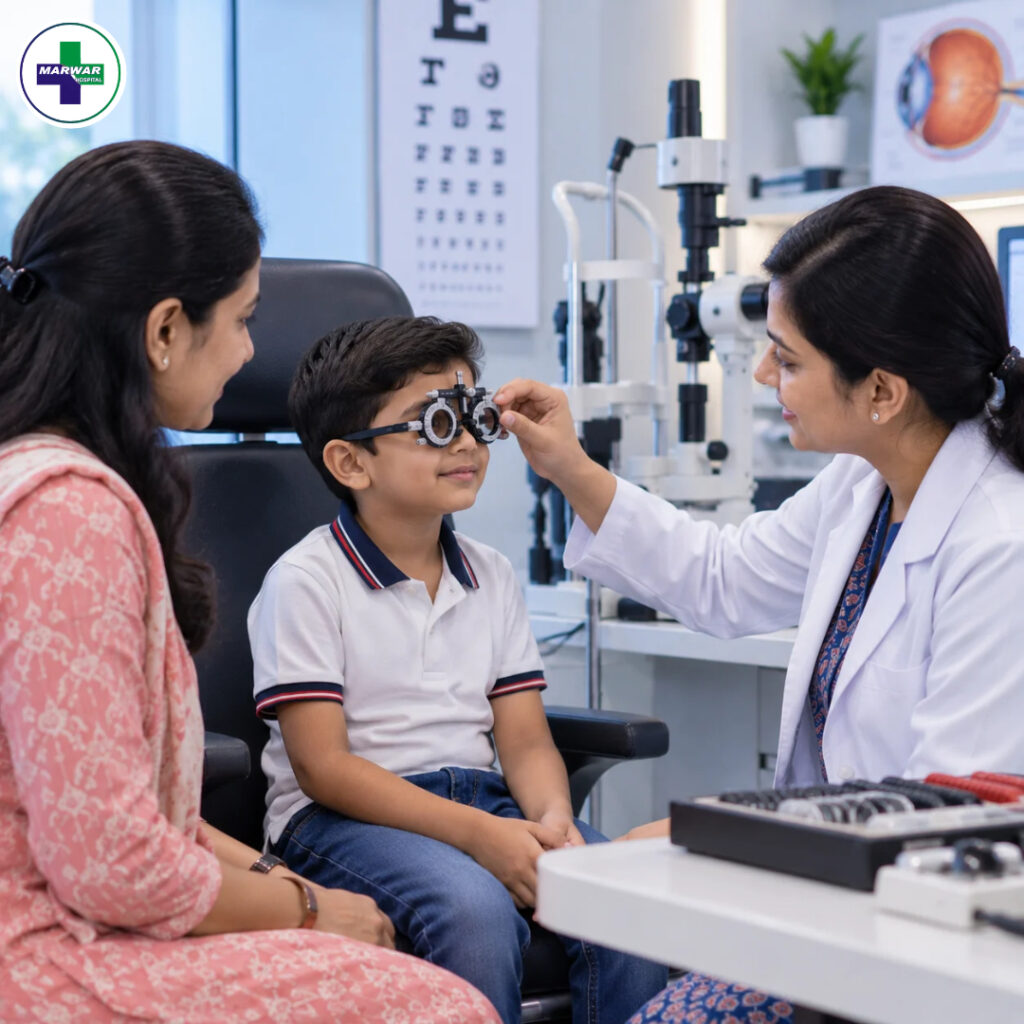
Children rely heavily on good vision for learning and development. However, younger children may not understand that their eyesight is abnormal or may not know how to describe what they are experiencing.
Parents should pay attention to signs such as frequent squinting, sitting close to screens, holding books unusually close, covering one eye, difficulty reading, or problems seeing the classroom board.
Vision screening during childhood can help identify children who may need further assessment. The American Academy of Ophthalmology supports timely vision screening during childhood for early detection of vision problems.
Marwar Hospital’s Eye Department also lists eye care for children and squint correction among its services.
What Problems Can an Eye Checkup Help Identify?
An eye examination may help detect or evaluate several common eye and vision conditions.
Refractive Errors
Myopia, hyperopia, astigmatism, and presbyopia can affect the way a person sees near or distant objects.
Depending on the condition, symptoms may include:
- Blurred vision
- Difficulty reading
- Squinting
- Eye strain
- Headaches
- Difficulty seeing distant objects
- Difficulty focusing on nearby text
A refraction test can help determine whether corrective lenses may improve vision.
Cataract
A cataract occurs when the natural lens inside the eye becomes cloudy. It is commonly associated with ageing.
People with cataracts may gradually notice blurred vision, increased glare, difficulty seeing at night, or faded colours.
When a cataract begins to interfere with daily activities, an ophthalmologist may discuss whether cataract surgery is appropriate.
Marwar Hospital lists micro-phaco cataract surgery among its Eye Department services.
Glaucoma
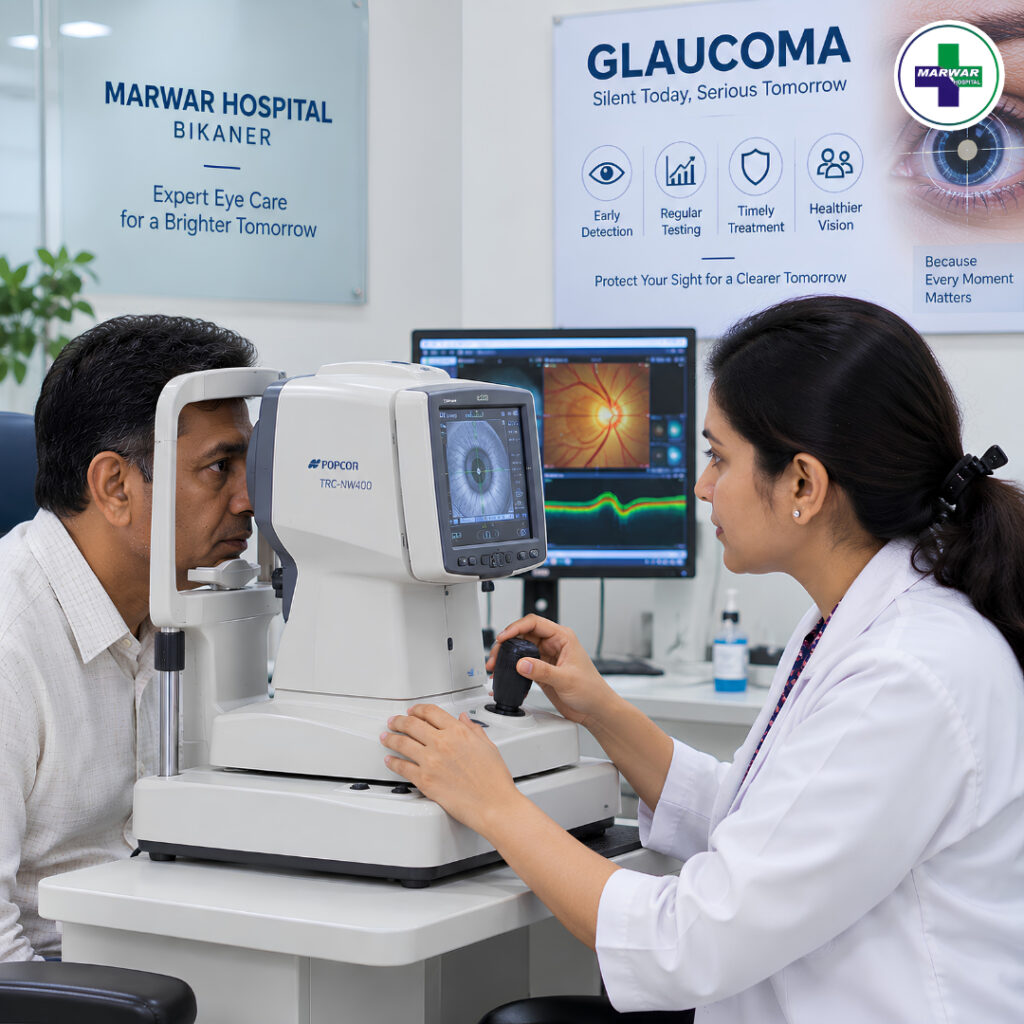
Glaucoma involves damage to the optic nerve and can lead to permanent vision loss. Some forms may develop gradually without noticeable symptoms.
An eye examination may include assessment of eye pressure, optic nerve appearance, and other factors relevant to glaucoma evaluation.
People with risk factors or an existing diagnosis may require follow-up according to their ophthalmologist’s recommendations.
Dry Eye
Dry eye can cause burning, irritation, redness, watering, a gritty sensation, and fluctuating vision.
People who spend long hours on digital devices or live in dry, dusty, or windy environments may experience eye discomfort. Persistent symptoms should be evaluated rather than repeatedly treating them without understanding the cause.
Squint
A squint occurs when the eyes are not properly aligned. It can affect children and adults.
In children, early assessment can be particularly important because abnormal eye alignment may affect normal visual development.
Marwar Hospital provides squint correction and treatment for misaligned or crossed eyes.
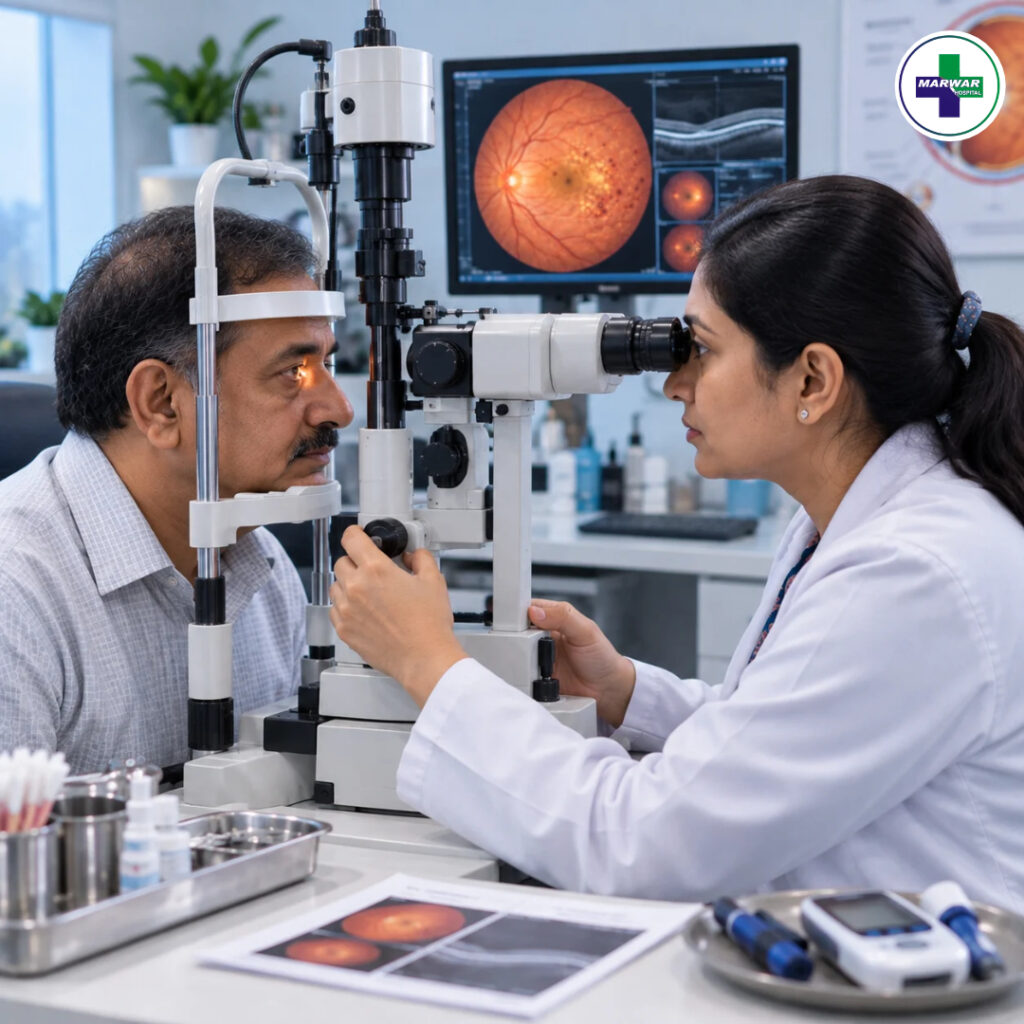
What Happens During an Eye Checkup?
The exact examination varies from patient to patient, but a typical eye evaluation may involve several steps.
Medical History
The eye specialist may ask about your current symptoms, previous eye problems, surgeries, medications, family history, and other health conditions.
Information about diabetes, blood pressure, previous eye injuries, or a family history of eye disease can be relevant.
Vision Test
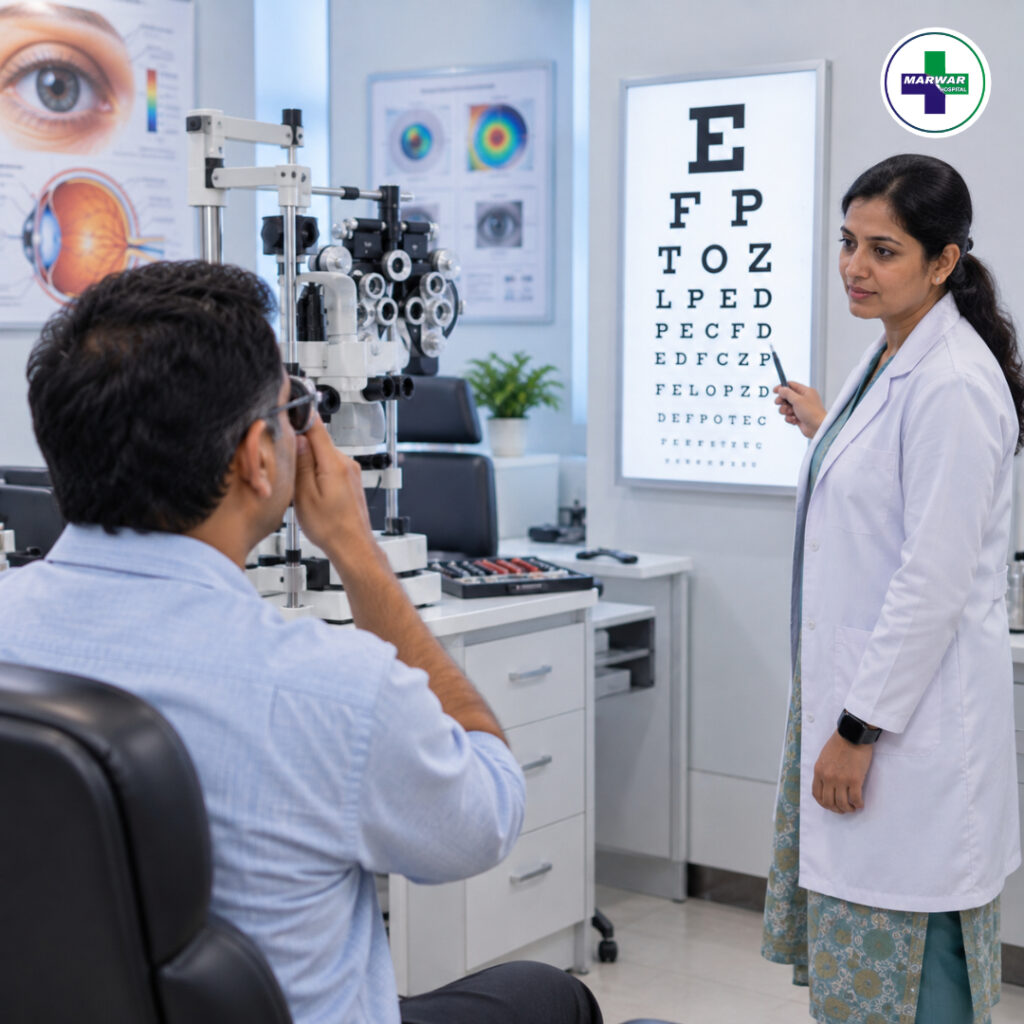
A visual acuity test measures how clearly you can see at a particular distance. You may be asked to read letters, numbers, or symbols from a chart.
Refraction Assessment
If blurred vision is suspected to be related to a refractive error, the doctor may perform a refraction assessment to determine the appropriate lens prescription.
Eye Pressure Assessment
Eye pressure may be checked when evaluating glaucoma risk or when clinically appropriate.
Examination of Eye Structures
The ophthalmologist may examine the cornea, lens, retina, optic nerve, and other structures using suitable instruments.
Additional tests may be recommended if the doctor identifies a concern or needs more information about a particular condition.
How Often Should You Have an Eye Checkup?
There is no single examination schedule that applies equally to everyone.
The appropriate frequency can depend on:
- Age
- Existing eye conditions
- Family history
- Diabetes or other health conditions
- Previous eye surgery
- Use of spectacles or contact lenses
- Symptoms
- Other individual risk factors
People with known eye diseases may require more frequent monitoring, while others may need routine examinations at intervals recommended by their eye-care professional.
If you have never had an eye examination or it has been a long time since your last one, discussing an appropriate schedule with an ophthalmologist can be a useful first step.
Who Should Pay Extra Attention to Eye Health?
Although everyone benefits from appropriate eye care, certain groups may need particular attention.
Children
Children may not recognize poor vision, making screening and observation by parents important.
Adults Working on Screens
People who spend many hours using computers or smartphones may experience eye fatigue, dryness, or discomfort. Regular breaks and appropriate eye assessments can help address persistent problems.
Older Adults
The risk of certain eye conditions increases with age. Regular evaluation can help monitor changes in vision and eye health.
People With Diabetes
Diabetes can affect the retina, sometimes before noticeable vision symptoms develop. Regular eye care should form part of diabetes management.
People With a Family History of Eye Disease
A family history of certain eye conditions may increase an individual’s risk. Discussing your family history with an eye specialist can help determine appropriate monitoring.
Warning Signs You Should Not Ignore
Routine checkups are important, but some symptoms should not wait for a scheduled appointment.
Seek prompt professional eye care if you experience:
- Sudden loss of vision
- A sudden major change in eyesight
- Severe eye pain
- Sudden double vision
- A sudden increase in floaters
- Flashes of light
- Significant redness accompanied by pain
- Eye injury or trauma
- Sudden distortion of vision
Sudden vision changes can sometimes indicate an urgent condition and should be assessed without unnecessary delay.
How to Maintain Better Eye Health Between Checkups
Regular examinations are only one part of maintaining healthy eyes. Everyday habits also matter.
Take Breaks During Screen Work
If you spend several hours looking at a screen, take regular breaks and look at distant objects periodically. Remembering to blink regularly can also help reduce discomfort associated with prolonged screen use.
Protect Your Eyes
Wear suitable protective eyewear during activities where dust, chemicals, flying particles, or other hazards may injure the eyes.
Avoid Rubbing Your Eyes
Frequent rubbing can increase irritation. If your eyes repeatedly itch or feel uncomfortable, identifying the underlying cause is more useful than continually rubbing them.
Maintain Good General Health
Conditions such as diabetes and high blood pressure can affect eye health. Following your healthcare professional’s advice for managing these conditions can support overall well-being.
Follow Your Prescription
If you have been prescribed spectacles or contact lenses, use them according to your eye-care professional’s recommendations.
Do Not Use Eye Drops Without Guidance
Different eye conditions can have similar symptoms but require very different treatments. Avoid using prescription eye drops, particularly steroid-containing medicines, without medical supervision.
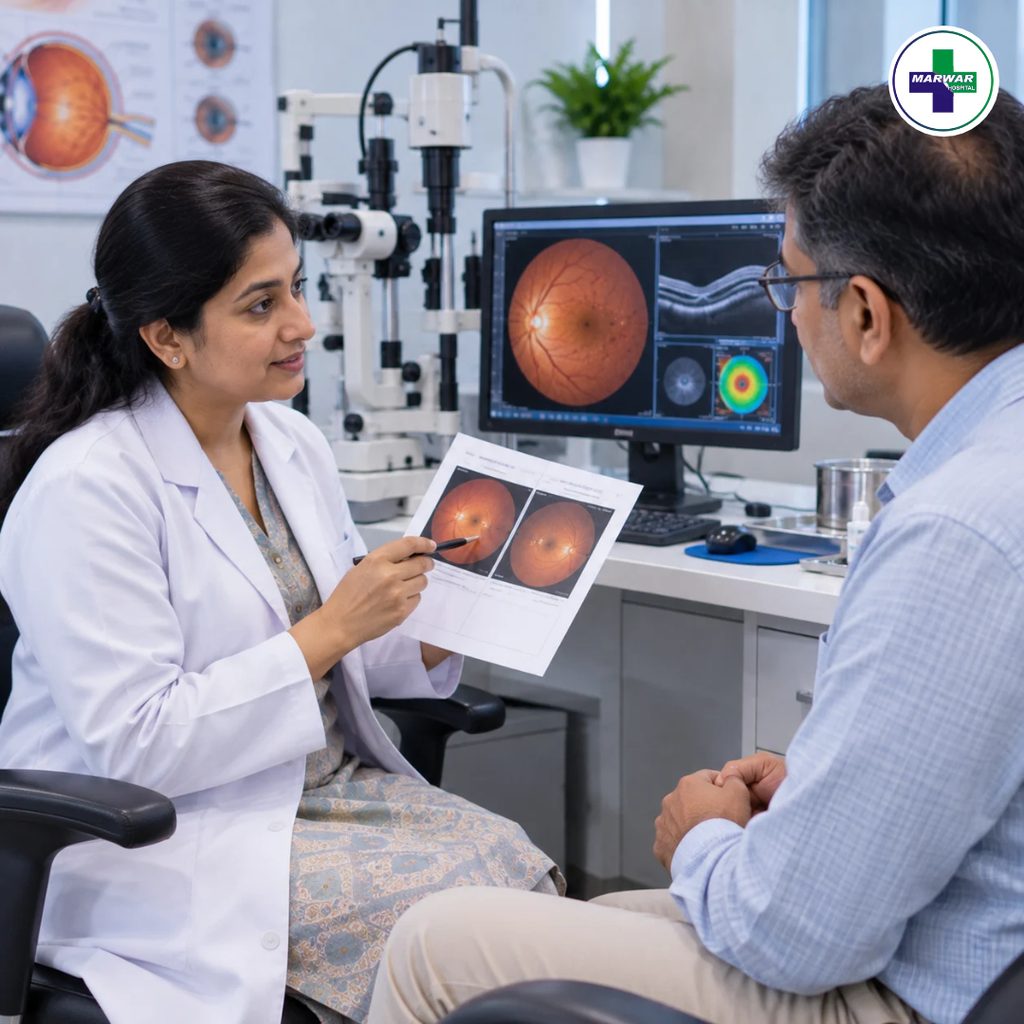
Learn more about our expert ophthalmologist care services here.
Regular Eye Checkups at Marwar Hospital Bikaner
For individuals seeking eye care in Bikaner, Marwar Hospital has a dedicated Eye Department providing eye-related evaluation and treatment.
According to the hospital’s official information, its Eye Department provides services including glaucoma investigations, glaucoma treatment and surgery, squint correction, treatment for misaligned or crossed eyes, oculoplastic procedures, children’s eye care, and cataract surgery using the micro-phaco method.
Marwar Hospital also provides outpatient consultations across multiple specialties, with its OPD designed to support evaluation and treatment guidance for patients.
If you are experiencing changes in vision or have concerns about your eye health, consulting an ophthalmologist can help determine whether you need routine monitoring, further testing, or treatment.
Conclusion
Regular eye checkups are an important part of responsible eye care. Your vision may appear perfectly normal while subtle changes are developing, which is why relying only on symptoms may not always be enough.
Eye examinations can help assess vision, identify refractive errors, monitor existing conditions, and detect signs that may require further evaluation. They are particularly valuable for children, older adults, people with diabetes, individuals with a family history of eye disease, and those who already have an eye condition.
Along with professional checkups, simple habits such as taking screen breaks, protecting your eyes, maintaining good hygiene, avoiding unnecessary eye rubbing, and managing overall health can support better eye care.
Most importantly, sudden or significant changes in vision should never be ignored. Prompt professional evaluation can be important when unusual symptoms appear.
For professional eye care in Bikaner, Marwar Hospital’s dedicated Eye Department provides evaluation and treatment services for a range of eye-related concerns. Taking the time for regular eye care today can help you stay more aware of your vision and support healthier eyes for the years ahead.
📍 For immediate assistance, get directions to our hospital on Google Maps. Location: Main Road, Sadul Colony, Bikaner, Rajasthan – 334001.
📞 For expert advice and appointments, contact our hospital today. 2207714, 2208814, 2209914
Regular eye checkups can help identify vision changes and certain eye conditions at an earlier stage, even when noticeable symptoms are not present. They also help monitor existing eye problems and determine whether vision correction is needed.
An eye examination can help identify or evaluate refractive errors, cataracts, glaucoma, dry eye, squint, and other eye-related concerns. Additional tests may be recommended depending on your symptoms and risk factors.
The frequency of eye checkups depends on factors such as age, existing eye conditions, diabetes, family history, previous eye surgery, and individual risk factors. An ophthalmologist can recommend an appropriate examination schedule.
Yes children can benefit from age-appropriate vision screening, especially if they frequently squint, sit close to screens, have difficulty reading, or struggle to see the classroom board. Early assessment can help identify vision problems that may need attention.
If you are looking for regular eye checkups in Bikaner, you can consult the dedicated Eye Department at Marwar Hospital Bikaner for professional evaluation of vision and various eye-related concerns.