


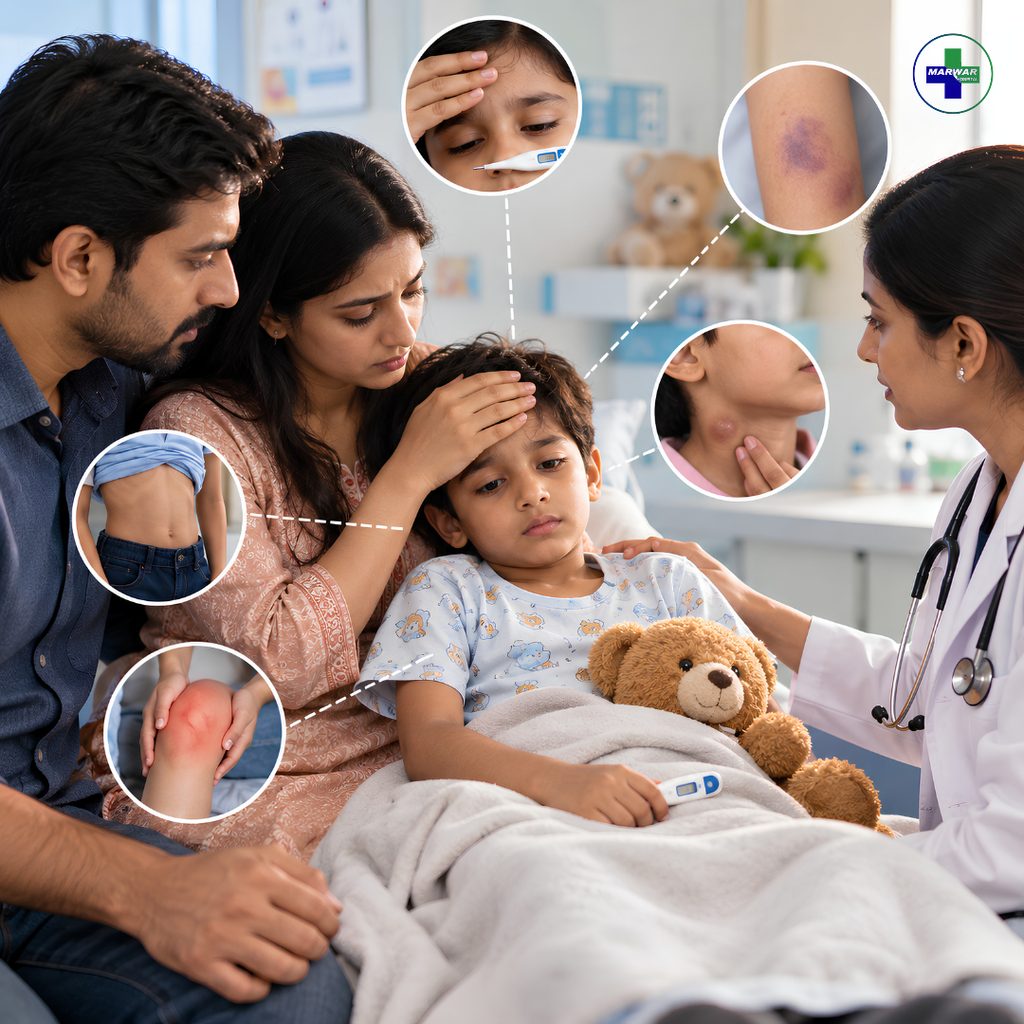
When a child develops an unusual symptom, parents naturally become concerned. Fever, tiredness, swollen lymph nodes, headaches, stomach pain or loss of appetite are common during childhood and are usually caused by infections or other non-cancerous conditions. However, when symptoms are persistent, unexplained, repeatedly returning, or occurring in combination with other warning signs, a pediatrician may recommend further evaluation by a pediatric oncologist.
A pediatric oncologist is a specialist who evaluates and treats cancers and certain serious blood disorders in children and adolescents. Importantly, being referred to a pediatric oncologist does not mean that a child definitely has cancer. Referral is often made simply to investigate symptoms carefully and rule out serious conditions.
According to the World Health Organization (WHO), childhood cancers are uncommon, but prompt and accurate diagnosis is important because early diagnosis can improve treatment outcomes.
For parents in Bikaner, understanding when specialist evaluation may be appropriate can help reduce unnecessary delays while also avoiding unnecessary fear.
What Does a Pediatric Oncologist Do?
A pediatric oncologist specializes in cancers that affect children and adolescents. Their work may involve evaluating children with suspected or confirmed conditions such as:
- Leukemia
- Lymphoma
- Brain and central nervous system tumours
- Neuroblastoma
- Wilms tumour
- Bone tumours
- Soft-tissue tumours
- Retinoblastoma
- Other childhood cancers and certain blood-related disorders
Childhood cancers can behave differently from many adult cancers, so children require age-appropriate evaluation and treatment. WHO notes that childhood cancer care requires specialized diagnosis and multidisciplinary treatment involving professionals from different areas of healthcare.
A pediatric oncologist may work alongside pediatricians, surgeons, radiologists, pathologists, nurses, nutrition specialists and other healthcare professionals depending on the child’s condition.
Does Every Child With These Symptoms Need a Pediatric Oncologist?
No.
This is one of the most important things parents should understand.
Symptoms such as fever, tiredness, headaches, bruising or swollen glands are extremely common among children. Most are not caused by cancer.
For example, a child with swollen lymph nodes may simply have a throat infection, while tiredness could be related to inadequate sleep, nutritional deficiencies or a recent illness.
A pediatrician generally begins by taking a detailed history and performing a physical examination. If the findings suggest that additional specialist evaluation is appropriate, the child may be referred to a pediatric oncologist.
The goal is not to assume cancer—it is to investigate concerning symptoms properly.
1. Persistent or Recurrent Fever Without an Obvious Cause
Children frequently develop fever because of viral or bacterial infections. In most cases, the fever improves as the underlying illness resolves.
However, parents should discuss persistent or repeatedly unexplained fever with a doctor, particularly when it occurs together with:
- Unusual tiredness
- Weight loss
- Pale skin
- Easy bruising
- Bone or joint pain
- Enlarged lymph nodes
- Loss of appetite
- Abdominal swelling
Fever is among the symptoms that can occur with certain childhood cancers, including leukemia and lymphoma, but it is much more commonly caused by infections. WHO specifically lists fever among the warning symptoms that healthcare professionals should be aware of when evaluating possible childhood cancer.
A persistent unexplained fever may therefore warrant further evaluation.
2. Unexplained Weight Loss or Poor Appetite
Children’s appetite naturally changes. Some days they may eat more, while on other days they may eat less.
Concern increases when a child experiences a noticeable and unexplained loss of weight or a prolonged reduction in appetite.
Parents may observe:
- Clothes becoming noticeably loose
- Reduced interest in meals
- Persistent lack of appetite
- Reduced energy
- Weight loss without changes in diet or activity
- Weight loss accompanied by fever or pain
Unexplained weight loss is one of the warning symptoms associated with childhood cancer.
A doctor can determine whether the change is related to nutrition, infection, gastrointestinal problems, emotional factors or another medical condition.
3. Persistent Tiredness, Weakness or Pale Appearance
Children are naturally active and may become tired after school or physical activity. But persistent fatigue that is unusual for the individual child deserves attention.
Parents may notice that their child:
- Stops participating in favourite activities
- Sleeps considerably more than usual
- Appears weak
- Has difficulty keeping up with other children
- Looks unusually pale
- Complains of persistent weakness
These symptoms can have many causes. In some childhood blood cancers, changes in blood-cell production may contribute to anemia, fatigue and pallor. WHO identifies fatigue and symptoms of anemia among possible signs associated with leukemia.
If fatigue persists without a clear explanation, a pediatric evaluation may be appropriate.
4. Frequent or Unexplained Bruising and Bleeding
Children often get bruises while playing. An occasional bruise after an obvious fall is usually not concerning.
Parents should pay more attention when bruises appear frequently or without a clear injury.
Other signs can include:
- Frequent nosebleeds
- Bleeding gums
- Small red or purple spots on the skin
- Unusual bleeding
- Bruises appearing in unusual places
- Bleeding that seems excessive
These symptoms can have several causes, including platelet or blood-related problems. Certain childhood cancers, particularly leukemia, can also produce abnormal bleeding or bruising.
A doctor can determine whether blood tests or specialist evaluation is needed.
5. Persistent Bone or Joint Pain
Children may occasionally experience muscle or joint discomfort after sports, physical activity or minor injuries.
However, persistent or unexplained bone pain should be evaluated, especially when it:
- Continues for a long time
- Keeps returning
- Occurs without an injury
- Causes limping
- Interferes with sleep or normal activity
- Is associated with swelling or a lump
WHO identifies bone pain as one of the possible warning symptoms of childhood cancer.
Persistent pain does not mean that a child has cancer. It simply means that the underlying cause should be identified rather than assumed to be normal growing pain.

6. A Persistent Lump or Swollen Lymph Node
Swollen lymph nodes are very common in children, particularly during or after infections.
A child may develop enlarged glands in the:
- Neck
- Armpit
- Groin
In many cases, they gradually return to normal.
However, parents should consult a doctor if a lump or swelling is persistent, increasing in size, unusually firm, painless and unexplained, or accompanied by other symptoms.
Lymphoma and leukemia can sometimes involve enlarged lymph nodes, although infections and other benign conditions remain much more common causes.
The important point is that a persistent lump should be examined rather than self-diagnosed.
7. Persistent Abdominal Swelling or a Lump
A child’s abdomen can become uncomfortable or swollen because of constipation, infections or digestive problems.
However, persistent abdominal enlargement or a noticeable abdominal mass requires medical assessment.
Parents may also notice:
- Abdominal pain
- Reduced appetite
- Weight loss
- Vomiting
- Fever
- Fatigue
- Blood in the urine in some cases
Certain childhood tumours, including Wilms tumour and neuroblastoma, may involve the abdomen. WHO guidance lists abdominal distension and a palpable abdominal mass among signs that may require evaluation.
Parents should avoid repeatedly pressing or massaging a suspected abdominal lump and should seek medical advice instead.
8. Persistent Headaches With Vomiting
Headaches in children are commonly caused by infections, migraines, dehydration, vision problems and other conditions.
But headaches that are persistent, worsening, unusual for the child, or associated with repeated vomiting should be assessed by a healthcare professional.
Other symptoms that may be important include:
- Changes in vision
- Problems with balance
- Difficulty walking
- Seizures
- Weakness
- Changes in behaviour
- Problems with school performance
- Developmental regression in younger children
Brain and central nervous system tumours can produce headaches, nausea, vomiting, seizures and neurological changes.
Again, these symptoms are not proof of a brain tumour. They simply indicate that medical evaluation may be necessary.
9. Changes in Vision or the Appearance of the Eye
Some childhood eye conditions require prompt assessment.
Parents should consult a doctor if they notice:
- A white reflection in the pupil
- A new or persistent squint
- Changes in vision
- Unusual enlargement of the eye
- Eye swelling
- Persistent eye pain
- An unusual appearance in one eye
A white appearance in the pupil, known as leukocoria, can be associated with retinoblastoma, although other eye conditions can also cause it.
Any unexplained change in a child’s eye should be evaluated promptly.

Learn more about our expert Oncologist care services here.
10. Persistent Cough or Difficulty Breathing
Most childhood coughs are caused by respiratory infections or allergies. However, a persistent cough or unexplained breathing difficulty deserves medical attention.
Seek medical evaluation when a child has:
- Persistent cough
- Unexplained shortness of breath
- Difficulty breathing
- Chest discomfort
- Breathing difficulty accompanied by swelling or other unusual symptoms
Some childhood cancers, including certain lymphomas, can affect structures within the chest and cause respiratory symptoms.
If a child is struggling to breathe, has blue lips, severe breathing difficulty or rapidly worsening symptoms, urgent medical care is required, regardless of the suspected cause.
11. Seizures or Sudden Neurological Changes
A first seizure or sudden neurological change should always receive medical attention.
Parents may notice:
- New seizures
- Difficulty walking
- Loss of balance
- New weakness
- Changes in speech
- Changes in vision
- Significant behavioural changes
- Loss of previously acquired developmental abilities
Such symptoms can result from many neurological conditions. Brain tumours are one possible cause, which is why appropriate medical evaluation is important.
A pediatrician may recommend neurological investigations and specialist consultation depending on the clinical findings.
12. When a Pediatrician Recommends Further Testing
Sometimes a child does not have one dramatic symptom. Instead, a combination of smaller abnormalities may lead a pediatrician to investigate further.
For example, a child might have:
Persistent fever + unusual tiredness + pale appearance + bruising
or
Persistent headache + vomiting + balance problems
or
Abdominal swelling + weight loss + poor appetite
A combination of symptoms may prompt blood tests, imaging or referral to a specialist.
WHO emphasizes that early diagnosis involves awareness of symptoms, accurate clinical evaluation and timely access to appropriate treatment.
What Happens During a Pediatric Oncology Consultation?
A pediatric oncology consultation does not automatically mean that treatment will begin.
The specialist may first:
1. Review the child’s medical history
The doctor may ask about:
- When symptoms began
- How frequently they occur
- Previous illnesses
- Family medical history
- Changes in appetite or weight
- Activity levels
- Any previous test results
2. Perform a physical examination
Depending on the symptoms, the doctor may examine the child’s:
- Skin
- Eyes
- Lymph nodes
- Abdomen
- Muscles and joints
- Neurological function
- General growth and development
3. Review existing investigations
If blood tests, ultrasound scans, X-rays or other reports have already been performed, the specialist may review them.
4. Recommend additional tests if necessary
Depending on the clinical situation, investigations may include blood tests, imaging or tissue examination.
The exact approach depends on the child’s symptoms and findings. There is no single test that diagnoses every childhood cancer.

Why Is Timely Referral Important?
One of the biggest challenges in childhood cancer is that its symptoms can resemble common childhood illnesses.
This can sometimes result in delays in recognizing the underlying condition.
WHO states that childhood cancer outcomes can improve with prompt and correct diagnosis followed by appropriate treatment. Early diagnosis can help reduce delays and may improve the chance of successful treatment.
This is why parents should neither ignore persistent symptoms nor immediately assume the worst.
The right approach is:
Notice → Consult → Evaluate → Diagnose → Treat, if required
Is There a Routine Cancer Screening Test for Every Child?
For most children, routine population-wide cancer screening is not recommended.
WHO explains that childhood cancers generally cannot be identified through standard population-based screening programmes. Instead, awareness of symptoms and appropriate evaluation when concerning signs appear are important approaches to early diagnosis.
Certain children with known high-risk genetic conditions may require specialized monitoring, but this is different from routine cancer screening for every child.
Parents should therefore focus on regular pediatric care, healthy development and paying attention to persistent or unusual symptoms.
When Should Parents Seek Immediate Medical Help?
Some symptoms require urgent attention rather than waiting for a routine appointment.
Parents should seek emergency medical care if their child experiences:
- Severe difficulty breathing
- A seizure
- Sudden weakness or loss of consciousness
- Severe or rapidly worsening headache
- Significant bleeding
- Sudden major vision changes
- Severe abdominal pain or rapidly increasing abdominal swelling
- Any rapidly deteriorating condition
These symptoms can occur for many reasons, and emergency evaluation is important regardless of whether cancer is suspected.
What Parents Can Do Before the Appointment
If your child has persistent or unexplained symptoms, keeping a simple record can help the doctor.
Write down:
- When the symptom started
- How frequently it occurs
- Whether it is becoming worse
- Fever measurements, if applicable
- Changes in appetite
- Weight changes
- Pain location and timing
- Any new lumps or swelling
- Previous medical reports
- Medicines already taken
This information can make the consultation more productive and help the healthcare team understand the child’s condition.

Pediatric Oncology Care at Marwar Hospital, Bikaner
For parents in Bikaner and surrounding areas, access to appropriate pediatric medical evaluation can be an important part of responding to concerning symptoms.
At Marwar Hospital, Bikaner, families can seek professional medical guidance when a child develops persistent or unusual symptoms that require further evaluation.
The important principle is not to assume that every unusual symptom is cancer. Instead, parents should ensure that symptoms that persist, worsen or occur in combination with other warning signs are appropriately assessed by qualified healthcare professionals.
Conclusion
Knowing when a child may need to see a pediatric oncologist can help parents respond to concerning symptoms with greater awareness and less confusion. Persistent unexplained fever, unusual fatigue, unexplained weight loss, frequent bruising or bleeding, ongoing bone pain, persistent lumps, abdominal swelling, repeated headaches with vomiting, changes in vision, breathing difficulties or new neurological symptoms may require medical evaluation.
However, these symptoms do not automatically mean that a child has cancer. Childhood cancer is uncommon, and many of these signs are caused by infections or other medical conditions.
A pediatrician can assess the child first and decide whether blood tests, imaging, observation or specialist consultation is appropriate. When a pediatric oncologist is recommended, the referral is an opportunity for specialized evaluation—not a confirmation of cancer.
Early and accurate diagnosis is an important part of childhood cancer care. WHO emphasizes that awareness of symptoms, timely clinical evaluation, correct diagnosis and prompt access to treatment are key components of improving outcomes.
For parents in Bikaner, the best approach is simple: do not ignore persistent or unexplained changes in your child’s health, but do not panic either. Seek qualified medical advice, ask questions, and follow the recommended evaluation.
Your child’s health deserves attention, timely evaluation and compassionate care.
📍 For immediate assistance, get directions to our hospital on Google Maps. Location: Main Road, Sadul Colony, Bikaner, Rajasthan – 334001.
📞 For expert advice and appointments, contact our hospital today. 2207714, 2208814, 2209914
A child may be referred to a pediatric oncologist when symptoms are persistent, unexplained, repeatedly returning, worsening, or occurring together with other concerning signs. A referral does not mean the child definitely has cancer.
Symptoms such as persistent fever, unexplained weight loss, unusual tiredness, frequent bruising or bleeding, persistent bone pain, swollen lymph nodes, abdominal swelling, headaches with vomiting, vision changes, breathing difficulties, or new neurological symptoms may require medical evaluation.
No. Most symptoms seen in children are caused by infections or other non-cancerous conditions. A pediatrician may recommend specialist consultation to investigate concerning symptoms properly and rule out serious conditions.
The specialist may review the child’s medical history, perform a physical examination, review previous test reports, and recommend additional blood tests, imaging, or tissue examination if necessary.
Emergency medical care should be sought for severe breathing difficulty, seizures, sudden weakness or loss of consciousness, severe or rapidly worsening headaches, significant bleeding, sudden major vision changes, severe abdominal pain or rapidly increasing abdominal swelling, or any rapidly deteriorating condition.