
Introduction
A medical emergency can happen without warninA person may suddenly lose consciousness, sustain a burn, experience severe bleeding, or develop breathing difficulties. Having a basic understanding of first aid can help you take the right steps during the initial moments of an emergency.
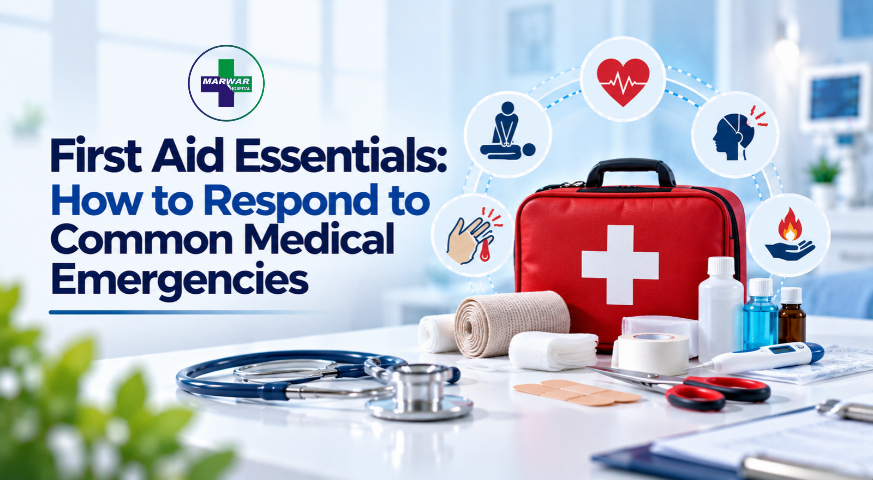
First aid is the immediate care provided to someone who is injured or suddenly becomes ill. Its main purpose is to protect the person from further harm and provide basic support until trained medical professionals take over.
Knowing basic first aid techniques can help people stay calm and respond more confidently during emergencies. This article from Marwar Hospital explains how to handle common emergencies, recognise serious warning signs, and avoid mistakes that could worsen an injury.
What to Do Before Giving First Aid
Before approaching an injured or unwell person, check the surroundings for danger. Traffic, fire, electrical wires, smoke, or hazardous chemicals can put both the injured person and the rescuer at risk.
After ensuring the surroundings are safe, speak to the person and check whether they respond. Ask someone nearby to contact emergency services if the situation appears serious. In India, dial 112 to request emergency services and get urgent assistance.
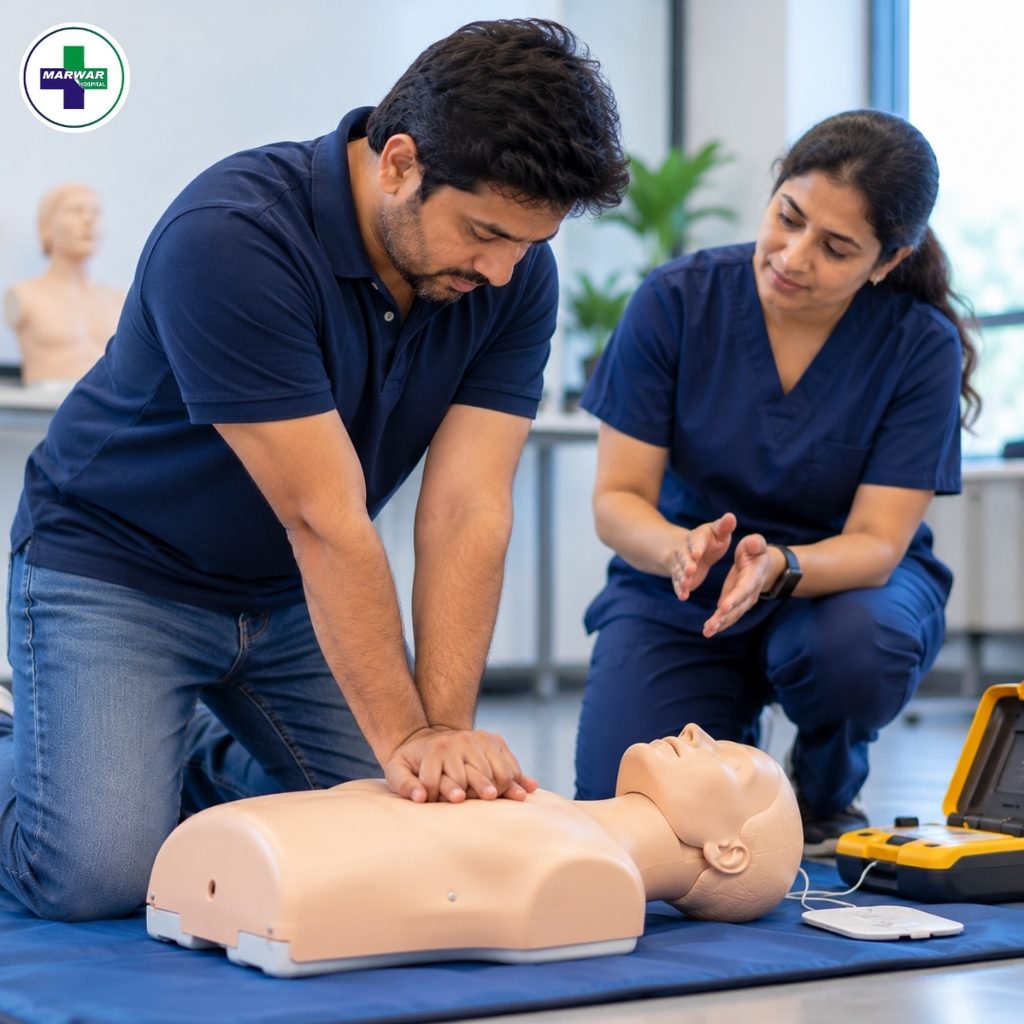
If a person is unconscious and is not breathing normally, call for help, begin cardiopulmonary resuscitation (CPR) if you are able, and follow the emergency call handler’s instructions. An automated external defibrillator (AED) should be used as soon as available, following its voice prompts.
First Aid for Common Emergencies
1. How to Control Bleeding
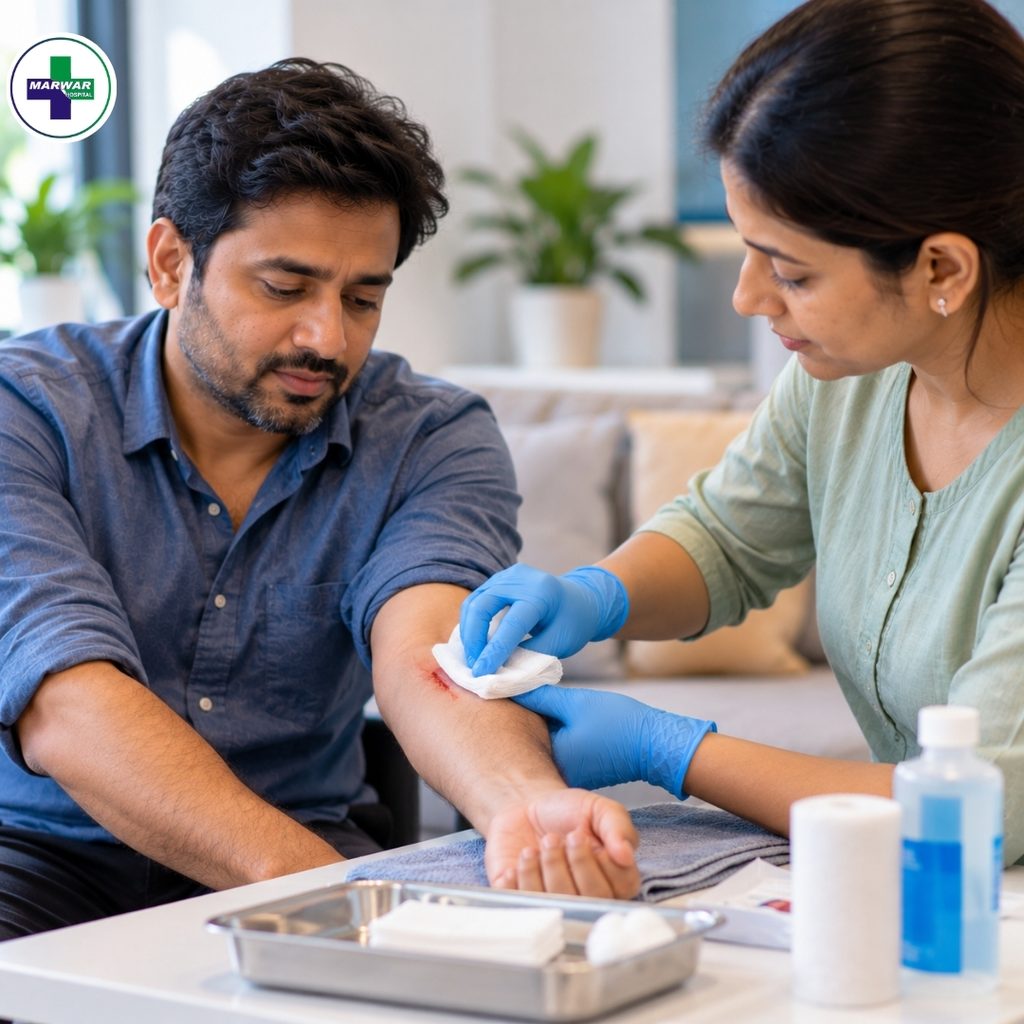
Cuts and wounds can happen during cooking, household activities, outdoor work, or accidents. Minor injuries may need simple cleaning, while heavy bleeding can become life-threatening.
Basic first aid steps:
- If available, wear disposable gloves to protect yourself.
- Cover the wound with sterile gauze or a clean cloth, then maintain steady, firm pressure until the bleeding stops or medical assistance arrives.
- Once minor bleeding is controlled, clean the wound with clean running water and cover it with a suitable dressing.
Seek urgent help if bleeding is heavy, the wound is deep, or pressure does not control the bleeding.If an object is stuck in the wound, leave it in place, apply pressure around it, and get medical help immediately.
2. What to Do for Burns
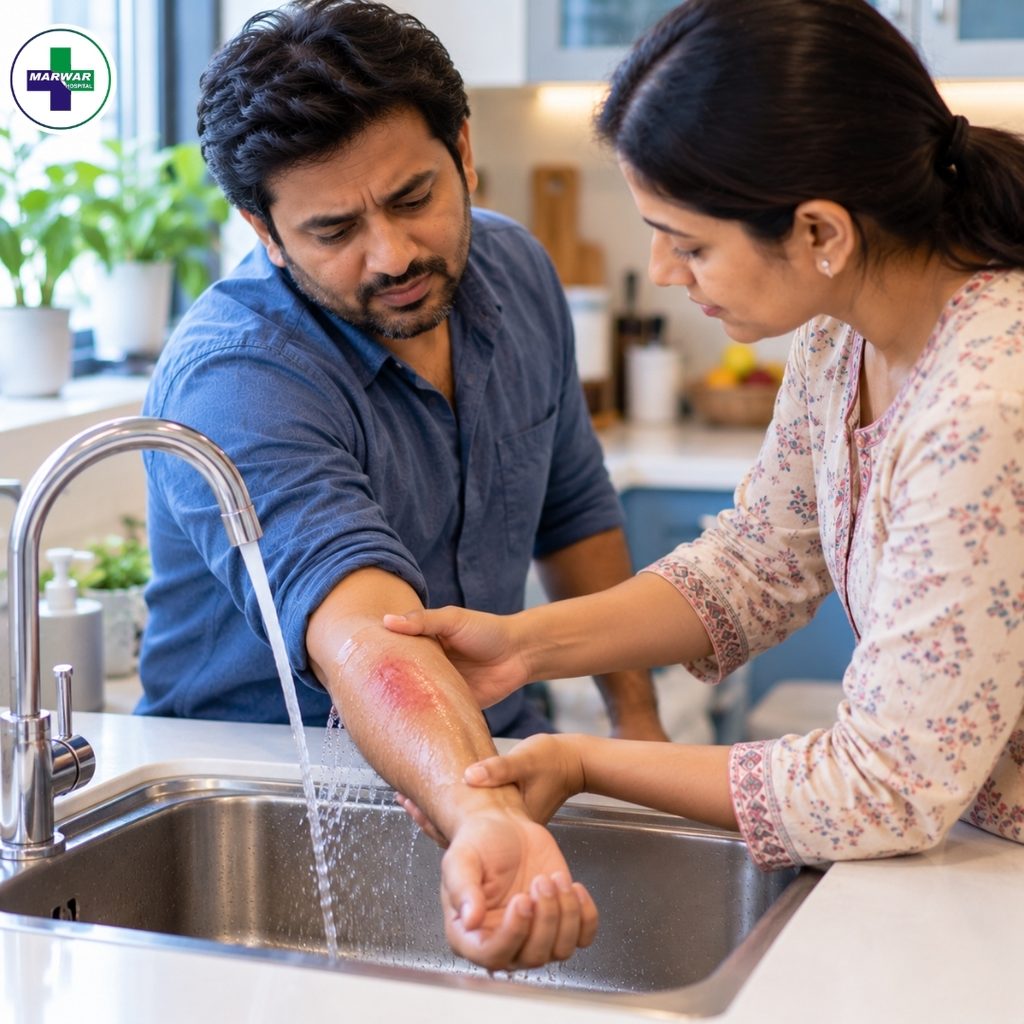
Burns may result from hot water, steam, flames, hot surfaces, chemicals, or electricity. The right course of action varies depending on what caused the problem and how serious the condition is.
For an ordinary heat burn, hold the affected area under cool running water for 20 minutes. Remove any nearby clothing or jewellery unless it is stuck to the burned skin. Then cover the affected area loosely with a clean, non-fluffy dressing.
Do not apply ice, toothpaste, butter, oil, or other home remedies to the affected area. Do not pull away material that has become stuck to the burned skin.
Large or deep burns, electrical burns, chemical burns, and burns affecting sensitive areas require urgent medical assessment. For chemical exposure, avoid direct contact with the substance and follow emergency instructions. If a chemical enters the eyes, rinse immediately with clean running water while arranging urgent medical care.
3. First Aid for Choking
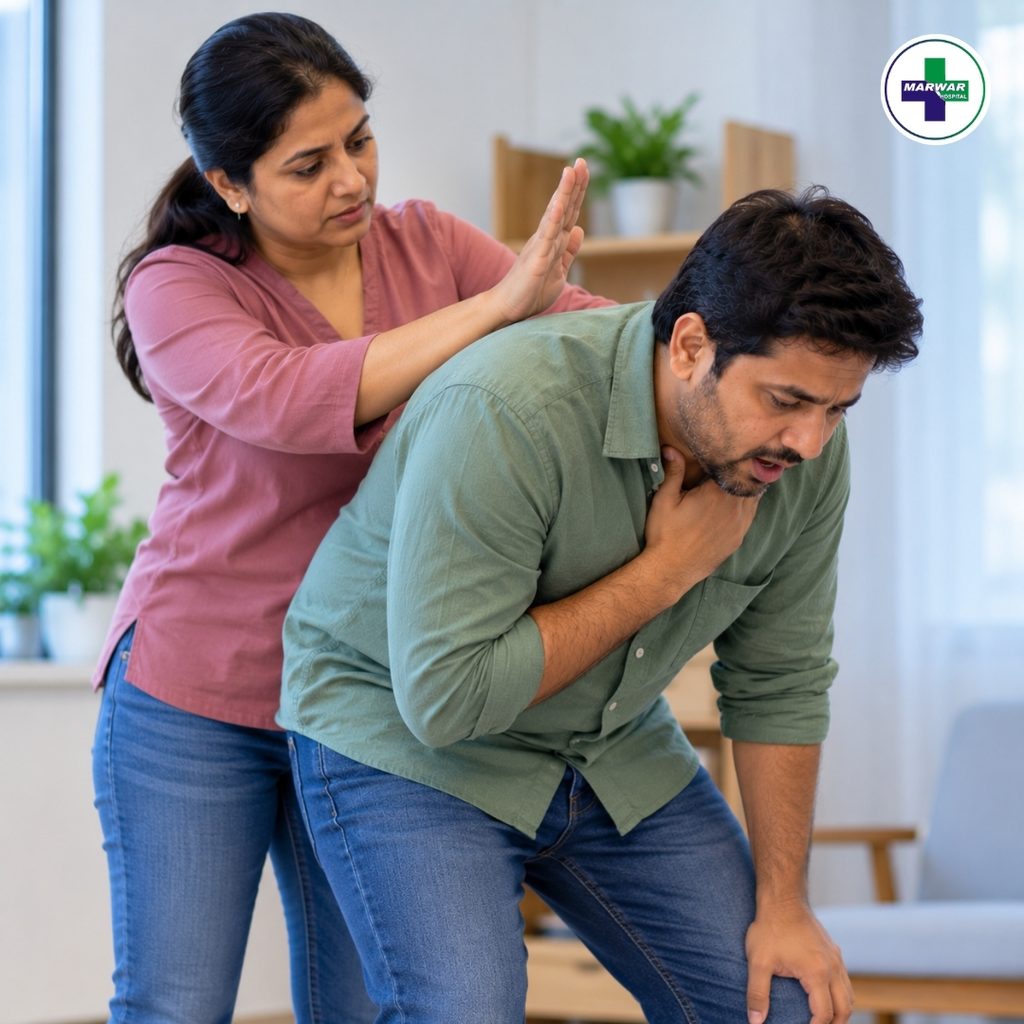
Choking happens when food or another object blocks the airway. If the person can speak, breathe, or cough forcefully, encourage them to continue coughing and watch for worsening symptoms.
If an adult or child over one year cannot speak, breathe, or cough effectively, call emergency services. Give five back blows followed by five abdominal thrusts, repeating as necessary according to recognised first aid guidance.
For babies under one year, use five back blows followed by five chest thrusts. Never perform abdominal thrusts on an infant.
If the person becomes unresponsive, lower them carefully to the ground and begin CPR, following emergency dispatcher instructions. Do not put your fingers into the mouth unless the obstructing object is clearly visible and can be removed safely.
4. Recognising a Possible Heart Attack
A heart attack can cause pressure, tightness, or discomfort in the chest. Pain may spread to the arms, back, neck, jaw, or shoulders. Other symptoms can include sweating, nausea, breathlessness, or unusual weakness.
What to do:
- Call emergency services immediately.
- Help the person sit and rest in a comfortable position.
- Keep them calm and loosen tight clothing.
- Follow the emergency call handler’s instructions.
Do not wait for symptoms to disappear and do not allow the person to drive themselves. If they become unresponsive and are not breathing normally, begin CPR and use an AED if available.
5. Helping Someone Who Faints
Fainting is a temporary loss of consciousness that may occur due to dehydration, a sudden fall in blood pressure, or an underlying medical condition.
If there is no sign of an injury, gently help the person lie down flat. Check their breathing and responsiveness, and let them rest if they regain consciousness quickly.
Never give food, water, or medicine to someone who is unconscious or not fully alert. Call emergency services if they do not wake promptly, have difficulty breathing, experience chest pain, or suffer a serious injury. A first episode of unexplained fainting should also receive medical assessment.
6. Suspected Broken Bones
A fracture may cause pain, swelling, bruising, or difficulty moving a limb. A serious fracture may also cause visible deformity or an open wound.
Keep the injured area still and support it in the position in which it was found. Do not try to straighten a deformed limb or push a bone back into place. A cold pack wrapped in cloth may help reduce swelling when appropriate.
Seek medical assessment for a suspected fracture. Call emergency services for major injuries, severe bleeding, an open fracture, or suspected head, neck, or spinal injury. Avoid moving the person unnecessarily if a spinal injury is possible.
Learn more about our expert services here.
What Should a First Aid Kit Include?
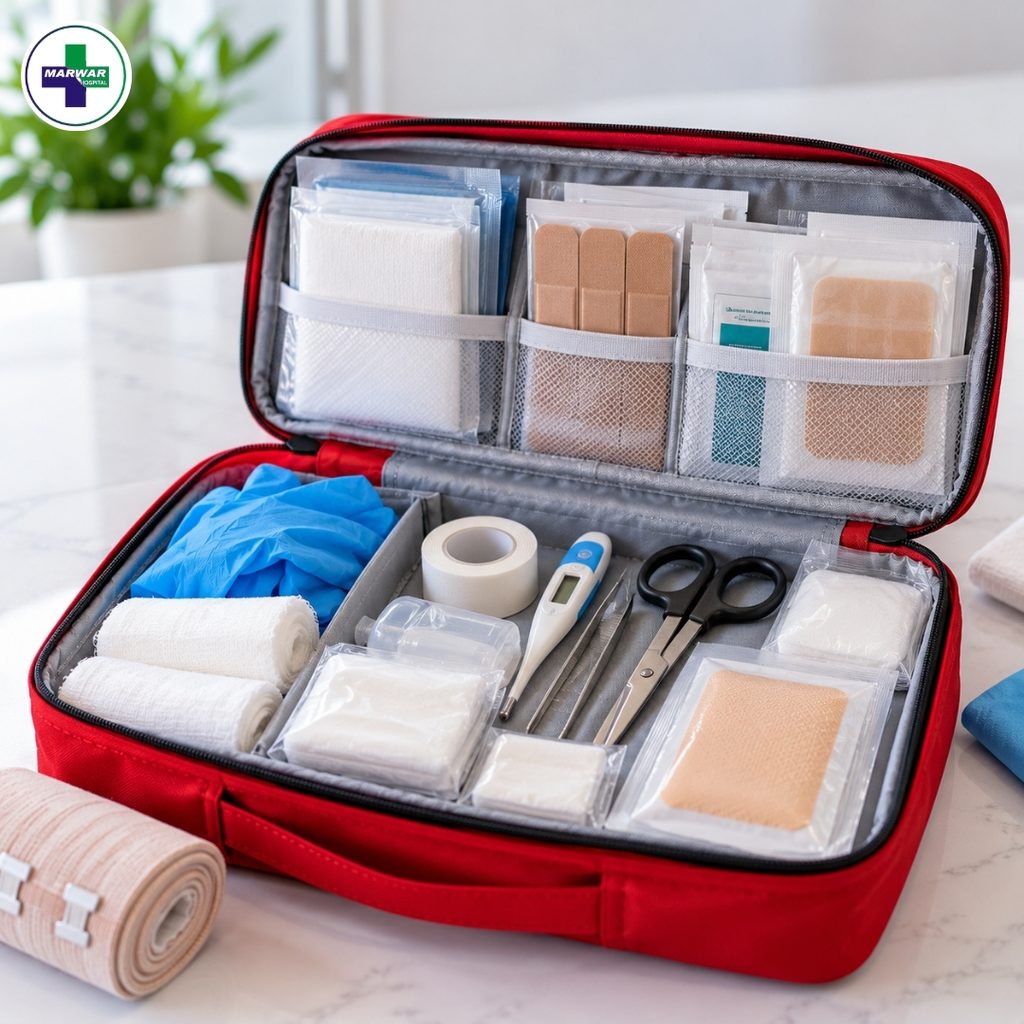
Keeping a first aid kit at home or in the workplace makes it easier to manage minor injuries. Useful supplies include:
- Sterile gauze and adhesive bandages
- Clean dressings and medical tape
- Disposable gloves
- Antiseptic wipes
- Small scissors and tweezers
- A digital thermometer
- A burn dressing
- Emergency contact numbers
Check the kit periodically and replace damaged or expired supplies. Store it in a dry, accessible place away from young children.
The guidance provided in this Marwar Hospital educational article is intended to build awareness of basic first aid, not replace practical training or emergency medical care.
How Can You Prepare for Emergencies?
Learning first aid through a recognised training course can help you practise CPR, choking assistance, and other emergency skills. Keep emergency numbers accessible and make sure family members know where the first aid kit is stored.
At home, take precautions such as storing sharp objects safely, keeping hot liquids away from children, and maintaining clear walkways to reduce the risk of accidents.
During an emergency, stay as calm as possible, seek professional help early, and follow the instructions of trained emergency personnel.
Conclusion
First aid knowledge can help people respond more safely to common emergencies such as bleeding, burns, choking, fainting, and suspected fractures. The most important priorities are to check for danger, call for help when needed, and provide appropriate care without making the situation worse.
Learning basic first aid and keeping essential supplies nearby can improve preparedness at home, work, and in public places. Serious symptoms always require prompt medical attention.
Medical Note
This article is intended for general health education and does not replace professional medical advice, emergency treatment, or certified first aid training. For life-threatening emergencies in India, call 112 and follow the emergency call handler’s instructions.
📍 For immediate assistance, get directions to our hospital on Google Maps. Location: Main Road, Sadul Colony, Bikaner, Rajasthan – 334001.
📞 For expert advice and appointments, contact our hospital today. 2207714, 2208814, 2209914
First aid is the immediate care provided to someone who is injured or suddenly becomes ill. It helps protect the person from further harm and provides basic support until trained medical professionals take over.
First, check the surroundings for danger and ensure it is safe to approach. Check the person’s responsiveness and breathing, call emergency services when needed, and follow the emergency call handler’s instructions. In India, dial 112 for emergency assistance.
For severe bleeding, apply firm, steady pressure using sterile gauze or a clean cloth and seek urgent medical help. For an ordinary heat burn, cool the affected area under cool running water for 20 minutes. Avoid applying ice, toothpaste, butter, or oil to burns.
If someone is choking but can cough forcefully, encourage them to cough. If they cannot breathe, speak, or cough effectively, call emergency services and provide age-appropriate choking first aid. If someone faints, check their breathing and help them lie flat if there is no suspected injury. Never give food or water to someone who is unconscious.
A basic first aid kit should include sterile gauze, adhesive bandages, clean dressings, medical tape, disposable gloves, antiseptic wipes, scissors, tweezers, a digital thermometer, and a burn dressing. Check supplies regularly and replace damaged or expired items.