

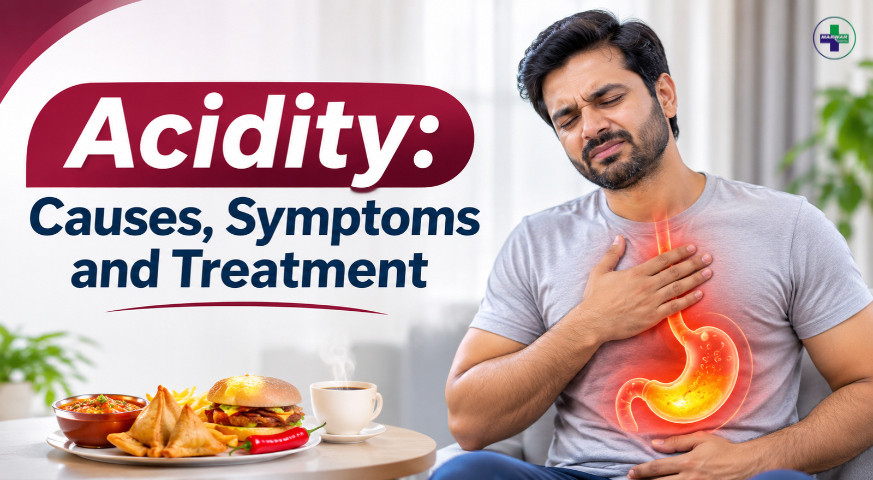
Acidity is a common digestive problem that affects people of different ages and lifestyles. It often causes a burning sensation in the chest or upper abdomen, sour taste in the mouth, bloating, and discomfort after eating. These symptoms may occur occasionally or become frequent enough to interfere with daily activities, sleep, and overall comfort.
Acidity is commonly associated with acid reflux, a condition in which stomach contents move back into the food pipe. Although occasional acidity may improve with simple lifestyle changes, persistent symptoms can sometimes indicate gastroesophageal reflux disease (GERD) or another digestive condition.
Understanding the causes of acidity, recognising its symptoms, and following appropriate treatment and prevention measures can help improve digestive health.
What Is Acidity?
Acidity is a commonly used term for symptoms related to excess stomach acid or acid reflux. The stomach naturally produces hydrochloric acid to help digest food and protect against certain harmful microorganisms.
Normally, a muscular valve called the lower oesophageal sphincter helps prevent stomach contents from moving back into the food pipe.
When this valve relaxes at inappropriate times or does not function effectively, stomach acid may enter the oesophagus and cause irritation. This process is known as acid reflux.
Repeated acid reflux may lead to gastroesophageal reflux disease, commonly called GERD.
Acidity may also be associated with indigestion, stomach irritation, or other digestive problems. Therefore, persistent symptoms should not automatically be attributed to excess acid without proper medical evaluation.
Common Causes of Acidity
Several factors can contribute to acidity and acid reflux.
1. Spicy and Fatty Foods
Certain foods may trigger acidity symptoms in some individuals.
Spicy meals, fried foods, high-fat dishes, and heavy meals may worsen acid reflux or digestive discomfort.
The effect of food varies between individuals. Not everyone experiences acidity after consuming the same foods.
Identifying personal food triggers can help reduce unnecessary discomfort.
2. Eating Large Meals
Consuming oversized meals can put extra pressure on the stomach, increasing the chances of acid reflux.
Heavy meals can also cause fullness, bloating, and discomfort.
Eating smaller portions and avoiding overeating may help improve digestive comfort.
3. Lying Down Immediately After Eating
Reclining shortly after eating can make it easier for stomach acid and food to flow back into the oesophagus.This can increase the likelihood of acid reflux, especially after heavy or fatty meals.
Maintaining an upright position after eating and allowing sufficient time before bedtime may help reduce symptoms.

4. Excess Body Weight
Excess body weight may increase pressure on the abdomen, which can contribute to acid reflux.
Some individuals experience improvement in reflux symptoms after gradual weight reduction when medically appropriate.
Maintaining a healthy weight may support digestive health and overall wellbeing.
5. Smoking and Alcohol
Smoking may affect the function of the lower oesophageal sphincter and contribute to reflux symptoms.
Alcohol can also worsen acidity in some individuals.
Reducing or avoiding these substances may help improve symptoms, particularly when they are identified as personal triggers.
6. Stress and Irregular Eating Habits
Stress may influence digestive function and increase sensitivity to discomfort.
Irregular meal schedules, rushed eating, and frequent overeating may also contribute to digestive problems.
Although stress does not necessarily increase stomach acid production directly, it can influence how symptoms are experienced.
7. Certain Medicines
Certain medications may increase the likelihood of acid reflux or lead to irritation and discomfort in the stomach lining.
Examples include certain anti-inflammatory painkillers and other medicines that affect digestive function.
Do not stop prescribed medicines without consulting your healthcare professional. If acidity develops after starting a medicine, discuss it with your doctor.
Common Symptoms of Acidity
Acidity symptoms may vary depending on the underlying cause and severity.
1. Burning Sensation in the Chest
A burning sensation in the chest is a frequently experienced symptom among individuals dealing with acid reflux.It usually feels like burning discomfort behind the breastbone and may spread towards the throat.
Symptoms often occur after meals, during bending, or when lying down.
2. Sour or Bitter Taste in the Mouth
Acid reflux may cause stomach contents to move towards the throat or mouth.
This can create a sour or bitter taste, particularly after eating or during sleep.
Some people may also experience regurgitation, where food or liquid comes back into the mouth.
3. Bloating and Abdominal Discomfort
Acidity may occur alongside bloating, fullness, or upper abdominal discomfort.
These symptoms can sometimes be associated with indigestion rather than acid reflux alone.
Persistent bloating or abdominal pain may require evaluation to identify the underlying cause.
4. Nausea
Some individuals experience nausea during episodes of acidity.
Nausea may become more noticeable after heavy meals or when reflux symptoms are severe.
Repeated nausea or vomiting should be medically evaluated.

5. Throat Irritation
Repeated acid reflux may irritate the throat.
Possible symptoms include throat discomfort, hoarseness, frequent throat clearing, or a sensation of something stuck in the throat.
These symptoms can have several causes, so they should not automatically be considered acidity.
6. Difficulty Sleeping
Acidity may become worse at night, especially when a person lies down shortly after eating.
Night-time reflux can interfere with sleep and contribute to discomfort.
Frequent night-time symptoms may require medical evaluation and appropriate treatment.
Effective Treatment Options for Acidity
Treatment depends on the frequency of symptoms, underlying cause, and individual medical history.
1. Antacids
Antacids neutralise stomach acid and may provide temporary relief from occasional heartburn.
They are generally used for short-term symptom relief rather than long-term management of persistent reflux.
Some antacids may interact with other medicines or be unsuitable for individuals with certain medical conditions.
2. Acid-Reducing Medicines
Doctors may recommend medicines that reduce stomach acid production.
Common categories include:
- Proton pump inhibitors (PPIs)
- H2 receptor blockers
These medications are commonly prescribed to manage recurring acid reflux, gastroesophageal reflux disease (GERD), and other conditions associated with excess stomach acid.The appropriate medicine, dose, and duration depend on the patient’s symptoms and medical history.
Avoid prolonged self-medication without medical advice.
3. Lifestyle Changes
Lifestyle modifications are an important part of managing acidity.
Helpful measures may include:
- Eating smaller meals
- Avoiding personal food triggers
- Maintaining a healthy weight
- Avoiding lying down immediately after meals
- Reducing smoking and alcohol
- Eating at regular times
- Maintaining a comfortable sleep routine
These changes may help reduce reflux episodes and improve digestive comfort.

4. Sleeping Position
For people experiencing frequent night-time acid reflux, elevating the head of the bed may help reduce symptoms.
Using a suitable wedge or raising the upper part of the bed is generally more effective than simply adding multiple pillows.
Sleeping on the left side may also help some individuals experience fewer reflux symptoms.
5. Medical Evaluation and Treatment
Persistent acidity may require further medical assessment.
A healthcare professional may review symptoms, medicines, lifestyle habits, and medical history.
In selected cases, investigations such as upper gastrointestinal endoscopy may be recommended to examine the food pipe and stomach.
Treatment should address the underlying cause rather than relying only on temporary symptom relief.

Home Habits That May Help Reduce Acidity
Certain everyday habits can support better digestive comfort.
Eat slowly: Take time to chew food properly and avoid rushing through meals.
Avoid overeating: Smaller portions may reduce stomach pressure and discomfort.
Maintain an upright position: Avoid lying down immediately after eating.
Identify food triggers: Keep track of meals that repeatedly cause symptoms.
Drink water regularly: Maintain adequate hydration throughout the day.
Avoid late-night heavy meals: Allow sufficient time between dinner and bedtime.
Maintain a healthy routine: Regular physical activity and adequate sleep may support overall digestive health.
These measures may help manage occasional acidity but are not a substitute for medical treatment when symptoms persist.
When Should You Consult a Doctor for Acidity?
Medical evaluation is important if acidity occurs frequently or interferes with daily activities.
Consult a healthcare professional if you experience:
- Frequent heartburn
- Persistent sour taste or regurgitation
- Repeated night-time acidity
- Difficulty swallowing
- Persistent nausea or vomiting
- Unexplained weight loss
- Symptoms that do not improve with appropriate treatment
Seek urgent medical attention if you experience chest pain, particularly when accompanied by breathlessness, sweating, dizziness, or pain spreading to the arm, jaw, or back.
Chest discomfort should never automatically be assumed to be acidity because it may indicate a heart-related emergency.

How Can Acidity Be Prevented?
Preventing acidity involves identifying triggers and maintaining healthy digestive habits.
Follow regular meal timings: Avoid frequent overeating and prolonged periods without food if these worsen your symptoms.
Choose balanced meals: Include vegetables, fruits, whole grains, and suitable protein sources.
Limit trigger foods: Reduce foods or beverages that consistently cause reflux symptoms.
Maintain a healthy weight: Weight management may help reduce pressure on the stomach.
Avoid smoking: Smoking cessation may improve reflux symptoms and overall health.
Improve sleep habits: Avoid heavy meals close to bedtime and consider suitable sleeping adjustments if night-time reflux occurs.
Seek medical advice when needed: Persistent symptoms should be evaluated instead of repeatedly treating them with over-the-counter medicines.
Conclusion
Acidity is a common digestive complaint that may cause heartburn, sour taste, bloating, nausea, and discomfort after meals. It is often associated with acid reflux and may become more frequent due to eating habits, certain foods, smoking, excess body weight, or other factors.
Understanding acidity symptoms, identifying personal triggers, maintaining healthy routines, and using appropriate treatment can help improve digestive comfort.
Marwar Hospital is mentioned in this article in the context of general acidity-related health awareness and the importance of recognising digestive symptoms that may require medical assessment.
Medical Disclaimer: This article is intended for general educational purposes only and does not replace professional medical advice, diagnosis, or treatment. Consult a qualified healthcare professional if acidity symptoms are frequent, persistent, severe, or associated with concerning symptoms.Add Marwar Hospital’s local CTARemove repetitive acidity sections
📍 For immediate assistance, get directions to our hospital on Google Maps. Location: Main Road, Sadul Colony, Bikaner, Rajasthan – 334001.
📞 For expert advice and appointments, contact our hospital today. 2207714, 2208814, 2209914
Common symptoms of acidity include a burning sensation in the chest, sour or bitter taste in the mouth, bloating, nausea, regurgitation, and throat irritation.
Acidity may be triggered by large meals, spicy or fatty foods, lying down after eating, excess body weight, smoking, alcohol, stress, and certain medications.
Antacids may provide temporary relief from occasional heartburn. Eating smaller meals, avoiding personal food triggers, and remaining upright after meals may also help. Consult a doctor if symptoms persist.
Foods that may trigger acidity include spicy meals, fried foods, high-fat dishes, and certain acidic foods or beverages. Triggers vary between individuals, so identifying personal triggers is helpful.
Consult a doctor if you experience frequent heartburn, difficulty swallowing, persistent vomiting, or unexplained weight loss. Seek urgent medical attention for chest pain accompanied by breathlessness, sweating, dizziness, or pain spreading to the arm or jaw.