
Introduction
Water plays a vital role in supporting the body’s essential functions and maintaining overall health. It helps regulate body temperature, supports digestion, carries nutrients, and allows organs to work properly. Dehydration develops when the body loses more water and fluids than it receives, leaving it unable to maintain its normal fluid balance.
Dehydration may develop during hot weather, physical activity, fever, vomiting, or diarrhoea. Mild fluid loss can cause symptoms such as thirst, low energy, and weakness. However, severe dehydration may lead to dangerous health complications if medical care is delayed.
Recognising the early warning signs and understanding how to maintain fluid balance can help reduce the risk of complications. This article from Marwar Hospital explains the common symptoms, causes, prevention methods, and situations in which medical attention may be necessary.
What Is Dehydration?
Dehydration occurs when the body does not have enough water and fluids to perform its normal functions. The body continuously loses water through sweating, breathing, urination, and bowel movements. These losses are usually replaced by drinking fluids and consuming water-containing foods.
When fluid loss increases or fluid intake becomes insufficient, the body’s water balance can be disturbed. and the person’s age and general health.
How serious dehydration becomes depends on the amount of fluid lost, the speed of fluid loss, and the person’s age and overall health. Children, older adults, and people with certain medical conditions may be more vulnerable to dehydration. However, it can affect anyone when fluid intake does not meet the body’s needs.

Common Symptoms of Dehydration
Symptoms can vary depending on the amount of fluid lost and the speed at which dehydration develops.
1. Excessive Thirst
Thirst is one of the earliest signs of dehydration. It is the body’s natural signal that more fluids may be needed.
However, thirst is not always a reliable early warning sign, particularly in older adults.Maintaining hydration is easier when you drink water at regular intervals throughout the day instead of waiting until you feel very thirsty.
2. Dry Mouth and Lips
A dry mouth, chapped lips, or less saliva than usual can be signs that the body may not be getting enough fluids.
These symptoms can also occur because of certain medicines, mouth breathing, or other conditions. If dryness continues despite adequate fluid intake, medical advice may be useful.
3. Dark or Reduced Urine
Urine colour and frequency can provide useful clues about hydration. Dark yellow urine or urinating less often than usual may suggest that the body is conserving water.
Certain medications, supplements, and underlying health conditions can also affect urine colour, so changes in colour do not always indicate dehydration.Urine colour should therefore be considered alongside other symptoms rather than used as the only measure of hydration.
4. Tiredness and Weakness
Dehydration may lead to tiredness, physical weakness, and reduced ability to perform daily tasks. A lack of body fluids can also interfere with blood circulation and the body’s ability to regulate temperature. A person may feel especially tired during hot weather or after exercise when sweating causes additional fluid loss.
5. Headache and Dizziness
Some people experience headaches, light-headedness, or dizziness when dehydrated. These symptoms may become more noticeable when standing up or after physical activity.
Persistent dizziness should not automatically be attributed to dehydration, as it may have other causes. Severe dizziness, confusion, or fainting requires prompt medical assessment.
6. Muscle Cramps
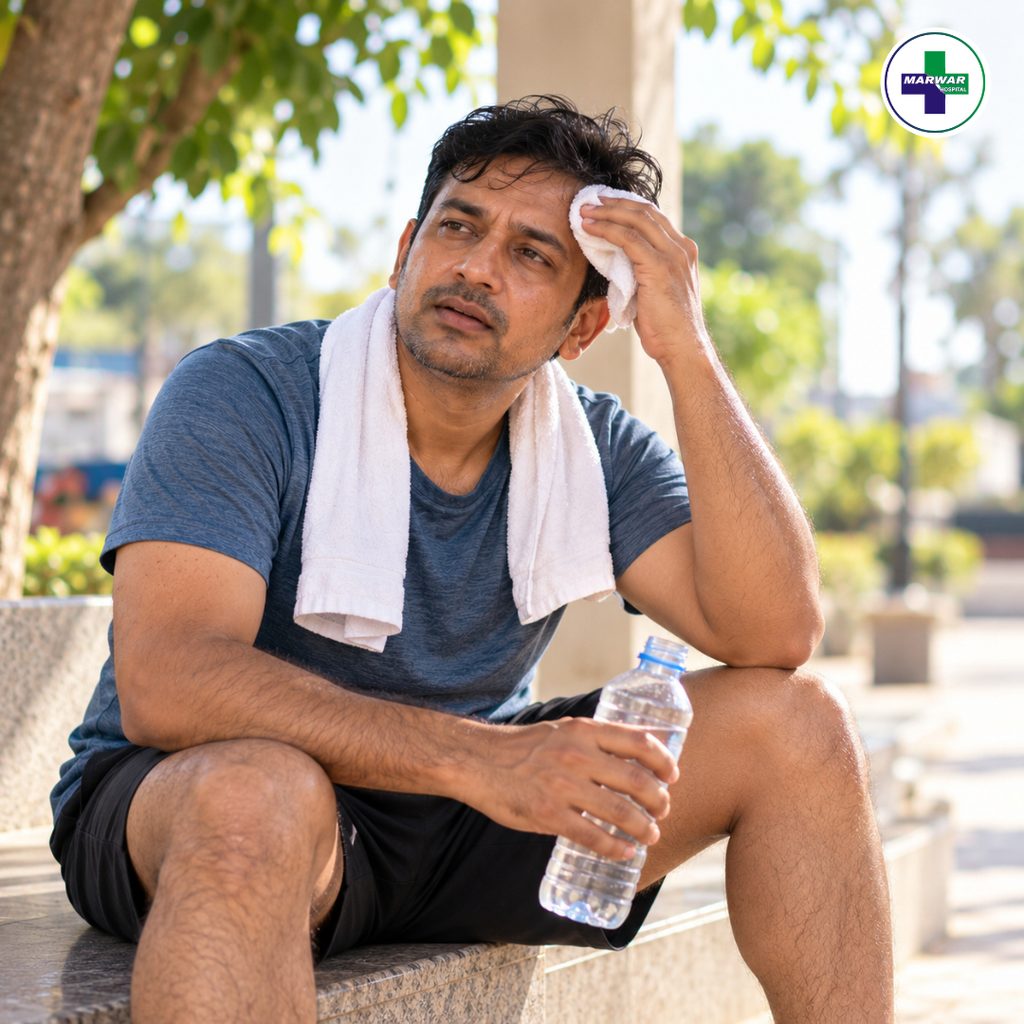
Heavy sweating during exercise or prolonged exposure to heat can lead to fluid and electrolyte loss. This may contribute to muscle cramps in some situations.
Electrolytes, including sodium and potassium, help support nerve signals and muscle function. Replacing fluids is important, but people with significant fluid loss may also need appropriate electrolyte replacement.
7. Rapid Heartbeat
When dehydration reduces the amount of fluid circulating in the body, the heart may beat faster to maintain blood flow. A person may notice a racing heartbeat along with weakness or dizziness.
A persistent rapid heartbeat, particularly with fainting, confusion, chest pain, or severe weakness, requires urgent medical attention.
What Causes Dehydration?
Dehydration may develop when the body loses too much fluid or when daily water intake is insufficient to replace the fluids the body needs.
Hot Weather and Excessive Sweating
High temperatures increase sweating as the body attempts to cool itself. People working outdoors, exercising, or spending long periods in the sun may lose considerable amounts of fluid.
High temperatures and humid weather can make dehydration more likely, particularly when fluid intake is insufficient throughout the day.
Vomiting and Diarrhoea
Vomiting and diarrhoea can cause rapid fluid loss. They may also lead to the loss of essential electrolytes.
Children and older adults can become dehydrated more quickly during these illnesses. Oral rehydration solution (ORS) can help replace water and salts lost through diarrhoea or vomiting when used according to the instructions.
Fever and Illness
During a fever, the body may lose more water than usual through sweating and increased moisture loss during breathing.
When someone is ill, they may also consume less water than usual, which can increase the chance of dehydrationWhen people are sick, they may drink less water than their bodies require, which can increase the likelihood of dehydration.
Inadequate Fluid Intake
Busy routines, limited access to drinking water, reduced appetite, or forgetting to drink can contribute to dehydration. Older adults may have a weaker sense of thirst, making regular fluid intake particularly important.
Certain Medicines and Health Conditions
Some medicines, including diuretics, increase urine production and may affect fluid balance. Diabetes and certain kidney or digestive conditions can also influence the body’s fluid requirements.
People with medical conditions that require fluid restriction should follow their healthcare professional’s advice rather than increasing fluid intake without guidance.

Learn more about our expert services here.
How Can Dehydration Be Prevented?
Simple daily habits can help maintain hydration and reduce the risk of fluid loss.
Drink fluids regularly: Keep drinking water accessible and take regular drinks throughout the day. Individual needs vary depending on activity, temperature, age, diet, and health.
Increase fluid intake when appropriate: Hot weather, exercise, fever, vomiting, and diarrhoea can increase fluid requirements. Drink more as needed, unless a healthcare professional has advised you to restrict fluids.
Eat water-rich foods: Foods such as watermelon, oranges, cucumber, tomatoes, and soups can contribute to daily fluid intake.
Take precautions during outdoor activities: During hot weather, take breaks in shaded or cool areas, wear suitable clothing, and avoid strenuous activity during the hottest part of the day when possible.
Replace fluids after heavy sweating: Water is often sufficient for routine activity. After prolonged strenuous exercise or substantial fluid loss, an electrolyte-containing drink may be helpful depending on the circumstances.
Use ORS when appropriate: Oral rehydration solution is useful for replacing fluids and salts lost through diarrhoea and vomiting. Prepare it exactly as directed on the packet.
Pay attention to vulnerable individuals: Children and older adults may need reminders or assistance with drinking fluids, especially during hot weather or illness.

When Should You Seek Medical Attention?
Mild dehydration may improve with appropriate fluid intake. However, medical advice is important if symptoms persist, fluid loss continues, or the person cannot keep fluids down.
Seek urgent medical attention if someone develops confusion, fainting, extreme weakness, very little or no urine, rapid breathing, or a rapid heartbeat accompanied by other serious symptoms. These may indicate severe dehydration or another urgent medical problem.
Babies and young children require particular attention. Warning signs include unusually few wet nappies, a dry mouth, reduced alertness, or difficulty feeding. Older adults and people with chronic medical conditions should also be monitored carefully during illness or extreme heat.
The educational information in this Marwar Hospital article is intended to explain common warning signs and support awareness of appropriate hydration practices.

Conclusion
Dehydration occurs when the body loses more fluids than it replaces. Common symptoms include excessive thirst, dry mouth, dark urine, tiredness, headaches, dizziness, and weakness. Heat, sweating, vomiting, diarrhoea, fever, and inadequate fluid intake are among its possible causes.
Drinking fluids regularly, eating water-rich foods, taking precautions during hot weather, and replacing lost fluids appropriately can help prevent dehydration. People with persistent symptoms or significant fluid loss should seek medical advice, while signs of severe dehydration require urgent care.
Medical Note
This article is intended for general health education and does not replace professional medical advice, diagnosis, or treatment. Fluid requirements vary between individuals, particularly those with kidney or heart conditions. Seek medical advice when symptoms persist and urgent care for signs of severe dehydration.
📍 For immediate assistance, get directions to our hospital on Google Maps. Location: Main Road, Sadul Colony, Bikaner, Rajasthan – 334001.
📞 For expert advice and appointments, contact our hospital today. 2207714, 2208814, 2209914
Common symptoms of dehydration include excessive thirst, dry mouth, dark yellow urine, reduced urination, tiredness, weakness, headaches, dizziness, and muscle cramps. Severe dehydration may cause confusion, fainting, or a rapid heartbeat.
Dehydration can occur due to hot weather, excessive sweating, physical activity, fever, vomiting, diarrhoea, inadequate fluid intake, or certain medicines and medical conditions that affect fluid balance.
You can help prevent dehydration by drinking water regularly, eating water-rich foods such as watermelon and cucumber, taking breaks in shaded areas during hot weather, and replacing fluids lost through sweating or illness.
Yes, oral rehydration solution (ORS) helps replace water and essential salts lost through diarrhoea and vomiting. Prepare it according to the packet instructions. Severe dehydration may require urgent medical treatment.
Seek medical advice if dehydration symptoms persist or you cannot keep fluids down. Confusion, fainting, extreme weakness, very little or no urine, or rapid breathing may indicate severe dehydration and require urgent medical attention.