

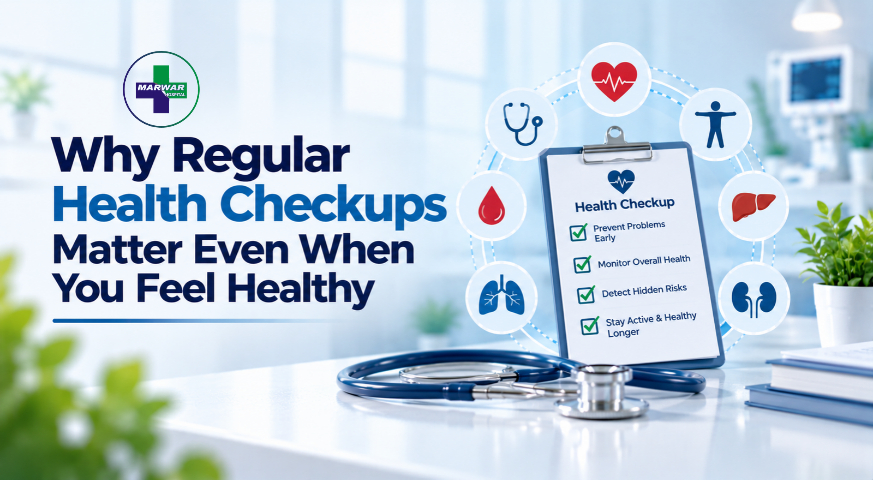
Introduction
Feeling healthy is a positive sign, but it does not always mean that every part of the body is functioning properly. Some health conditions develop gradually and may not cause noticeable symptoms during their early stages. High blood pressure, high cholesterol, and certain blood sugar problems, for example, can remain unnoticed for a long time.
Regular health checkups help people understand their current health status and identify potential concerns before they become more difficult to manage. They also provide an opportunity to discuss lifestyle habits, family medical history, and preventive care with a healthcare professional.
This educational article from Marwar Hospital explains why routine health checkups matter, what they may include, and how they can support long-term wellbeing even when you feel completely healthy.
What Is a Regular Health Checkup?
A routine health checkup helps evaluate a person’s overall health and identify potential health concerns. It may include a discussion of medical history, lifestyle, family health risks, physical examination, and selected screening tests.
The type and frequency of checkups depend on several factors, including age, existing medical conditions, family history, lifestyle, and previous test results. Not everyone needs the same tests at the same intervals.
A healthcare professional can help determine which assessments are appropriate instead of recommending unnecessary investigations.
Why Are Regular Health Checkups Important?
1. Detect Health Problems Early
Some medical conditions may develop without clear warning signs. A person can feel energetic and continue daily activities while certain health measurements gradually move outside the healthy range.
Routine assessments may help identify issues such as elevated blood pressure, abnormal blood sugar, or unhealthy cholesterol levels. Early identification allows people and their healthcare professionals to discuss suitable steps before complications develop.
However, screening tests do not detect every condition, and a single result may not provide a complete diagnosis. Further assessment may be needed when a result is abnormal.

2. Monitor Blood Pressure and Heart Health
High blood pressure often causes no obvious symptoms, which is why checking it periodically can be important. If it remains uncontrolled,When high blood pressure is not properly managed, it may raise the chances of developing heart disease, suffering a stroke, or experiencing kidney complications. A health assessment may include blood pressure measurement and a review of other factors that influence cardiovascular health, such as smoking, physical activity, diet, and family history.
Cholesterol testing may be recommended according to age and individual risk. person’s overall risk rather than relying only on how healthy they feel.
These health measurements give healthcare professionals a clearer picture of a person’s overall health risks, beyond how healthy they may feel.
3. Identify Blood Sugar Problems
Blood sugar levels can become abnormal before a person notices symptoms.Prediabetes and type 2 diabetes may develop gradually, and some people remain unaware of the condition for years.
A healthcare professional may recommend blood glucose testing or an HbA1c test depending on age, symptoms, risk factors, and medical history.
Identifying a problem early can help guide changes in eating habits, physical activity, and treatment when needed. Testing schedules should be based on individual risk rather than assuming everyone requires the same tests.
4. Review Nutritional and Lifestyle Factors
Everyday habits influence long-term health. Eating patterns, sleep quality, exercise, tobacco use, alcohol consumption, and stress can all affect wellbeing.
A regular health checkup allows you to discuss your daily habits with a healthcare professional and explore small lifestyle changes that may improve your health. Depending on the person’s symptoms and risk factors, a healthcare professional may also consider whether tests for nutritional deficiencies are appropriate.
Not everyone needs a broad panel of vitamin or mineral tests. Testing should have a clear purpose and be guided by medical assessment.

5. Consider Family Medical History
Family history can influence the likelihood of developing certain conditions, including diabetes, cardiovascular disease, and some inherited disorders.
Sharing relevant family medical information helps a healthcare professional assess personal risk and decide whether earlier or more frequent screening may be useful.
A family history does not mean that a person will definitely develop the same condition. It is one factor among several that can guide preventive care.
6. Stay Up to Date with Vaccinations and Preventive Health Measures
Regular checkups allow you to review your vaccination history and discuss other preventive measures that can help reduce the risk of illness.
Depending on age, health conditions, occupation, and previous vaccinations, a person may need specific immunisations or boosters.
Preventive care may also include appropriate cancer screening, dental care, eye examinations, or other assessments.The recommended schedule for preventive care varies based on a person’s health requirements, personal circumstances, and local medical guidelines.
What May Be Included in a Health Checkup?
The contents of a checkup should be tailored to the individual. Depending on a person’s age, health background, and risk level, preventive care may include the following:
- Medical history: Discussion of previous illnesses, medicines, allergies, family history, and current lifestyle.
- Physical measurements: Blood pressure, pulse, weight, and other measurements when appropriate.
- Blood tests: These may be used to measure blood sugar, cholesterol, and other health markers when needed.
- Preventive screening: Age-appropriate assessments based on individual risk and current recommendations.
- Lifestyle guidance: Advice on nutrition, exercise, sleep, tobacco avoidance, and stress management.
A full-body scan or extensive laboratory testing is not automatically necessary for every healthy person. Unnecessary tests can lead to false alarms, additional costs, and follow-up procedures that may not improve health outcomes.
The purpose is to recommend suitable health tests and assessments based on each person’s specific needs and potential health risks.

Learn more about our expert services here.
How Often Should You Get a Health Checkup?
There is no single schedule suitable for everyone. A healthy adult may need a different assessment routine from an older adult or someone with diabetes, high blood pressure, or a strong family history of certain conditions.
Age, pregnancy, medicines, previous test results, and lifestyle risks can influence how often checkups are recommended. Certain screening tests are recommended at particular ages, while others may depend on an individual’s health needs and risk factors.
Discuss an appropriate schedule with a healthcare professional rather than relying on a fixed annual package or assuming that frequent testing is always better.
How to Prepare for a Health Checkup
A little preparation can make a checkup more useful.
- Carry details of current medicines and supplements.
- Share relevant medical and family history.
- Mention any symptoms, even if they seem minor or occasional.
- Bring previous test reports if available.
- Ask whether fasting is required for any planned blood test.
- Prepare questions about sleep, diet, exercise, or other health concerns.
Be honest about daily habits and health concerns. Accurate information helps the healthcare professional provide advice that is relevant to your circumstances.

When Should You Seek Medical Advice?
Routine checkups are intended for preventive care and should not replace medical attention when symptoms appear. If you develop persistent pain, unusual tiredness, unexplained weight changes, or other new symptoms, seek appropriate medical advice rather than waiting for your next scheduled assessment.
Seek urgent medical attention for warning signs such as chest pain, severe breathing difficulty, sudden weakness on one side of the body, or sudden difficulty speaking.
The information in this Marwar Hospital educational article highlights the value of preventive care, while recognising that checkup needs differ from one person to another.

Conclusion
Regular health checkups can help people understand their health, identify certain problems early, review personal risk factors, and stay up to date with appropriate preventive care. Feeling healthy is encouraging, but it cannot rule out every medical condition.
The most useful approach is to choose checkups and screening tests according to age, medical history, family risks, and professional guidance. Combined with balanced nutrition, physical activity, sufficient sleep, and other healthy habits, appropriate preventive care can support long-term wellbeing.
Medical Note
This article is intended for general health education and does not replace professional medical advice, diagnosis, or treatment. The need for specific tests and the frequency of checkups vary between individuals. Consult a qualif
📍 For immediate assistance, get directions to our hospital on Google Maps. Location: Main Road, Sadul Colony, Bikaner, Rajasthan – 334001.
📞 For expert advice and appointments, contact our hospital today. 2207714, 2208814, 2209914
Regular health checkups can help identify potential health problems, such as high blood pressure, elevated blood sugar, and unhealthy cholesterol levels, before noticeable symptoms appear. They also help assess personal risk factors and guide preventive care.
Depending on your age, medical history, and risk factors, a checkup may include blood pressure measurement, physical examination, blood sugar testing, cholesterol testing, and appropriate preventive screenings. Not everyone needs the same tests.
The recommended frequency depends on your age, existing medical conditions, family history, lifestyle, and previous test results. Consult a healthcare professional to determine a suitable checkup schedule for your individual needs.
Yes. Appropriate screening can help identify risk factors such as elevated blood sugar, high blood pressure, and abnormal cholesterol levels. Early identification allows healthcare professionals to recommend suitable lifestyle changes, monitoring, or treatment when needed.
Carry your previous medical reports, a list of medicines and supplements, and details of your medical and family history. Mention any symptoms or health concerns, and ask your healthcare professional whether fasting is required for any planned blood tests.